Synopsis
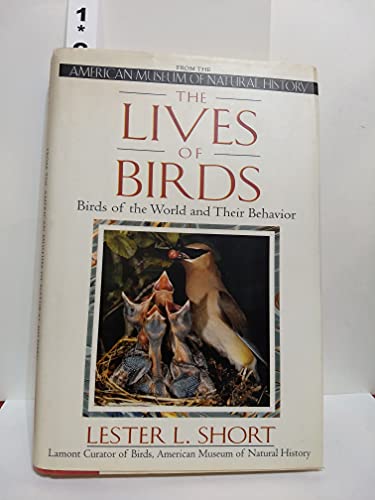
The first in a new series on animal behavior to be prepared in conjunction with the American Museum of Natural History (where Short is curator of birds). It is wide-ranging and directed to beginners, even youngsters, as the writing tends to over-explicitly discuss some elementary concepts. Illustrated with drawings and some color photos. Annotation copyright Book News, Inc. Portland, Or.
Reviews
Here is a splendid introduction to the world of birds. Short, Lamont Curator of Birds at Manhattan's American Museum of Natural History, begins his comprehensive account with an explanation of how a chick hatches. He then follows every phase of birds' lives--courtship, mating, feeding, nesting, egg-laying and incubation, migration. Short examines instinctive and learned behavior with examples of both; he discusses communication, vocal and non-vocal, and birds' social life. Finally, he looks at the relationship between birds and humans, noting that birds may represent one of our few authentic and remaining links with nature. Readers interested in birds will find this volume illuminating. Photos.
Copyright 1993 Reed Business Information, Inc.
The first in a planned series of popular works on animal behavior sponsored by the American Museum of Natural History, this study by the Museum's Curator of Birds summarizes current knowledge of bird behavior. Beginning with the hatching of an egg, Short progresses through the rearing of nestlings, learning processes, avian social structure, communication, territoriality, migration, and reproduction, ending with a discussion of bird-human interactions. While a few topics (e.g., feeding, defense mechanisms) could have been treated more fully, overall this is a knowledgeable, up-to-date, and straightforward synthesis for the nonspecialist. Suitable for public and high school libraries.
- Paul B. Cors, Univ. of Wyoming Lib., Laramie
Copyright 1993 Reed Business Information, Inc.
An extraterrestrial seeking intelligent life on this planet would, because most of Earth's surface is water, probably look to the oceans first and contact whales and dolphins, which possess some of the largest brains of any Earth creatures. Had our E.T. read this book, however, it might be dismayed to learn that not all 75 or so cetacean species are all that intelligent. It would enjoy a fascinating read, though, on one of the best known yet misunderstood orders of animals. Most may think of whales and dolphins as all saltwater mammals, yet there are a number of freshwater species, most notably in Brazil and China, where, because of human activities, they face a very uncertain future. Several people, their sympathy engaged by the propaganda that has led to international strictures on whale hunting, may view cetaceans in general as very noble beasts, yet some of them engage in sexual orgies, m{‚}enages {…}a-trois, even homosexuality. But then, some species have complex social arrangements that seem to rival our own. If your only contact with these animals comes from watching reruns of Flipper, flip off the tube and pick up this book. Jon Kartman
"About this title" may belong to another edition of this title.