About this Item
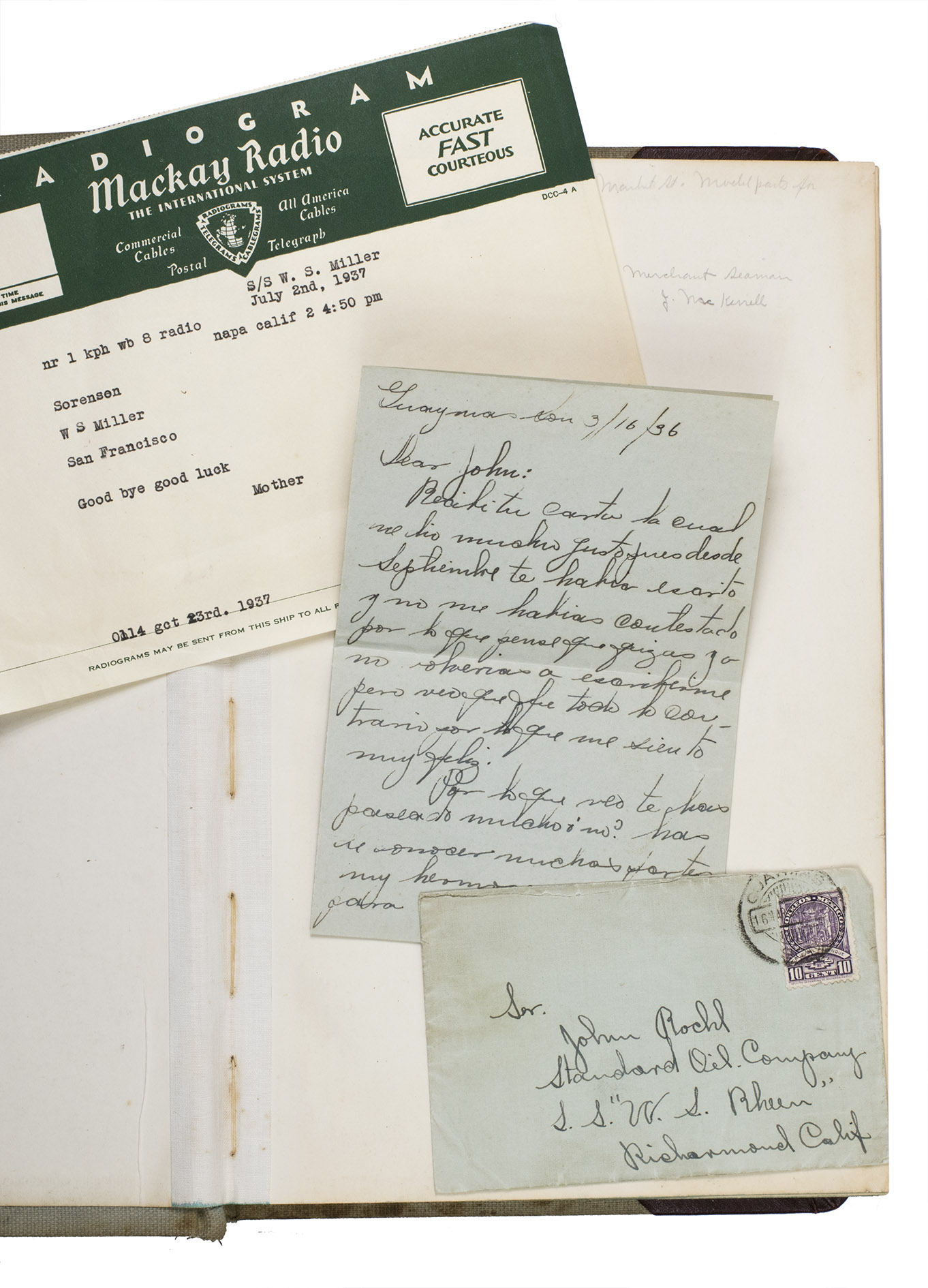
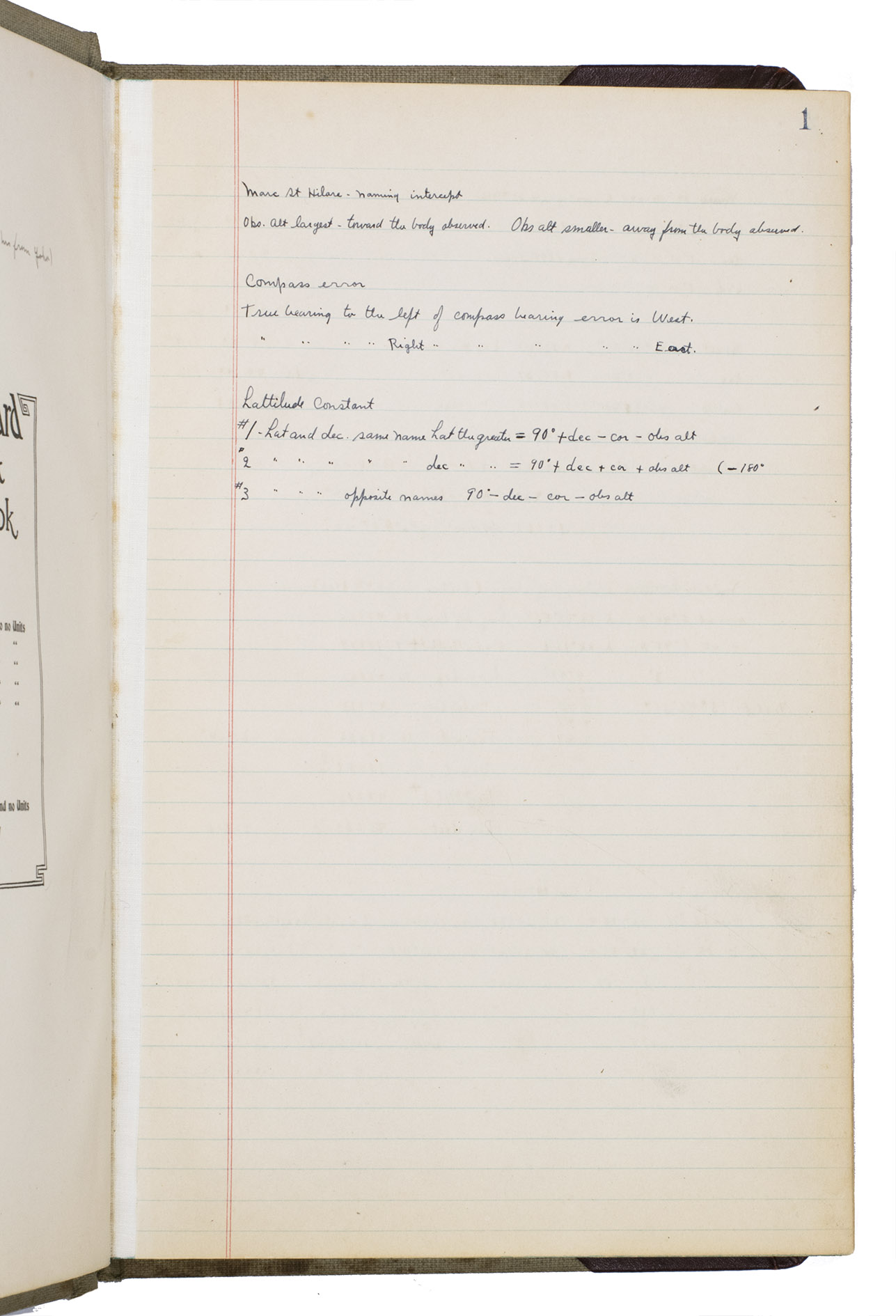
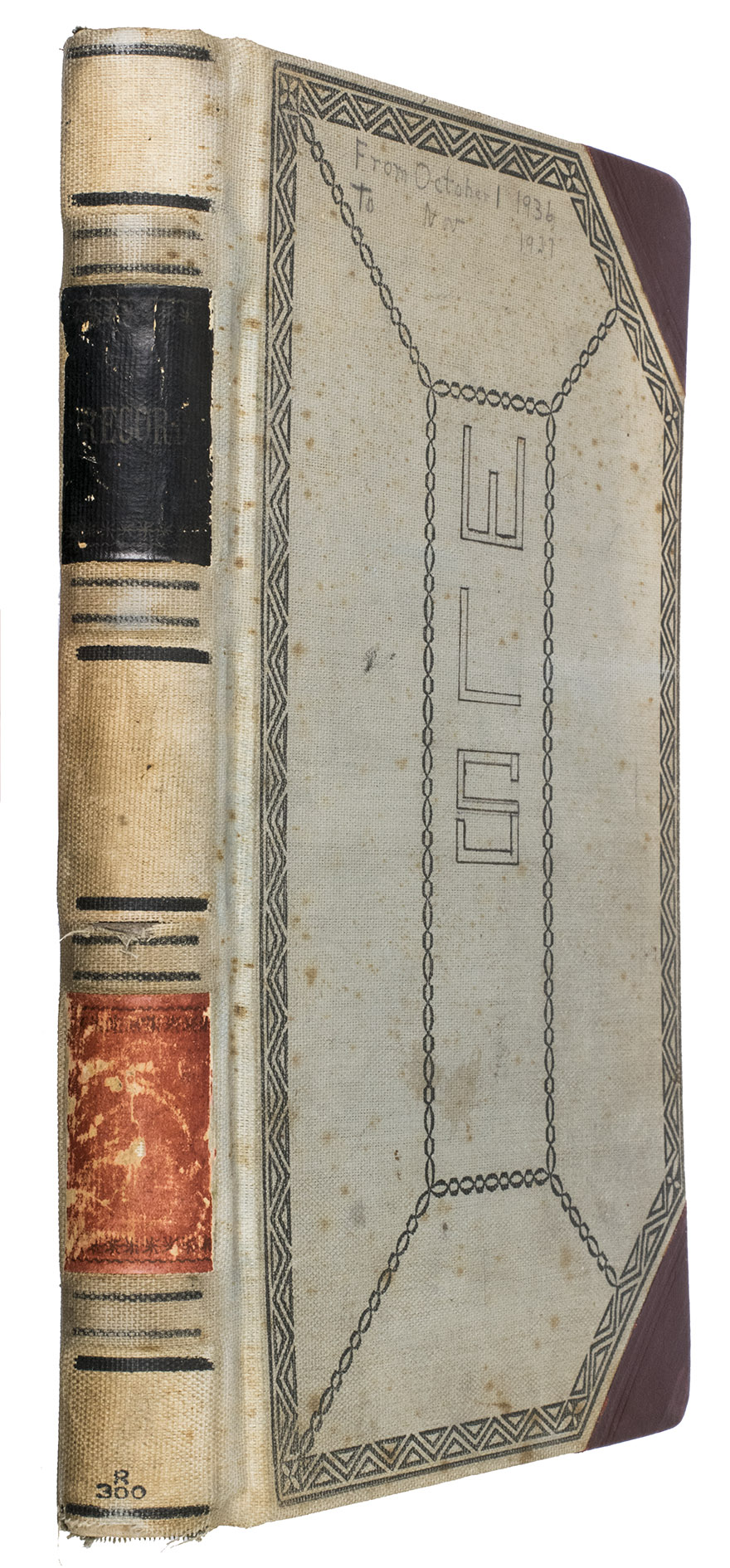
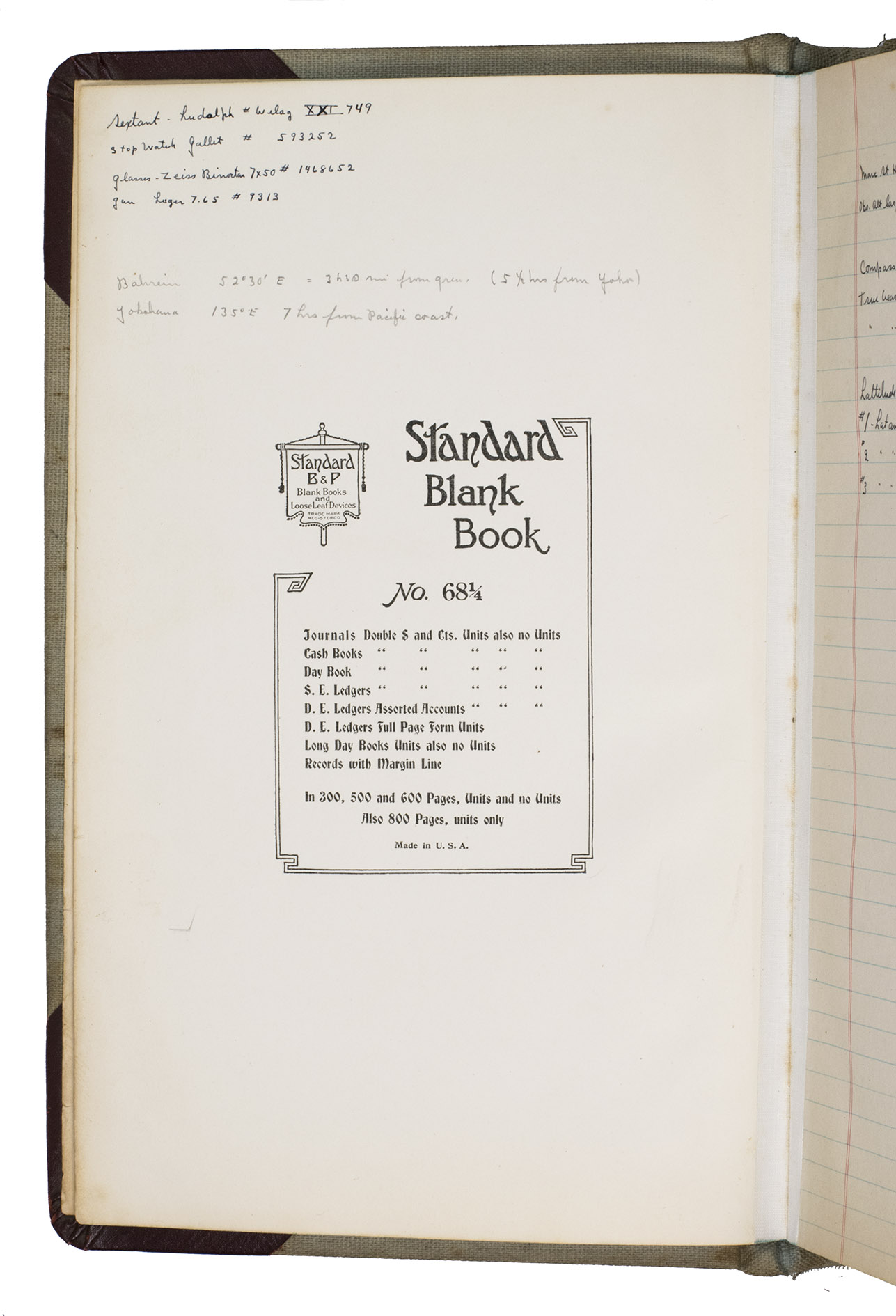
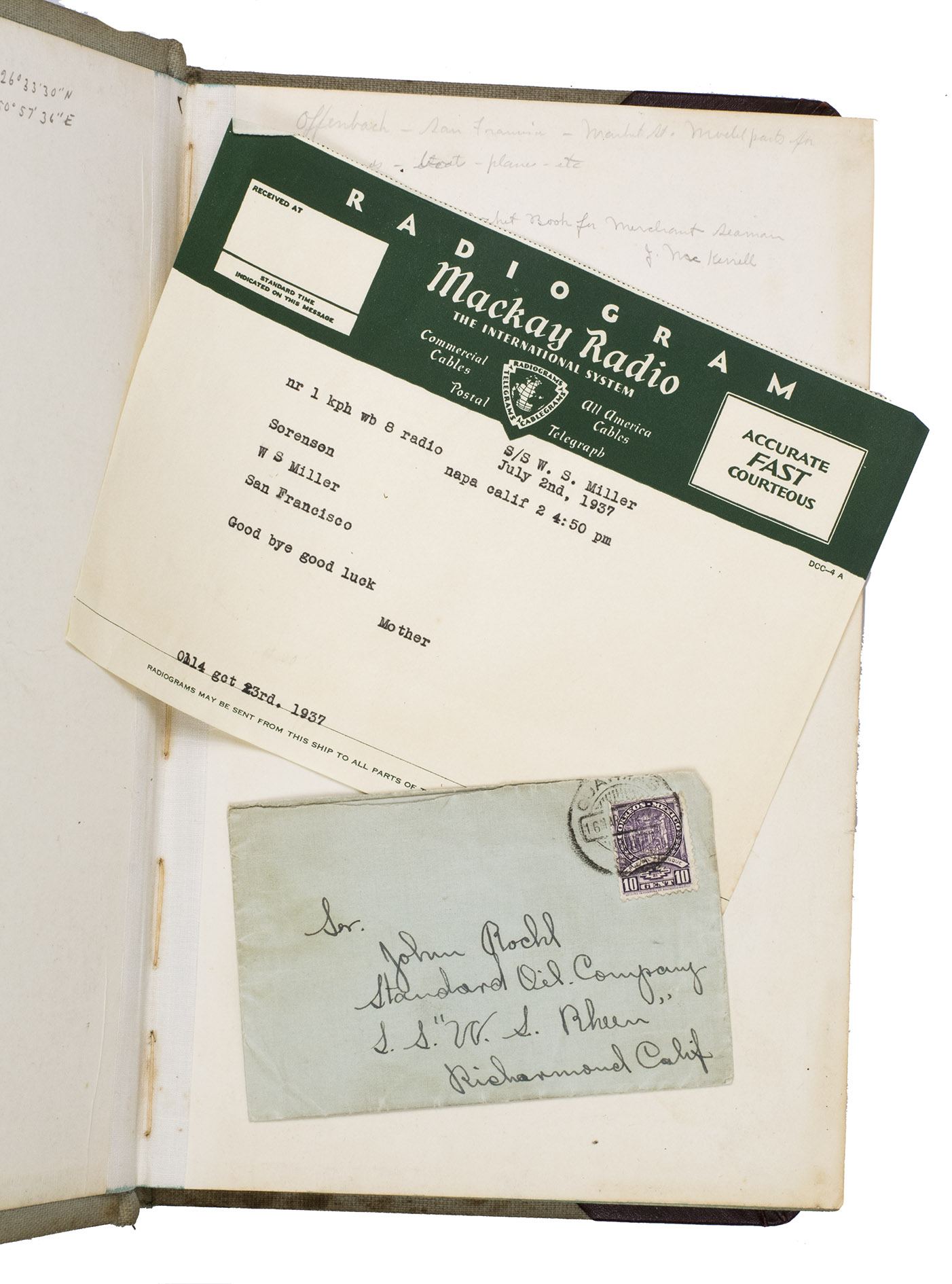
Private logbook of the oil tankers S.S. W.S. Rheem and S.S. W.S. Miller, recording voyages between Bahrain, Japan, California, and Vladivostok from October 1936 to November 1937. The present work comprises 300 pages of manuscript in pen and pencil on ruled paper, filled throughout with detailed navigational entries noting courses, bearings, distances, speeds, and daily performance against targets, interspersed with observations on ports, crews, and cargo operations. The logbook constitutes an exceptional primary document from the earliest phase of the Persian Gulf oil export industry and is directly connected to the strategic and economic conditions that shaped Japanese militarisation in the 1930s. Oil was discovered in Bahrain in 1932, and the first commercial exports, undertaken by the Bahrain Petroleum Company in June 1934, were carried to Yokohama by the S.S. W.S. Rheem, an event widely regarded as the foundation of Bahrain-Japan diplomatic relations. Owned by the Standard Oil Company of California and named after its former president, the W.S. Rheem operated extensively between Bahrain, Japan and the west coast of the United States during a period in which Japan s rapid industrial expansion, combined with its scarcity of natural resources, made imported oil a matter of national survival.The present logbook opens during Voyage 145 of the W.S. Rheem on 1 October 1936, noting that the vessel had "passed Singapore midnight" while en route from Bahrain Island to Kudamatsu, Japan. Daily entries meticulously chart target and actual miles run, speeds achieved, and positional fixes, with notes on compensating for shortfalls and on landfalls in Formosa and southern Japan. The ship arrives at Kudamatsu on the evening of 11 October, and a small pencil sketch records the vessel s mooring during discharge operations, which took approximately ten hours. On 16 October the W.S. Rheem sailed for San Francisco, arriving on 4 November. Subsequent voyages document repeated trans-Pacific passages and return runs to Bahrain, including a Christmas Day entry marked in red pencil while passing the Anambas Islands, a note of a crew member showing "symptoms of insanity" while transiting the Malacca Straits, and detailed descriptions of loading operations at Bahrain, complete with hose-placement diagrams and cargo composition, recorded as a mixture of Bahrain crude and "topo".In January 1937 the W.S. Rheem again sailed for Japan, arriving at Yokohama in February, before receiving altered port orders on the return passage to California. The logbook then records a series of short coastal voyages along the Californian seaboard, before the keeper notes his transfer in June 1937 to the S.S. W.S. Miller, another tanker owned by Standard Oil of California, and his assumption of duties as Chief Mate in July. From this point the logbook follows the W.S. Miller on voyages carrying refined gasoline from San Pedro to Vladivostok and back, a striking reminder of the extent and complexity of pre-war trans-Pacific and Pacific-Siberian oil trade. Further entries trace passages via the Panama Canal to the eastern United States and return voyages to the Pacific coast.The logbook retains its shipboard documentation, including a radiogram dated 2 July 1937 sent to Sorensen aboard the W.S. Miller in San Francisco by his mother in Napa, wishing him "Good bye good luck". A further Spanish letter dated March 1936, addressed to John Roche, a Standard Oil officer aboard the W.S. Rheem, and is a separate associated item that does not form part of the logbook itself.With the "Standard Blank Book" plate "No. 68¼" printed on the verso of the first flyleaf, the gutters of the flyleaves and pastedowns have been reinforced with white linnen tape, the boards are lightly stained and the spine shows some wear. Otherwise in very good condition. Contemporary blueish-grey black- and blind-stamped linen over boards with red leather corners, sewn on 4 supports with the corresponding raised.
Seller Inventory # ABC_50192
Contact seller
Report this item