Synopsis
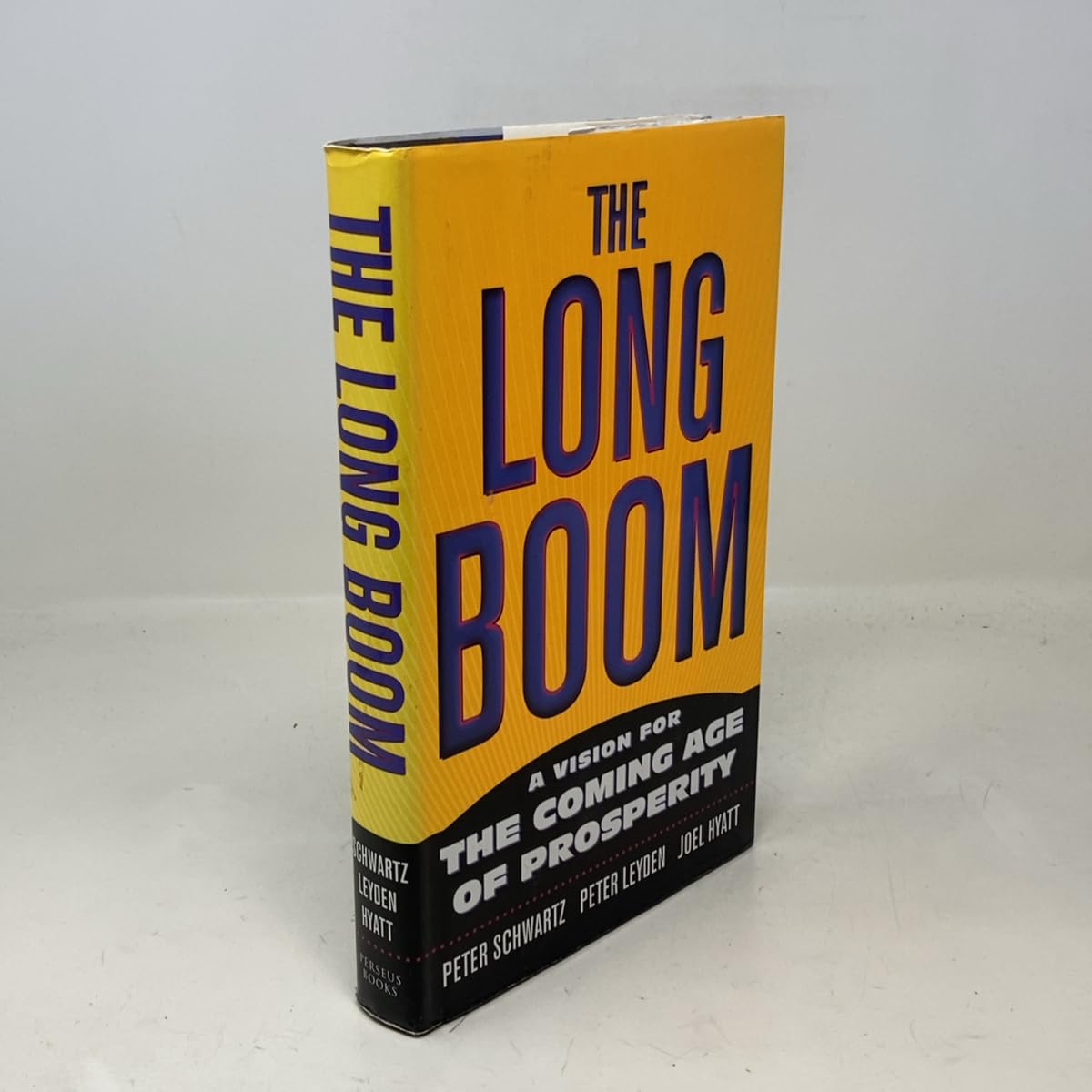
As we stand at the threshold of the new millennium, the future seems both exhilarating and terrifying. Does it hold great promise of freedom and opportunity or the threat of conflict and inequality? In the tradition of such influential and defining books as Future Shock and Megatrends , Peter Schwartz, Peter Leyden, and Joel Hyatt argue in The Long Boom that we are, in fact, on the verge of a global economic expansion on a scale never before experienced—and that the choices we make as informed individuals, institutions, communities, and nations today will determine whether that vision is realized. Analyzing economic, political, technological and socio-cultural trends that began to converge in the early 1980s, the authors offer a compelling—and highly plausible—vision of how the next twenty years will unfold. By 2020, we can expect to experience tremendous advances in now-emerging technologies; widespread adoption of alternative energy sources; increased productivity; and, perhaps most important, the creation of a truly global economy. Going beyond a description of this scenario, the authors identify potential bumps in the road and urge educators, policy makers, business leaders, social activists, and individuals in all types of organizations to participate in the “politics of the long boom,” the realm where people come together to pool resources and solve common problems. Grand in scope but intensely personal in scale, The Long Boom shows us all how to take an active role in creating a vibrant, diverse, constantly learning, and sustainable global society.
Reviews
Based on an article originally published in Wired, this book suffers from the expansion, as the authors have to keep finding ways of telling readers that things will be great in the near future. Schwartz is chairman of Global Business Network, a consulting firm; Leyden was managing editor of Wired; Hyatt teaches at the Stanford Graduate School of Business. Written with the same optimism about the economy as Dow 36,000 (Forecasts, Aug. 30), this sunny look at the future goes beyond the stock market to take an upbeat gander at the way we will live in the next century. To say that the authors are bullish is an understatement. Alternative energy sources, biotechnology and increased productivity figure prominently in their rosy scenarioAthe key to which is continued and extended economic growth in the developed world, which will trickle down to the developing world and create a global middle class. But in their zeal to describe how all parts of the world will participate in and benefit from the long boom, the authors make sweeping and potentially offensive generalizations: Asians, for example, while not good at "improvisation," are "extremely adept at mastering set courses and memorizingAfar better than" Westerners. The authors are on safer ground discussing technology, but their attitude toward this future is entirely passive. They give the impression that we will all sit back and marvel at the forthcoming human accomplishments, and that this will provide the chief pleasure in the future. Yet their vision is exciting, and the authors articulate it with the panache of Alvin TofflerAand the kind of wide-eyed confidence in the future that characterized the 1939 World's Fair. (Oct.)
Copyright 1999 Reed Business Information, Inc.
Consider the authors--Peter Schwartz, founder of the Global Business Network, a consulting firm and think tank; Peter Leyden, former managing editor of Wired magazine; Joel Hyatt, cofounder of Hyatt Legal Services, who teaches entrepreneurship at Stanford--technological optimists. They expect major developments in computer technology, biotechnology, and the fuel cell and other new energy technologies in the next two decades, followed by key breakthroughs in nanotechnology. They urge political, economic, and social action--including 4 to 6 percent growth per year worldwide--to spread the benefits of an ever-more-global economy to as many as possible of the world's people. The Long Boom examines the past two decades and projects the next two for different world regions and argues that, with faster growth and wider understanding of environmental issues, a growing global middle class will devote the needed resources to repairing the environment. Facing a time of startling change, they offer 10 guiding principles: go global, open up, let go, grow more, be adaptable, keep learning, value innovation, get connected, be inclusive, and stay confident. Mary Carroll
"About this title" may belong to another edition of this title.