Synopsis
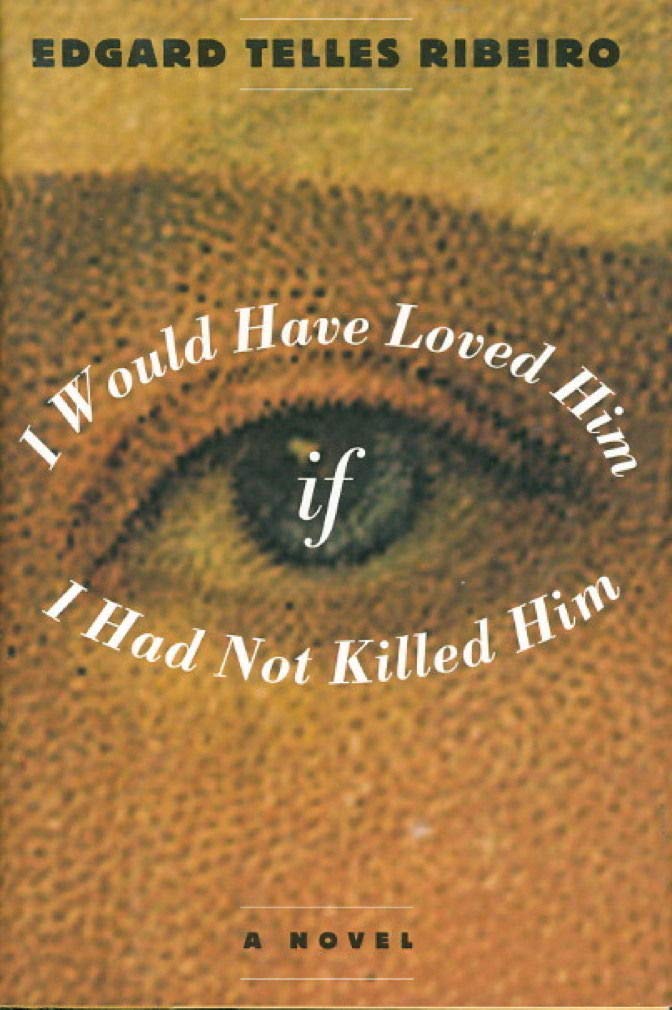
In Brasilia, Fernando, a film director, and Andrea, an antiques dealer, sift through emphemeral clues from the past to substantiate Andrea's story that her aunt Guilhermina had murdered her husband.
Reviews
Behind this first novel's snappy title lurks an elegant and quietly intoxicating story. In an antique store in Brasilia, Fernando, a failed filmmaker, and Andrea, the leading lady from his one disappointing film, find each other again after 10 years apart. Andrea seduces Fernando with her great-aunt Guilhermina's life story--a wild tale involving a child bride who is violated by her husband and exacts a rigorous revenge; a rich young widow who discovers her sexuality while traveling through Europe in the '30s; and a reclusive elderly woman living on a remote Brazilian ranch whom Andrea briefly came to know. Though Fernando and Andrea's affair doesn't last, their fascination for Guilhermina endures, and each independently researches different facets of her life. The novel's ending, in which past and present amiably commingle, is inconclusive and unbalanced, if only because it's skewed toward Fernando's perspective. But Ribeiro, a diplomat by profession, is a natural writer. His language is impeccable and imbued with a grace that's impossible to resist.
Copyright 1994 Reed Business Information, Inc.
A simple, but by no means timid, story provides the basis for layers of meaning and discovery in this first novel by a Brazilian diplomat. In 1926 a 14-year-old girl is married off to a wealthy, 66- year-old Brazilian plantation owner ``in a ceremony resembling a first communion more than a wedding.'' Guillhermina is so young that her suitor presents her with a doll along with her engagement ring. On their wedding night he rapes her, and she plans for seven years to kill him, finally trapping him in their wine cellar and letting him starve to death. This tale is initially related by Guillhermina's grand-niece Andrea to Fernando, a film-director friend who by chance wanders into her antiques store in Bras¡lia. When the director suggests that Andrea write a script about her aunt, she tries, but resists turning Guillhermina's life into ``a soap opera.'' Together she and Fernando look through old papers and photographs and reconstruct Guillhermina's post-murder trail, which involved constant travel and relationships with such odd characters as a woman who owned three green dwarves who performed with circuses. In the final section, Fernando goes to Paris to try and piece together more of the story; he meets with several of Guillhermina's acquaintances and sees how they intersected with one another later on. These goings-on are labyrinthine without being confusing, and whenever the story teeters at the edge of melodrama, Ribeiro pulls it back into the acerbic contemporary world with moments like Fernando's description of his ``turn-of-the-century courtship'' with Andrea, and her sardonic comments on his poor filmmaking abilities. An exuberant dissection of crisscrossing paths with the intrigue of a mystery and the emotional impact of a biography. -- Copyright ©1994, Kirkus Associates, LP. All rights reserved.
This witty page-turner by a Brazilian diplomat-filmmaker-writer deftly blends conventions of literary fiction and mystery to tell of Fernando, whose chance meeting in Brasilia with former love Andrea leads to a perplexing adventure. Andrea relates fascinating stories about her late Aunt Guilhermina: married against her will at 14 to a rich, older man who turned their 1926 wedding night into a rape, she spent seven years plotting revenge, eventually murdering her husband, inheriting his wealth, and taking herself to Europe for a spate of wild living. Or so she claims many decades later to her grandniece. At first interested in the colorful tales only as material for a screenplay, Fernando becomes obsessed with learning the truth, even as Andrea becomes reluctant to reveal more. Fernando thus sets out alone to retrace Guilhermina's movements abroad. The novel's clever plotting, three-dimensional characters, and intriguing themes should appeal to a variety of readers. Highly recommended.
Starr E. Smith, Marymount Univ. Lib., Arlington, Va.
Copyright 1994 Reed Business Information, Inc.
"About this title" may belong to another edition of this title.