Synopsis
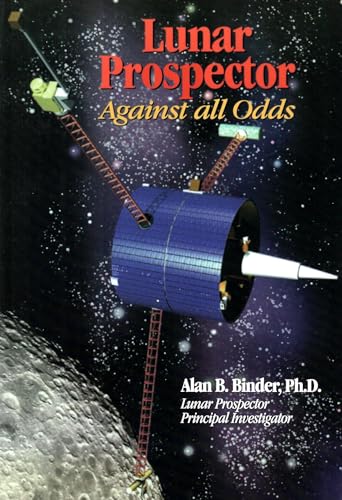
“Lunar Prospector, Against all Odds” is the Principal Investigator’s, Dr. Alan Binder’s account of the triumphs, defeats, politics and ultimate success of his Lunar Prospector spacecraft mission that orbited the Moon from 1998 to 1999 accumulating data about the Moon’s surface composition. A most noteworthy finding was the first evidence of water or water ice around the Moon’s polar regions. “Lunar Prospector, Against all Odds” is a report to the American taxpayer. Binder rightfully believes that since he worked for the taxpayers, they deserve an account of his mission. Not only does he provide the details for designing, building, launching, and monitoring his spacecraft orbiting the Moon, but readers are introduced to the interactions he had with NASA and aerospace industries. And, this is not complimentary because their behavior was not above board—something the American public needs to know. WHO IS DR. ALAN BINDER? He was trained as a planetary scientist but became very knowledgeable with spacecraft missions and as a spacecraft system’s engineer. As a doctoral student, he spent many nights at the McDonald observatory in Texas conducting research with his mentor, Gerald Kuiper (a leading planetary scientist of his time and who the Kuiper Belt was named after). Binder was one of a few Principal Investigators responsible for obtaining the first images of the surface of Mars from the Viking Lander in 1976. And, for over 10 years he was a professor in the German university system helping Germany develop their own lunar programs. The Lunar Prospector mission was the first mission in the early 1990’s to be selected for the Faster, Better, Cheaper program to cut costs without sacrificing performance. Proposals were open to the general scientific community with the understanding that winners would have direct control and management of their mission. However, as you will read in Lunar Prospector, the contractual agreement was not honored as Binder repeatedly struggled with NASA and aerospace industries to successfully and timely complete his mission. An important note, the Lunar Prospector mission came in at budget of $63 million, an on-budget accomplishment that has never been achieved with any NASA mission. It is estimated that if Lunar Prospector had been a NASA mission, the cost would have been closer to 10x Binder’s budget. WHO IS THIS BOOK FOR? Lunar Prospector, Against all Odds is a diary account by Alan Binder of all his activities, from conception to mission completion. He verbally recorded the transpired events on a very regular basis. Although there are technical discussions (not highly technical), the book can easily be read and understood by anyone. If your interests are the steps necessary for a successful spacecraft mission, then this book is for you. If your interest is in the personal interactions that can occur with NASA and the aerospace industry, then this book is for you. And, if your interest is space exploration and what it takes to design, build and test a spacecraft for a mission, then this book is for you. Finally, if you have an interest looking inside a failed organization, a failed federal governmental agency, then this is the book for you (and learn some science along the way). This is a long book, over 1000 pages, but it is the complete story. The length might seem daunting, but the interest is kept. Find out the very petty reason NASA locked Binder out of a building. Discover the mediocrity of NASA and aerospace engineers, some barely competent. And, one NASA administrator that was a particular hindrance eventually was fired, but only to be replaced by another of similar nature. And, there are so many more “stories” that will have you shaking your head. One goal of Dr. Binder’s in his execution of the mission was to show commercial viability. His ultimate goal was to stir the commercial section into action because commercial exploration of space and the Moon is feasible. He was a little ahead of his time, but his dream has started to come to fruition with SpaceX and others aiming for the stars.
About the Author
Dr. Alan Binder was trained as a planetary scientist but became very knowledgeable with spacecraft missions and as a spacecraft system’s engineer. As a doctoral student, he spent many nights at the McDonald observatory in Texas conducting research with his mentor, Gerald Kuiper (a leading planetary scientist of his time and who the Kuiper Belt was named after). Binder was one of a few Principal Investigators responsible for obtaining the first images of the surface of Mars from the Viking Lander in 1976. And, for over 10 years he was a professor in the German university system helping Germany develop their own lunar programs.
"About this title" may belong to another edition of this title.