Synopsis
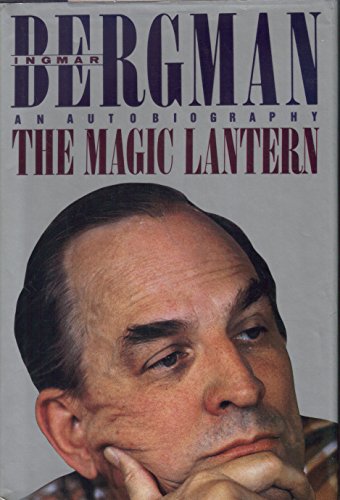
The noted director spares nothing in an honest look at his life and work that also features his reminiscences about those with whom he has worked, including Chaplin, Garbo, and Olivier
Reviews
Bergman's magic lantern (representing both memory and a toy cinematograph he obtained as a child) swings backward and forward between his early life in Lutheran parsonages and his experiences as an internationally renowned director of films, plays and operas. Ignoring strict chronology, it explores his relations with his parents and older brother, his introduction to the theater, his successes and failures, and his decision (after Fanny and Alexander ) to stop making films. Bergman, having always suffered from a nervous stomach and chronic insomnia, also candidly acknowledges his weaknesses and fears, frightening dreams and bouts of temper, his infatuation with Hitler and Nazism during the 1930s and his obsession with sex, as well as the special, sensual happiness in being a film director. A reader's disappointment over the paltry detail and characterization of Bergman's wives, children and loversand of his filmsis somewhat dissipated by the inclusion of numerous anecdotes about Chaplin, Garbo, Karajan, Olivier and especially Ingrid Bergman, who continued to work on Autumn Sonata while she was dying, and by occasional judgments about fellow practitioners (for example, that Soviet film director Tarkovsky is "the greatest of them all"). Photos not seen by PW. 40,000 first printing; $35,000 ad/promo; first serial to American Film.
Copyright 1988 Reed Business Information, Inc.
As a filmmaker, Bergman stands alone among postwar artists in his relentless dissection of the human soul's dark side. The Seventh Seal , Persona , and Shame are but a few of his long string of masterworks. This autobiography, although naturally of great interest, proffers a mixed blessing. The volume's brevity is disappointing, as is, at least for film fans, the author's extensive descriptions of his theater work. What Bergman does relate, particularly his tangled relationships with his parents, is not only illuminating but quite moving. No "tell-all" book this one, but revealing in ways that much longer and allegedly "franker" books are not.Thomas Wiener, formerly of "American Film," Washington, D.C.
Copyright 1988 Reed Business Information, Inc.
"About this title" may belong to another edition of this title.