Synopsis
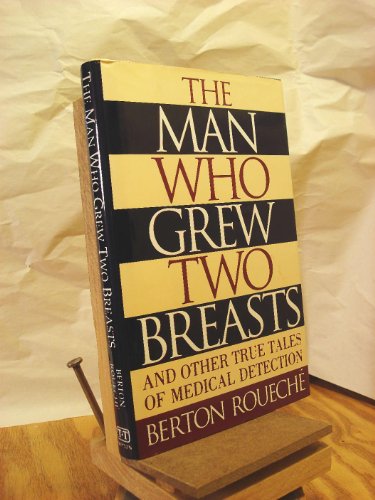
The author of The New Yorker magazine's "Annals of Medicine" column offers seven new, true accounts--along with one classic piece--of strange illnesses and the medical detectives who found their causes. 15,000 first printing.
Reviews
Devotees of the late Roueche's Annals of Medicine column in the New Yorker will be delighted to have this collection of seven original pieces and one reprint, even though the articles are neither uniformly engrossing nor as wondrous as the medical curiosities they explore. Some of the pieces dating from the '70s-one about the diagnosis of a 24-year-old woman's muscle problems as myasthenia gravis, for example-lack Roueche's signature tension that builds between the manifestation of a puzzling medical condition and its identification, which is perhaps why they remained unpublished during his lifetime. The more recent articles tend to be cautionary, such as one that tells of a 20-year-old Denver woman, a Jehovah's Witness who refused a blood transfusion and died from aplastic anemia caused by an oral tanning agent. And physical fitness adherents will be given pause by the 30-year-old New Yorker who was hospitalized with crippling pains in her right thigh brought on by an exercise machine, a condition her doctor dubbed "thigh thinners thecitis." The resolution of the title piece, about gynecomastia, an estrogen condition that develops men's breasts, will have older readers grinning.
Copyright 1995 Reed Business Information, Inc.
When Roueche{‚}died last year, seven installments of his 50-year-old New Yorker feature, "Annals of Medicine," had not been put between book covers. Now they are. As usual with a Roueche{‚}medical piece, each concerns a patient with a mysterious complaint and a doctor who, through medical ratiocination, correctly identifies it and empirically brings it to resolution. Formally, then, each is a detective story, so much in the manner of a Sherlock Holmes case that we recall perforce that the Holmes tales were recorded by two physicians--the fictional Dr. Watson and the real Dr. Doyle. Though no doctor, Roueche{‚}shares Watson-Doyle's crystalline clarity and minimal fuss, as in these tales he presents the investigation of such conundrums as, besides the titular anomaly, a roomful of suddenly sick poker players and a little boy who's ill every week but always the picture of health when the doctor sees him. Ray Olson
"About this title" may belong to another edition of this title.