Synopsis
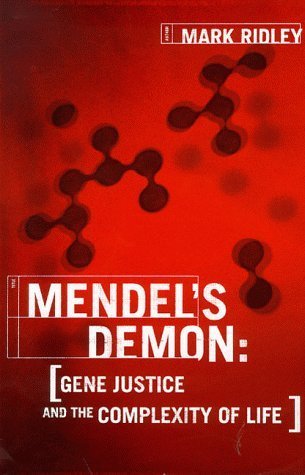
Why isn't life all simple - simple replicating molecules or simple single cells? Why are there multimillion-celled, long-lived monsters like us, built from tens of thousands of cooperating genes?
The existence of complex life is one of the great mysteries of evolution, for complexity is neither inevitable nor necessary. As Mark Ridley shows in this important and thought-provoking book, two major biological hurdles had to be overcome to allow living complexity to evolve. Complex life is constructed from more genes than simple life. But as gene numbers increase, so too do the number of copying errors - it is easier to make a mistake copying the Bible than copying an advertising slogan. Similarly, natural selection encourages gene selfishness, and genes could easily evolve to subvert complex life forms. In retracing the history of life on our planet - from the initial wobbly replicating molecules, through microbes, worms and flies and ultimately to humans - Ridley reveals how life has evolved as a series of steps to deal with error and coerce genes to cooperate within each body. It is a process he likens to the guiding hand of a benign demon enforcing Mendel's fundamental laws of inheritance.
About the Author
Mark Ridley is in the Department of Zoology at the University of Oxford. He was formerly assistant professor of anthropology and biology at Emory University, Georgia, USA. He has also been a research fellow at St Catherine's College, Cambridge, and at Linacre, Oriel and New Colleges, Oxford. He is the author of the acclaimed student textbook Evolution and is a regular contributor to The New York Times, The Sunday Times, Nature, New Scientist and The TLS, among other publications. Mendel's Demon is his long-awaited trade debut.
"About this title" may belong to another edition of this title.