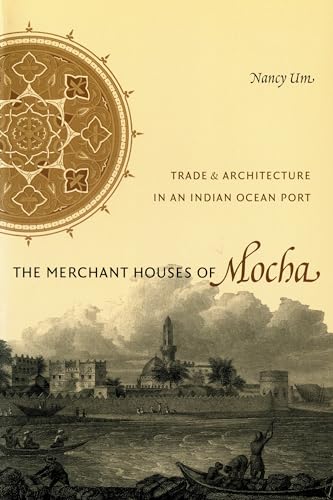
The Merchant Houses of Mocha (Paperback)
Nancy Um
Sold by AussieBookSeller, Truganina, VIC, Australia
AbeBooks Seller since June 22, 2007
New - Soft cover
Condition: New
Ships from Australia to U.S.A.
Quantity: 1 available
Add to basketSold by AussieBookSeller, Truganina, VIC, Australia
AbeBooks Seller since June 22, 2007
Condition: New
Quantity: 1 available
Add to basketPaperback. Gaining prominence as a seaport under the Ottomans in the mid-1500s, the city of Mocha on the Red Sea coast of Yemen pulsed with maritime commerce. Its very name became synonymous with Yemen's most important revenue-producing crop -- coffee. After the imams of the Qasimi dynasty ousted the Ottomans in 1635, Mocha's trade turned eastward toward the Indian Ocean and coastal India. Merchants and shipowners from Asian, African, and European shores flocked to the city to trade in Arabian coffee and aromatics, Indian textiles, Asian spices, and silver from the New World.Nancy Um tells how and why Mocha's urban shape and architecture took the forms they did. Mocha was a hub in a great trade network encompassing overseas cities, agricultural hinterlands, and inland market centers. All these connected places, together with the functional demands of commerce in the city, the social stratification of its residents, and the imam's desire for wealth, contributed to Mocha's architectural and urban form.Eventually, in the mid-1800s, the Ottomans regained control over Yemen and abandoned Mocha as their coastal base. Its trade and its population diminished and its magnificent buildings began to crumble, until few traces are left of them today. This book helps bring Mocha to life once again. Gaining prominence as a seaport under the Ottomans in the mid-1500s, the city of Mocha on the Red Sea coast of Yemen pulsed with maritime commerce. Shipping may be from our Sydney, NSW warehouse or from our UK or US warehouse, depending on stock availability.
Seller Inventory # 9780295989112
Gaining prominence as a seaport under the Ottomans in the mid-1500s, the city of Mocha on the Red Sea coast of Yemen pulsed with maritime commerce. Its very name became synonymous with Yemen's most important revenue-producing crop ― coffee. After the imams of the Qasimi dynasty ousted the Ottomans in 1635, Mocha's trade turned eastward toward the Indian Ocean and coastal India. Merchants and shipowners from Asian, African, and European shores flocked to the city to trade in Arabian coffee and aromatics, Indian textiles, Asian spices, and silver from the New World.
Nancy Um tells how and why Mocha's urban shape and architecture took the forms they did. Mocha was a hub in a great trade network encompassing overseas cities, agricultural hinterlands, and inland market centers. All these connected places, together with the functional demands of commerce in the city, the social stratification of its residents, and the imam's desire for wealth, contributed to Mocha's architectural and urban form.
Eventually, in the mid-1800s, the Ottomans regained control over Yemen and abandoned Mocha as their coastal base. Its trade and its population diminished and its magnificent buildings began to crumble, until few traces are left of them today. This book helps bring Mocha to life once again.
Nancy Um is associate professor of art history at Binghamton University in New York.
"About this title" may belong to another edition of this title.
We guarantee the condition of every book as it's described on the Abebooks web sites. If you're dissatisfied with your purchase (Incorrect Book/Not as Described/Damaged) or if the order hasn't arrived, you're eligible for a refund within 30 days of the estimated delivery date. If you've changed your mind about a book that you've ordered, please use the Ask bookseller a question link to contact us and we'll respond within 2 business days.
Please note that titles are dispatched from our UK and NZ warehouse. Delivery times specified in shipping terms. Orders ship within 2 business days. Delivery to your door then takes 8-15 days.
| Order quantity | 25 to 45 business days | 8 to 14 business days |
|---|---|---|
| First item | US$ 37.00 | US$ 44.00 |
Delivery times are set by sellers and vary by carrier and location. Orders passing through Customs may face delays and buyers are responsible for any associated duties or fees. Sellers may contact you regarding additional charges to cover any increased costs to ship your items.