Synopsis
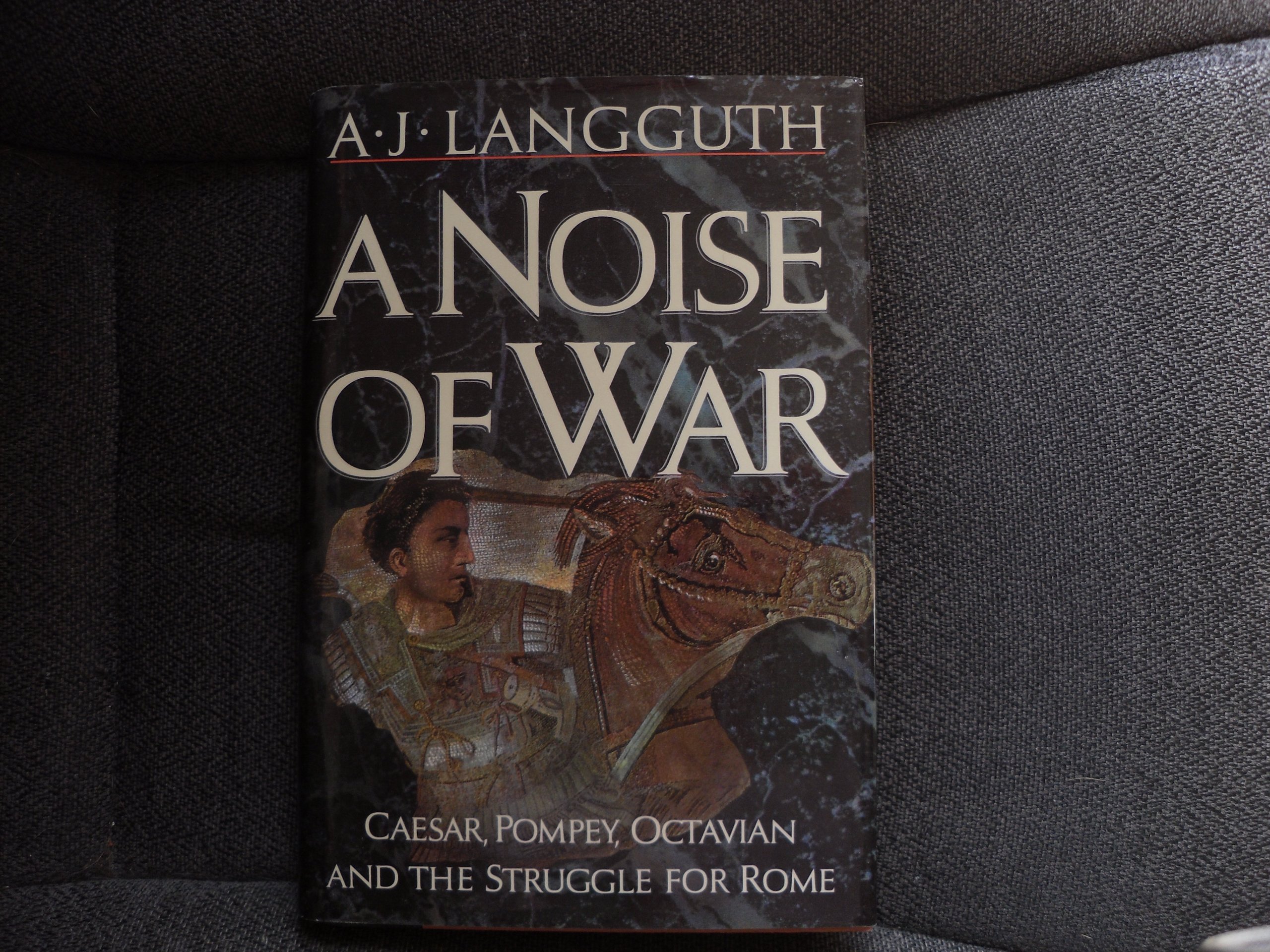
A historically accurate recreation of ancient Rome captures the politics and personalities of such figures as the aristocratic Caesar, sharp-tongued Cicero, Octavian, Cleopatra, and others whose struggles led to war, murder, and the Augustan Age. 35,000 first printing.
Reviews
Novelist and biographer Langguth (Patriots, 1988; Saki, 1981, etc.), in a narrative that reads as limpidly as fiction, vividly brings alive the death of the Roman Republic and the birth of the Augustan age. Although Julius Caesar (100 B.C.--44 B.C.) stands astride Langguth's narrative like a colossus, the author traces Rome's crisis back to the class tensions between the plebians and patricians who built the Roman empire. Senate factions killed the tribunes Tiberius and Gaius Gracchus for attempting to distribute lands received from conquests to the soldiers who fought for it, rather than to Senate patricians. After the deaths of the Gracchi, Marius, a bluff soldier who married Caesar's aunt Julia, took up the plebian cause and, in an unprecedented six terms as consul, liberalized the requirements for property ownership and Roman citizenship. Sulla, a patrician commander, together with his young prot‚g‚ Pompey, took Rome back by storm and established a brutal dictatorship in favor of Senate patricians. Although a patrician, Caesar identified with the plebian cause, defied Sulla and Pompey, and spent years in exile in consequence. After Sulla's death, Caesar and Pompey vied for military distinction. Langguth describes Caesar's victories in Gaul, his triumphant return, his civil war with Pompey (which resulted in Pompey's death), the conspiracy against Caesar led by Brutus and Cassius, and Caesar's assassination. After Caesar's death, Mark Antony, Lepidus, and Octavian, Caesar's adopted son, defeated and suppressed the conspirators, establishing an authoritarian government and ending the pretense of republican government in Rome. The triumvirate ruled Rome for a while with growing strain; after Antony married the Egyptian queen Cleopatra, war broke out between Octavian and Antony, culminating in Octavian's naval victory over Antony at Actium. Establishing control over the entire empire, Octavian became the Emperor Augustus, finally putting an end to the Roman Republic and the powers of the patrician Senate. A vibrant, readable account of one of Roman history's watershed periods. (Maps and photographs--not seen) -- Copyright ©1994, Kirkus Associates, LP. All rights reserved.
Langguth's narrative of the fall of the Roman republic begins in 81 B.C. with the confrontation of Julius Caesar and the dictator Sulla and the emergence of Marcus Tullius Cicero. Langguth then proceeds, through a series of progressively graver crises and progressively closer approaches to one-man rule, to the emergence of Caesar as supreme power. The intrigues and wars that followed constitute hardly more than an epilogue, for the republic was dead. Caesar and Cicero are the focal figures in Langguth's version of that story, but a host of other memorable actors are vividly portrayed. Langguth's concern throughout is readability, and this he certainly achieves. Fans of Colleen McCullough's massive fictional coverage of the same events will find Langguth's work a valuable companion to hers. Roland Green
Sweeping from Marius and Sulla to the death of Cicero, Langguth (Patriots, S. & S., 1989) portrays the major political figures of the late Roman Republic. Unfortunately, he vacillates between attempts at popular biography and critical history, his style shifting abruptly between novelistic and annalistic as he strings factual comments together like beads. Errors of fact, chronology, and interpretation abound. For example, Caesar's age is inconsistently chronicled, and the definition of patrician is outdated and inaccurate. Popularization should at least be distinguished by a clear message or lesson, but here there is little to justify the dubious attempts at oversimplification. Apparently intended for interested lay readers, the book cannot be recommended.
James S. Ruebel, Iowa State Univ., Ames
Copyright 1994 Reed Business Information, Inc.
"About this title" may belong to another edition of this title.