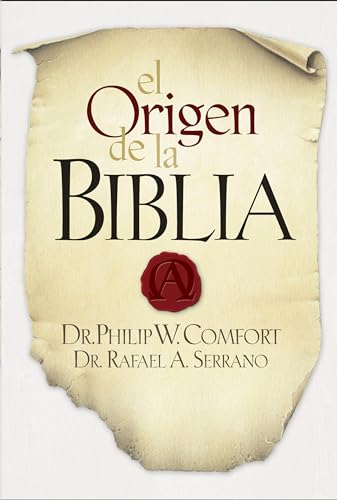
Se han escrito muchos libros sobre la Biblia, pero muy pocos explican su origen. Este libro proporciona una perspectiva fascinante sobre cómo se inspiró la Biblia, cómo se canonizó, se leyó como literatura sagrada, se copió en antiguos manuscritos hebreos y griegos, y finalmente se tradujo a los idiomas utilizados en el mundo. Ningún trabajo de un solo volumen puede igualar su abundante información sobre el desarrollo histórico de la Biblia.
Many books have been written about the Bible, but few explain its origins. This volume provides a fascinating overview of how the Bible was first inspired, canonized, read as sacred literature, copied in ancient Hebrew and Greek manuscripts, and eventually translated into the languages of the world. No one-volume work can match the wealth of information about the historical development of the Bible.
Philip W. Comfort, Ph.D., has studied English Literature, Greek, and New Testament at the Ohio State University and the University of South Africa. He has taught these classes at a number of colleges, including Wheaton College, Trinity Episcopal Seminary, Columbia International University, and Coastal Carolina University. He has contributed a number of books to the Tyndale collection, both as author and editor: The New Greek-English Interlinear New Testament, The Origin of the Bible, The Tyndale Bible Dictionary, Essential Guide to Bible Versions, The Text of the Earliest New Testament Greek Manuscripts (with D. Barrett), Who's Who in Christian History.
Philip lives in Pawleys Island, South Carolina, with his wife Georgia. His three children and grandchildren live nearby.