Synopsis
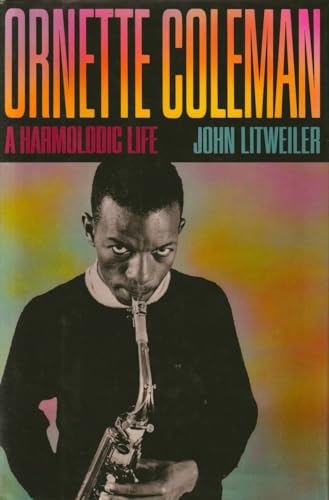
The first full-length biography of the father of free jazz describes Coleman's beginnings as a musician, the development of his radical musical ideas, and his influence on modern jazz
Reviews
Life of the innovative, ``free jazz'' composer-musician that attempts to place him among the gods with Louis Armstrong and Charlie Parker. Litweiler, a former Downbeat editor, pursued free jazz in The Freedom Principle (1984). When alto-saxist Ornette Coleman (b. 1930) hit N.Y.C. in 1959 on a wave of critical praise and walked straight into a top gig at the Five Spot, older players were jealous, and few would accept his odd, seemingly wrong and unmusical way of playing. This was nothing new to Coleman, who had broken into the music business around Fort Worth, playing four-square white music for dances and be-bop for black clubs, and had been beaten in alleys for the way he soloed. But he heard within himself a wild goose honking to be free of the chords and key signatures that shackled other soloists. This liberation of jazz melody from traditional harmonic and rhythmic patterns led to free-form and post-bop jazz, with Coleman as its standard bearer. But despite his many, many recordings--few of which sell well--and great respect abroad, the musician's ``harmolodic concepts'' have not caught on widely in the States. When finally signed by a major label, Columbia, which recorded his Skies of America symphony, Coleman, according to Litweiler, wasn't given the proper backing in the studio and after. His latest work has done better and includes his brilliant soundtrack for the film Naked Lunch, and the infectious pop-music spirit of his recent Virgin Beauty album, with Jerry Garcia. A bio for initiates. Litweiler focuses strongly on the music, though if one hasn't heard it, no words can describe it--and newcomers will find it tough to follow the overload of ever- shifting personnel changes. (Eight page of b&w photographs--not seen.) -- Copyright ©1993, Kirkus Associates, LP. All rights reserved.
Litweiler, noted jazz critic and a former editor of Downbeat , provides the first full-length biography of jazz innovator Ornette Coleman (1930-). Using material from interviews with Coleman, his sister, and his musical associates, Litweiler describes Coleman's formative years in Texas, his struggle for acceptance in Los Angeles, the 1959 breakthrough at the Five Spot in New York, and his role as one of the leading exponents of free jazz during the experimental Sixties. The author also documents Coleman's violin improvisation, his symphonic works, and his fusion of free jazz with rock rhythms and electric guitars during the last two decades. Though never explaining the connection between Coleman's music and the social context in which it was created, Litweiler has written an extremely well-researched, interesting account of a jazz great that should appeal to general readers and jazz fans alike.
- David Szatmary, Univ. of Washington, Seattle
Copyright 1993 Reed Business Information, Inc.
"About this title" may belong to another edition of this title.