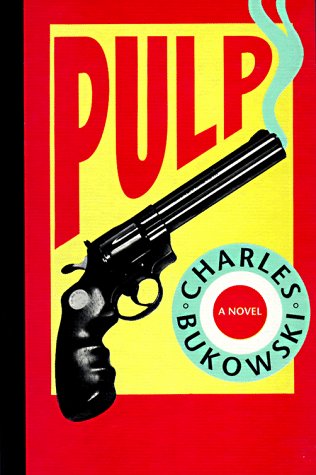
Synopsis
Nick Belane, a private detective, becomes involved in an unusual case when a mysterious client, who calls herself Lady Death, asks him to find the real Celine
Reviews
"My eyes were blue and my shoes were old and nobody loved me. But I had things to do. I was Nicky Belane, private detective." You should know a few things about Mr. Belane: he's the hero of a novel "dedicated to bad writing" by the late cult favorite Charles Bukowski; his client is a femme fatale called Lady Death; and his assignment is to determine if the Louis-Ferdinand Celine-look-alike who's hanging out at Red Koldowsky's bookstore in Hollywood is really the French writer who supposedly died in 1961 or if he's just another weirdo. It's hard to tell for sure if Bukowski intends to celebrate the pulps or parody them--probably a little of both--but the result, like so much genre burlesque, is both hysterically funny and ultimately tiresome. Parodies are best handled in 20, not 200, pages. Still, nobody does down-and-out better than Bukowski: "I hated to look in the mirror but I did. And I saw depression and defeat. . . . My flesh looked like it wasn't trying. It looked like it hated being part of me." Finally, Bukowski can't quite decide if he wants to be Woody Allen writing a fiendishly clever parody of pulp writers, or if he just wants to be himself, the unreconstructed poet of the gutter whose work usually finds its emotional center somewhere between tears and laughter. Mainstream mystery readers won't have a clue what's going on here, but Bukowski's fans, probably a little bent themselves, will know instinctively when to laugh with Woody and cry with Charlie. Bill Ott
This is a darkly humorous takeoff of private eye novels, replete with the recently deceased Bukowski's usual scatalogical unpleasantries. Nick Belane, a hard-drinking, foul-mouthed Los Angeles detective who charges $6 per hour, is swatting flies in his office when in walks a "glorious dizziness of flesh" who introduces herself as Lady Death. She wants Belane to verify that a man she spotted in a bookstore is the long-dead writer Celine. The "real Celine," she says, "not just some half-assed wannabe. There are too many of those." He accepts the job, which, of course, takes him to every gin mill in the city. He's also hired to locate something called the Red Sparrow, to tail a cheating wife, and to investigate a voluptuous space alien named Jeannie Nitro who's been harassing a wimpy mortician and occupying his customers. All four cases, of course, dovetail into an existential nightmare. There are some truly funny moments, but many will find Bukowski's raw, ugly side repulsive and his negativity unbearable. Recommended for large literature collections.
Ron Antonucci, Hudson Lib. & Historical Society, Ohio
Copyright 1994 Reed Business Information, Inc.
"About this title" may belong to another edition of this title.