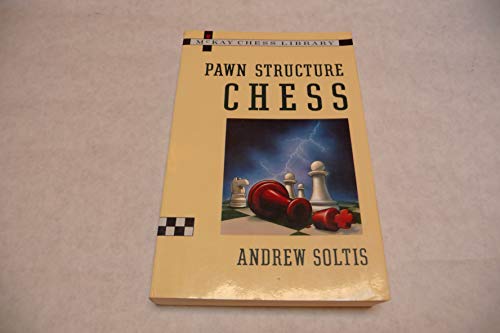
Pawn Structure Chess
196 ratings by Goodreads
Language: English
Published by Random House Puzzles & Games, 1995
Series: Book 12 of 38 - Batsford Chess
- Softcover
- New

Seller: SHIMEDIA, Brooklyn, NY, U.S.A.SHIMEDIA
4-star seller
AbeBooks seller since June 30, 2024
Softcover
Condition: New
US$ 199.99
Free Shipping
Ships within U.S.A.
Quantity: 1 available
Add to basketFree 30-day returns
Item description from seller
Satisfaction Guaranteed or your money back.
Seller Inventory # 0812925297
- Title
- Pawn Structure Chess
- Author
- Soltis, Andrew
- Publisher
- Random House Puzzles & Games
- Publication year
- 1995
- Condition
- New
- Binding
- Soft cover
- Language
- English
- ISBN 10
- 0812925297
- ISBN 13
- 9780812925296
- Edition
- 5th or later Edition
- Series
- Book 12 of 38: Batsford Chess
Some 250 years ago, the great Philidor wrote, "The pawns are the soul of chess." Although that statement is perhaps the most common cliche in the literature of the game, it is too often misunderstood.
Pawns are usually considered weak because of their limited range of movement. But the pawns' restricted mobility is precisely what makes them so important strategically: they form a semi-permanent structure -- often called a "pawn skeleton" -- that establishes the territorial lines of the coming battle and thus the nature of the battle itself. Understanding how pawns affect strategy is the subject of this important book. In it you will learn:
-- how to handle the characteristic pawn structure of each opening "family" and each major variation
-- how to recognize the strengths and weaknesses of pawn chains
-- when to exchange pawns in the center -- and when not to
-- how to cramp your opponent's position and what to do if your opponent cramps yours
-- how to create and exploit pawn "holes"...and much, much more, all copiously illustrated by complete games from actual play.
Pawns are usually considered weak because of their limited range of movement. But the pawns' restricted mobility is precisely what makes them so important strategically: they form a semi-permanent structure -- often called a "pawn skeleton" -- that establishes the territorial lines of the coming battle and thus the nature of the battle itself. Understanding how pawns affect strategy is the subject of this important book. In it you will learn:
-- how to handle the characteristic pawn structure of each opening "family" and each major variation
-- how to recognize the strengths and weaknesses of pawn chains
-- when to exchange pawns in the center -- and when not to
-- how to cramp your opponent's position and what to do if your opponent cramps yours
-- how to create and exploit pawn "holes"...and much, much more, all copiously illustrated by complete games from actual play.
"Synopsis" may belong to another edition of this title.
About the Author
Andrew Soltis is a grandmaster and a chess columnist for New York Post and Chess Life. In 1988, he was named chess journalist of the year by the Chess Journalists of America.
"About the title" may belong to another edition of this title.
Shipping rates within U.S.A.
| Item | 5 to 14 business days | 5 to 14 business days |
|---|---|---|
| First item | US$ 0.00 | US$ 14.00 |
Payment methods
Specialty
Science Fiction, Fantasy, etcSeller's business information
SHIMEDIA
NY, U.S.A.