Synopsis
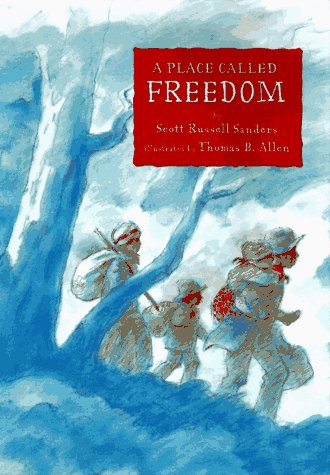
After being set free from slavery in 1832, young James Starman and his family journey from Tennessee to Indiana to start a new life
Reviews
PreSchool-Grade 2. Sanders continues to explore the experience of blazing new trails and creating community in the wilderness. This time his subject is an African-American family freed from slavery in 1832. After settling on untamed land along the Wabash River in Indiana, Papa returns frequently to the Tennessee plantation to guide other loved ones north. (It is unclear here whether he is guiding them as a conductor on the Underground Railroad or if they, too, have been freed.) Eventually, his bustling settlement warrants railroad tracks and a name (in actuality, Lyles Station, not "Freedom"). Told from the point of view of James, who is seven when the story begins, the narrative is brief but full of memorable images: "Papa called Lettie a short drink of water, because she was little and wriggly, and he called me a long gulp of air, because I was tall and full of talk." Allen's scenes, in muted earth tones and foggy blues, are close-up cameos, his pastel edges fading into the white page?an effective technique, suggesting a sequence of rising and falling memories. Some of the "recollections" give way to full, double-page, colored-pencil illustrations, making this a successful choice for groups despite the subtle hues. While much is available on the Underground Railroad for the picture-book audience, parallels to the "Little House" experience for African Americans are relatively scarce. It is that focus and the fine writing that make this book a breath of fresh air.?Wendy Lukehart, Dauphin County Library, Harrisburg, PA
Copyright 1997 Reed Business Information, Inc.
Setting his story during a time when antislavery sentiment was gaining momentum, Sanders (Here Comes the Mystery Man, 1993, etc.) tells the story of a Tennessee family of freed slaves who make their way north to begin a new life in Indiana. James Starman narrates this metaphor-studded tale of a lesser-known side of frontier settlement. His family follows the drinking gourd for more than a month of nights as the ``buttery bowl of the moon filled up then emptied again.'' A kind fisherman with a ``face as wrinkled as an old boot'' carries them across the Ohio to the free soil of Indiana. A Quaker gift of seed and a borrowed mule and plow enable them to work the land, eventually drawing family and friends from the South to form a new community they call Freedom. Inspired by the true story of Lyles Station, Indiana, Sanders sketches with broad strokes a fictionalized portrait of another kind of struggle for freedom. Allen's trademark pastels are rendered in predominant smoky blues that provide powerful keyhole glimpses of family and farm set starkly against white canvas, accentuating the austerity of the days of frontier homesteading. (Picture book. 6-9) -- Copyright ©1997, Kirkus Associates, LP. All rights reserved.
Ages 5-8. After being freed from slavery in 1832, seven-year-old James Starman, his sister, and their parents walk from Tennessee to Indiana, where they decide to settle. Papa plants crops and builds a cabin; Mama sews clothes and teaches her children to read and write; and, whenever he can, Papa returns to Tennessee, transporting other friends and relatives to safety in the North. As the years go by, an entire town of African Americans develops, which the residents name Freedom. Allen's illustrations, rendered in blue pastels with accents of brown, red, and gold, suit the upbeat mood of the story and portray many common frontier activities. Based on the true story of the founding of Lyle Station, Indiana, this will make an excellent addition to primary history units and may spur students to discover the histories of their own towns. Kay Weisman
"About this title" may belong to another edition of this title.