Synopsis
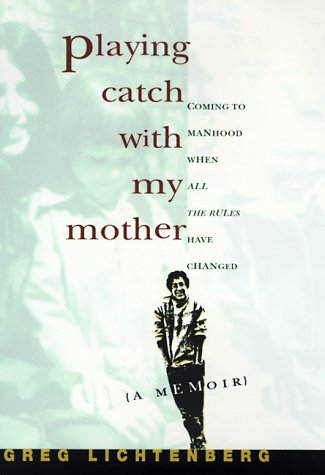
An honest and spirited memoir of growing up during the 1970s in a family stalwartly trying to live with non-traditional and non-sexist standards traces the difficulties and tribulations of reconciling these values with the painful truths of childhood and adolescence.
Reviews
Skillful writing rescues this memoir from being just another chronicle of adolescent angst, and a genuine attempt to grapple with what it meant to come of age during the feminist movement of the late 1960s and '70s grounds it in the life of the nation, not just that of the memoirist. Lichtenberg successfully evokes the time when he was growing up in Manhattan with two parents whose marriage was impacted by the women's movement. After a trial separation, his mother and father experimented with a new lifestyle in which both worked and shared the housework. However, Lichtenberg recalls that their fighting continued to escalate until they eventually divorced. As a teenager, he was disturbed both by his father's brutal outbursts and by his mother's feminist consciousness, which, he recalls, sometimes caused him to feel guilty about being male: "My father had a problem. His problem was being a boy." Lichtenberg's sexual awakening further confused him, and he perceptively describes how his personal turmoil caused him to deliberately sabotage a relationship with a girl who cared about him. The book ends on a note of earned optimism, with Lichtenberg and his fiancee enjoying the fruits of the often tumultuous revolution in gender roles endured by their parents' generation, "imagining choices beyond the cruelties of tradition and the shortsightedness of rebellion."
Copyright 1999 Reed Business Information, Inc.
A premature, somewhat shallow memoir of a bright young mans coming of age, from infancy through high school, during the 1970s and '80s. Except for a vague reference to ``our dreams of [gender] equality set to rock and roll, Lichtenberg, a graduate of Harvard and the Iowa Writers Workshop who has taught writing on the university level, never makes clear what the old rules of becoming a man were or why and how they have all . . . changed. In the first third or so of the book, he does have some moving passages concerning his fathers fits of rage, his mothers creative and feminist leanings, his parents briefly dropping out of careers to pursue a dream of the simple life in rural California, and their divorce. Yet far too much of this work is devoted to Lichtenberg's often successful, if unnoteworthy, quest for status and sexual experience at the elite New York City high school he attends. If the author is ideologically for gender equality, in his behavior, he is pretty much a traditional, prefeminist American male. And in this largely self-absorbed bookperhaps not coincidentally, the longest chapter is entitled ``My Don Juan Complex''the author manifests little critical self-reflection, while family members and friends usually are portrayed without real depth or nuance. In addition, there is a depressing dearth here of allusions to the wider worlds of culture and ideas, of politics, society, and religion. Lichtenbergs book thus serves as a caution to potential memoirists to ask themselves two questions: Has my life and times really been significant enough to try and capture in book form? And, if so, have I thought about it probingly enough, and can I faithfully and imaginatively capture its texture? In this case the answers to both questions unfortunately is no. -- Copyright ©1999, Kirkus Associates, LP. All rights reserved.
Narratives on gender identity from the perspective of straight white men are, well, rare. But Lichtenberg's debut, a memoir of childhood, is proof that the battles for equality fought in the 1970s have led to important new questions. Born in the middle of the chaotic sixties, young Greg grows up primarily in Greenwich Village with a hippie father and a feminist mother, a couple whose marriage doesn't survive the era's gender wars. His father, a frustrated music critic prone to violent outbursts and anger, eventually finds a new, younger wife. Across town, his mother attends women's groups and builds a career outside the home. Lichtenberg's narrative revisits the typical boyhood stops: neighborhood sports, adolescent friendships, dating, and sex. At different times, he finds himself straddling the gender fence, a "traitor" to both sides. Although he wants to embrace feminist ideas, he discovers he must reject some to feel like a man. Lichtenberg writes sharp, engaging prose, generous with insights, and in his hands even the most familiar subject matter holds the reader rapt. James Klise
"About this title" may belong to another edition of this title.