
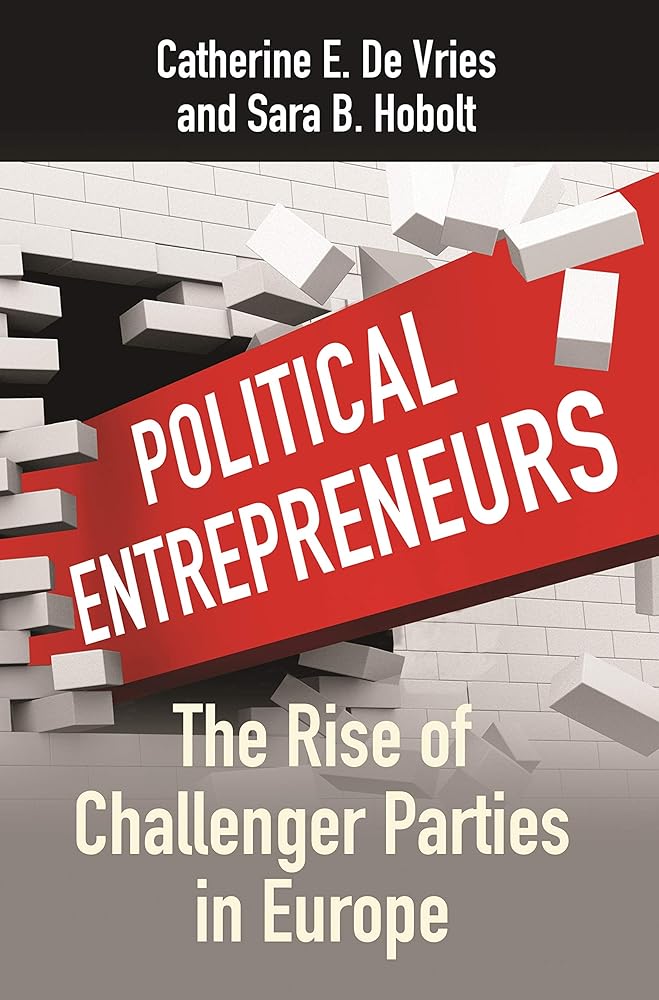

Political Entrepreneurs: The Rise of Challenger Parties in Europe
Catherine E. De Vries","Sara B. Hobolt
ISBN 10: 0691194750 ISBN 13: 9780691194752
Published by Princeton University Press, 2020
Used
Hardcover
From
Worldbridge Books, Reston, VA, U.S.A.
Seller rating 3 out of 5 stars

AbeBooks Seller since April 4, 2024
This specific item is no longer available.
About this Item
Description:
Condition: used - Very good. Slight tear to dust jacket on spine. Text clear, pages unmarked. _____________ How challenger parties, acting as political entrepreneurs, are changing European democracies. Challenger parties are on the rise in Europe, exemplified by the likes of Podemos in Spain, the National Rally in France, the Alternative for Germany, or the Brexit Party in Great Britain. Like disruptive entrepreneurs, these parties offer new policies and defy the dominance of established party brands. In the face of these challenges and a more volatile electorate, mainstream parties are losing their grip on power. In this book, Catherine De Vries and Sara Hobolt explore why some challenger parties are so successful and what mainstream parties can do to confront these political entrepreneurs. Drawing analogies with how firms compete, De Vries and Hobolt demonstrate that political change is as much about the ability of challenger parties to innovate as it is about the inability of dominant parties to respond. Challenger parties employ two types of innovation to break established party dominance: they mobilize new issues, such as immigration, the environment, and Euroscepticism, and they employ antiestablishment rhetoric to undermine mainstream party appeal. Unencumbered by government experience, challenger parties adapt more quickly to shifting voter tastes and harness voter disenchantment. Delving into strategies of dominance versus innovation, the authors explain why European party systems have remained stable for decades, but also why they are now increasingly under strain. As challenger parties continue to seek to disrupt the existing order, Political Entrepreneurs shows that their ascendency fundamentally alters government stability and democratic politics. 1048 6.5,"unit":"INCHES"},{"value":1.25,"unit":"INCHES"},{"value":9.75,"unit":"INCHES"}]. Seller Inventory # 41079573119012
Synopsis:
How challenger parties, acting as political entrepreneurs, are changing European democracies
Challenger parties are on the rise in Europe, exemplified by the likes of Podemos in Spain, the National Rally in France, the Alternative for Germany, or the Brexit Party in Great Britain. Like disruptive entrepreneurs, these parties offer new policies and defy the dominance of established party brands. In the face of these challenges and a more volatile electorate, mainstream parties are losing their grip on power. In this book, Catherine De Vries and Sara Hobolt explore why some challenger parties are so successful and what mainstream parties can do to confront these political entrepreneurs.
Drawing analogies with how firms compete, De Vries and Hobolt demonstrate that political change is as much about the ability of challenger parties to innovate as it is about the inability of dominant parties to respond. Challenger parties employ two types of innovation to break established party dominance: they mobilize new issues, such as immigration, the environment, and Euroscepticism, and they employ antiestablishment rhetoric to undermine mainstream party appeal. Unencumbered by government experience, challenger parties adapt more quickly to shifting voter tastes and harness voter disenchantment. Delving into strategies of dominance versus innovation, the authors explain why European party systems have remained stable for decades, but also why they are now increasingly under strain.
As challenger parties continue to seek to disrupt the existing order, Political Entrepreneurs shows that their ascendency fundamentally alters government stability and democratic politics.
About the Author: Catherine E. De Vries is professor of political science at Bocconi University in Milan. She is the author of Euroscepticism and the Future of European Integration. Twitter @CatherineDVries Sara B. Hobolt is professor and the Sutherland Chair in European Institutions at the London School of Economics. She is the author of Europe in Question, coauthor of Blaming Europe?, and coeditor of Democratic Politics in a European Union under Stress. Twitter @sarahobolt
"About this title" may belong to another edition of this title.
Bibliographic Details
Title: Political Entrepreneurs: The Rise of ...
Publisher: Princeton University Press
Publication Date: 2020
Binding: Hardcover
Condition: Very good
Dust Jacket Condition: Dust Jacket Included