Synopsis
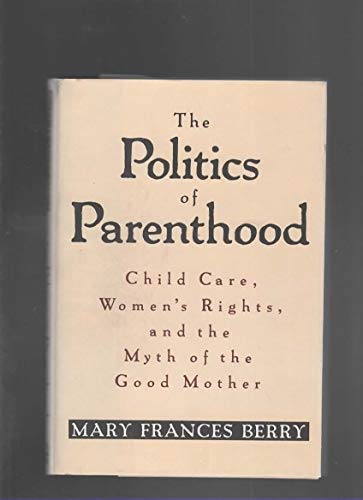
Calling for a redefinition of "good parenting," a former Carter administration official examines the history of American mothering and shapes a new parenting paradigm based on children's needs. Tour.
Reviews
Berry, a lawyer, a member of the U.S. Commission on Civil Rights and a University of Pennsylvania history professor, follows her Why ERA Failed with this absorbing book, a rallying cry for making child care the equal province of both parents. Using interesting historical detail from colonial times to the present, the author shows how gender politics have shaped the practice of American child care, and she lays out society's rationales for absolving men of responsibility for child care. Berry maintains that fathers played a more important role in their children's upbringing prior to the 20th century. She also offers the African American perspective. Included in the chronicle are slaves and slave mistresses, Jane Addams, Phyllis Schlafly, Thomas Jefferson, Reagan, Bush, the present Supreme Court and a litany of bills and laws that have failed to solve the problems. Berry makes a strong case that women must lobby to have men assume an equal share of child rearing if women are to pursue careers.
Copyright 1993 Reed Business Information, Inc.
A forceful overview of how what's perceived as good for the child changes as the culture and public-policy change--currently, Berry says, to the detriment of women. The author's fundamental thesis is that women's rights will never be seen as more important than women's responsibilities as long as mothers are thought of as the primary caretakers of their children. Berry (coauthor, Long Memory, 1981; American Social Thought and History/Univ. of Pennsylvania) builds her case slowly, beginning with the colonial era, when fathers were responsible for their children's upbringing. Revolution changed that--both the American Revolution and the Industrial Revolution propelled women into taking over the task of imbuing their children with virtue and knowledge. The angelic mother of the Victorian era evolved into post-WW II's demonic mother, as portrayed by Philip Wylie, and eventually into the Supermom of the 1990's. Throughout the 20th- century upheaval of wars, class struggles, and civil-rights and feminist movements, women remained--and still remain--in charge of the next generation. No amount of quality day care, nanny care, or family-leave policy will change that until, Berry says flatly, ``women decide that is what they want'' and demand that men assume their full share of what Ms. magazine early on dubbed the ``psychological responsibility'' of raising their children. Particularly deft is Berry's argument that the current view, put forth by Carol Gilligan and others, of women as ``different'' from men--more interested in relationships, for example--buys into the idea that women are therefore more suited to care for children. Also telling are frequent references to how the needs of poor women--usually black and Hispanic--collide with the feminist political agenda. An important and comprehensive reference for those involved in both gender battles and the fight for comprehensive child care. -- Copyright ©1993, Kirkus Associates, LP. All rights reserved.
In a timely and fascinating book, Berry, a lawyer and University of Pennsylvania history professor, reviews the social history of the American family in support of the thesis that the "mother care tradition" is purely a result of acculturation, that it is "neither traditional nor necessary," and that it reinforces male dominance. An acute sense of the painfulness of social change and the difficulty of building a political consensus are successfully conveyed through the history of day care and parental leave legislation. However, Berry's emphasis on acculturation becomes didactic and impersonal; it slights the complex genetic heritage that is the ultimate source of individuality as well as gender identity and that complicates the issue of defining and achieving workplace "equality." The gender-neutral Pregnancy Act did not, as the author erroneously states, entitle women to an "unpaid disability or maternal leave with guaranteed job reinstatement" precisely because it addressed motherhood in terms of political realities divorced from biological ones. For academic and larger public library social science collections.
- Carol Watwood, Western Kentucky Univ. Lib., Bowling Green
Copyright 1993 Reed Business Information, Inc.
"About this title" may belong to another edition of this title.