Synopsis
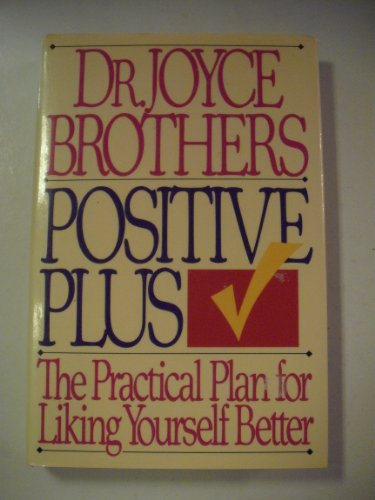
The renowned psychologist's tenth book encompasses her "Psychological Tool Kit," a collection of simple techniques for turning self-destructive patterns into positive behavior, as well as advice on stress-management techniques.
Reviews
TV psychologist and bestselling author Brothers ( What Every Woman Should Know About Men ) here outlines methods for building self-esteem based on behavioral principles. Drastic changes or psychotherapy are not necessary or realistic, she stresses. By using positive and negative reinforcement, pre-visualizing, list-making, "acting as if" poses and other behavioral techniques, an individual can make subtle personality shifts to eliminate or reduce such self-destructive tendencies as passivity, perfectionism, procrastination, overspending, boasting, lying and jealousy. By positively channeling, rather than eliminating, workaholism, anxiety and anger, we can make stress work for us instead of against. The book also offers advice on how to get through--and even benefit from--the life-changing crises of divorce, job loss and aging. Filled with personal anecdotes and case studies, this down-to-earth book should enable readers to set realistic goals for self-improvement and have fun while doing so. First Serial to Parade.
Copyright 1994 Reed Business Information, Inc.
Pop psychologist Brothers', (Widowed, 1990; The Successful Woman, 1988) easy-answer tactics for women suffering from low self- esteem are unlikely to help those who are in serious trouble. Brothers starts out by explaining that women change more easily than men, then drops the subject of changing men altogether and concentrates on making women into better helpmeets. The method relies heavily on what she calls a ``Psychological Tool Kit''--a facile string of lists of good qualities, bad qualities, and goals that women should write and revise regularly--as well as old-hat methods like positive reinforcement. Throughout, Brothers concentrates on molding women to meet society's expectations, while never suggesting that those expectations should be challenged. Her many ``successful'' examples include one woman whose aggressive temper earned her the animosity of the men who worked under her; she was taught to act more calmly. Another woman, depressed after losing her job, began to snap out of it after she saw how tangled her hair had become from weeks in bed, and she headed to the salon for a haircut and a facial. Brothers often includes herself in the material, and while her story of overcoming grief after her husband's death is touching and useful, her account of her use of positive reinforcement to convince him to make the morning coffee is roundabout and a little silly--she crows, ``I told him that if he ever left me for a younger woman, I planned to drop in on them every morning for coffee, because no one made coffee as good as his.'' Sexist advice more suited to old-fashioned women's magazines. (First serial to Parade) -- Copyright ©1994, Kirkus Associates, LP. All rights reserved.
The ever-popular Brothers ( What Every Woman Ought To Know About Marriage , LJ 8/84) addresses self-esteem in this guide for self-helpers.
Copyright 1993 Reed Business Information, Inc.
Brothers' new self-improvement guide runs the gamut from controlling anger to coping with widowhood and retirement. She first defines "reversion to the mean," a state or natural condition that "acts like a magnet, pulling you toward the golden mean, that middle ground between excess and deficit where health and happiness reign." Then she spills out the contents of a psychological tool kit that will help people "transform almost any undesirable trait into an asset." As these quoted passages indicate, Brothers' book consists of a stream of buzzwords. Still, her real-life stories bring her suggestions down to earth. Many readers will clamor for the latest tips on how to handle old age, unemployment, poor self-esteem, workaholism, and other common, troubling situations. Denise Perry Donavin
"About this title" may belong to another edition of this title.