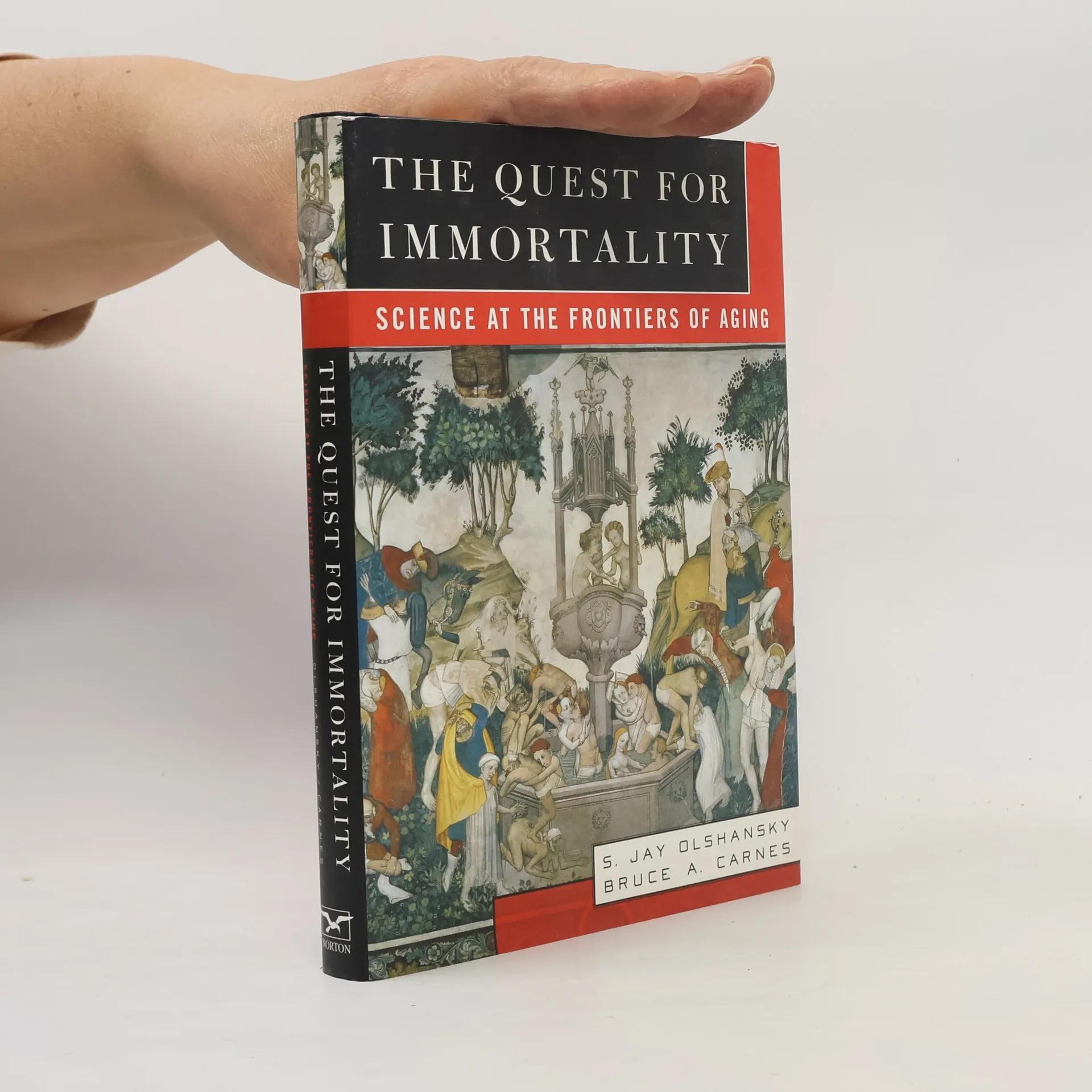
Blending scientific, philosophical, and religious thought, the author helps readers cut through the mythology surrounding the aging process, explaining the basic biology and psychology of old age and death.
In 1990, biodemographers Olshansky, Carnes, and Cassel published a review in Science entitled "In Search of Methuselah: Estimating the Upper Limits to Human Longevity" (250:634-640). In the article they argued that, despite the astounding increase in life expectancy during the 20th century (increasing, in the United States, from a mean age of 45 at the beginning of the century to 78 at its end), it was doubtful that we would witness an increase in longevity to ages older than 85 during the foreseeable future. This, they argued, reflected "entropy in the life table": it would be far more difficult to increase life expectancy by curing illnesses in elderly persons than it had been to nudge life expectancy upward by reducing infant mortality. Any increase above the age of 85, they insisted, would require biomedical breakthroughs in our ability to affect the basic processes of aging itself and not just in our ability to treat diseases. Their pessimism, while controversial, provided a much-needed shot of realism in a field in which some researchers were seriously predicting that life expectancy would soon rise above 100.
In The Quest for Immortality, Olshansky and Carnes present their work for the general public and discuss life expectancy, the causes of aging, and the efforts (both legitimate scientific research and bogus claims for alternative therapies) to prolong life and delay aging. The book is well written and is pleasant to read, with a folksy and unpretentious style. For instance, as case histories of how medical interventions have delayed untimely deaths and produced what the authors call "manufactured survival time," they turn to Carnes's own father's bypass surgery and the removal of Olshansky's own pilonidal cyst.
For readers interested in aging and longevity, this small book clearly explains the major concepts in the field. Olshansky and Carnes show how natural selection promotes health during the reproductive period but contributes little benefit over the age of 60. They point out that it is only in the past 100 years that most humans have begun to outlive their reproductive years; diseases of aging are a recent development. Our genetic heritage, they explain, has left us with bodies like cars that were designed to perform flawlessly in the Indy 500 but whose drivers insist on continuing many miles beyond the end of the race, until parts inevitably start to fail. Aging is not a disease that can be cured. The authors describe the free-radical theory of aging and the possibility that genetic manipulation and antioxidants may affect the aging process and, at the same time, decry the often outrageous claims currently made for antioxidants. They review ancient myths of longevity and discuss diets and dietary supplements aimed at averting aging. They point out that proponents of such treatments, in fact, have died at the expected age and of the usual causes.
Olshansky and Carnes also discuss possible scientific approaches, primarily genetic manipulation, that might affect human aging, and they lay out common-sense recommendations for a healthy life while revealing the illogic of claims made by proponents of antiaging treatments. Though targeted for the lay audience, this book will provide a useful introduction for physicians and prepare them to answer their patients' questions about longevity. The authors have an enviable ability to phrase technical issues and arguments in clear, nontechnical language.
Though extremely enjoyable to read, this book has one important flaw that will detract from its usefulness for physicians: a lack of references. The decision to forgo references, suggestions for further reading, and footnotes is unfortunate. The lack of references will largely restrict the audience for this book to the general public and prevent it from being used as a classroom aid for interested medical students and residents.
Howard Chertkow, M.D.
Copyright © 2001 Massachusetts Medical Society. All rights reserved. The New England Journal of Medicine is a registered trademark of the MMS.
As the baby boomers age, the number of books on the aging process seems to increase exponentially. Similarly, the range of elixirs, potions, herbs, specialty diets and hormones being marketed as ways to halt or reverse the aging process has been growing apace. Olshansky, a senior research scientist at the University of Chicago, and Carnes, an expert on aging, insert their voices into the mix, refuting many of the claims of purveyors of these products, reminding readers that "we should all be wary of those who distort legitimate science and use pseudoscience or no science in order to create and market false promises and exaggerated claims about health and longevity." They begin with a brief but far-reaching history of the human preoccupation with the Fountain of Youth, going all the way back to Babylonian and Greek myth and describing alchemical pursuits during the Renaissance. They then present an overview of current scientific study of the aging process, covering such topics as the evolutionary reasons for aging, cellular changes associated with the process and the physiological alterations inextricably linked to it. The authors address advances in medicine and public health that have led to dramatic increases in the human lifespan in developed countries over the past century, and that may yield genetic therapies intended to even further enhance longevity. Unfortunately, the authors seem to give secondary priority to the writing: there are distracting repetitions and awkward transitions between the singular and plural first person. But they argue persuasively that, taking whole populations into account, overall lifespan is unlikely to increase significantly, and that the most productive means for improving quality, and perhaps length, of life are mundane diet monitoring and consistent physical activity. (Jan.)
Copyright 2000 Reed Business Information, Inc.
The authors, University of Chicago scientists, research the biodemography of aging. Here they use that emerging science to help lay readers understand what is and isn't possible in extending life. They trace three types of prolongevity myths: antediluvian legends that people once lived very long lives, hyperborean myths that in particular places people live very long lives, and fountain legends of a substance that allows people to live very long lives. Such legends persist, they maintain, in today's promises of life expectancies of 120 years or more. Public health reforms more than doubled life expectancies in industrial nations in the twentieth century by reducing death in infancy and childhood. Although medical interventions can certainly extend life (producing what the authors call "manufactured time"), neither medicine nor lifestyle changes are likely to affect life expectancy in the twenty-first century as public health did in the twentieth. Genetic interventions
can have a more powerful impact, but many techniques raise serious ethical questions. Healthy life, rather than simply longer life, should be the goal.
Mary CarrollCopyright © American Library Association. All rights reserved