Synopsis
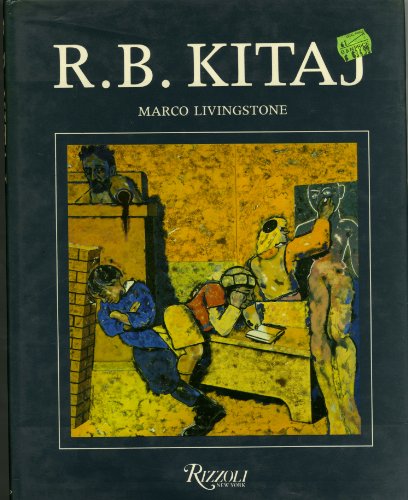
R.B. Kitaj (1932–2007) is one of the most intriguing 20th century artists. Born into a Russo-Jewish family near Cleveland, Ohio, 17-year old Kitaj spent 5 years at sea aboard a Norwegian freighter. He went on to study art in New York and Vienna. A Royal College of Art stipend made him move to London where he became a celebrated artist. Curating The Human Clay, a 1976 show of figurative contemporary British artists, he coined the term "School of London" for the artistic circle around Francis Bacon, Frank Auerbach, Lucian Freud, and Leon Kossoff. In 1991 he was elected a member of the Royal Academy, one of only three American painters to be thus honored in the history of the institution. A major 1994 retrospective at London’s Tate Gallery failed to produce Kitaj’s international breakthrough, but was unanimously panned by British critics instead. This, and the unexpected death of his wife Sandra, induced his increasingly paranoid perspective. Embittered he returned to the USA and settled in Los Angeles, where he finally took his own life in 2007. Kitaj left behind a manuscript unmatched among 20th-century artist autobiographies — Confessions of an Old Jewish Painter. Eloquently describing his vices and sufferings, it stands in the traditions of both St. Augustine and Thomas de Quincey. Now published for the first time, it is a sensation, from both a literary and art historical point of view.
Reviews
This first monograph on Kitaj is the result of a decade of personal contact and correspondence between the artist and authora cooperative endeavor in which the artist was actively involved in the design and content, writing prefaces to a number of works discussed. The changing aspects of the modern world are reflected in the artist's attempt to re-invent himself, frequently identifying with artists and writers whose works have caught his imagination. Kitaj seeks to incorporate all forms of experience, intellectual, emotional, sensual, into his work as points of access, but these are frequently obscured by the private, esoteric nature of his creativity. A valuable insight into the intimate circumstances of an artist's life and the complex, enigmatic qualities of his work, this is a stimulating addition to the literature of 20th-century art. Paula Frosch, Metropolitan Museum of Art Lib., New York
Copyright 1986 Reed Business Information, Inc.
"About this title" may belong to another edition of this title.