Synopsis
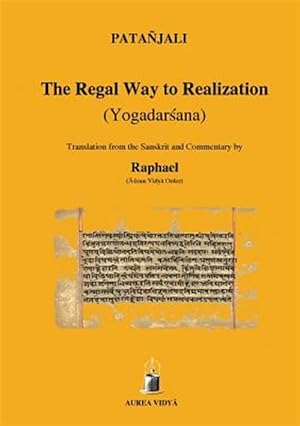
From ancient times the Rsis or great Sages, in composing their works, drew from a fount of Wisdom that embraces the knowledge of the spiritual and scientific laws that regulate the micro and macrocosm. After a profound research and consequent self-realization, the Rsis discovered that the first cause of human suffering rests on ignorance (avidya) of one's own real nature, which is Completeness, Synthesis and Unity. In this context takes its place the Yoga darsana, one of the six Points of View of the Indian philosophy based on the Vedas, and codified by PATAÑJALI in his work which was given the name of Yogadarsana or Yogasutra. Faithful to traditional Knowledge, in his sutras, PATAÑJALI posits the problem of kaivalya, liberation from the becoming of prakrti (universal substance). Patañjali describes, we may say, in a 'scientific' way, the means to realize a process of coordination, integration, mastery, transmutation and transcendence of our psychic and imprisoning energies so as to 'burn' all the obstacles that hinder the state of kaivalya or 'isolated Unity'. Thus this opus, which can be defined as alchemical, does not speak of 'inhibition' or psychological 'flights', but of solution and integration of the process-becoming (samsara). In his Translation and Commentary of the Yogasutra, RAPHAEL is faithful to the Upanisadic Tradition. So the work can be comprehended in its appropriate spiritual, philosophical and ethical dimensions. In particular, the Commentary is of great importance and efficacy because Raphael, while utilizing a conceptual methodology befitting the Western 'forma mentis', brings to light aspects and connections that are not readily apparent in the text.
About the Author
Raphael having attained a synthesis of Knowledge (with which eclecticism or syncretism are not to be confused) aims at 'presenting' the Universal Tradition in its many Eastern and Western expressions. He has spent a substantial number of years writing and publishing books on spiritual experience, and his works include commentaries on the Qabbalah, Hermeticism and Alchemy. He has also commented on and compared the Orphic Tradition with the works of Plato, Parmenides and Plotinus. Furthermore, Raphael is the author of several books on the pathway of non-duality (Advaita), which he has translated from the original Sanskrit, offering commentaries on a number of key Vedantic texts. After more than sixty years of teaching, both oral and written, Raphael has withdrawn into mahasamadhi.
"About this title" may belong to another edition of this title.