Synopsis
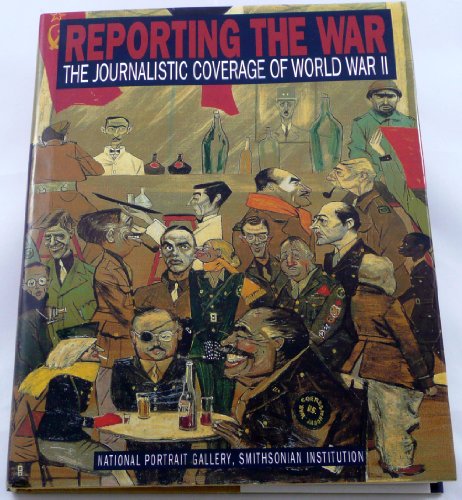
Reporting the War features the lives and work of journalists who brought news of the war from the European and Pacific theaters to the home front. More than one hundred captioned illustrations accompany Frederick Voss's account of the correspondents, photographers, and field artists who braved enemy fire, slept in foxholes, and were prisoners of war.
With a pantheon of talent including Ernie Pyle, Edward R. Murrow, Helen Kirkpatrick, Margaret Bourke-White, Carl Mydans, Bill Mauldin, and Ernest Hemingway, the Fourth Estate's reporting of World War II surpassed all previous war coverage. For the first time, new technologies enabled almost instantaneous transmission to a waiting audience back home. Radio listeners heard the voice of Edward R. Murrow, speaking from a London rooftop during a German air raid, and newspapers ran stories and pictures of battles in the Pacific and Europe, sometimes only hours after the reporters witnessed the scenes. And for the first time women covered the war, earning the respect of their male colleagues for insightful, accurate reporting.
This book also profiles the combat artists who visually portrayed the war. George Biddle's paintings of the war in Italy, Bill Mauldin's cartoons that enraged General George S. Patton, Tom Lea's paintings of the Battle of Peleliu - these and other depictions captured both the grisly and humorous sides of war.
Describing the censorship that often restricted the dispatches war correspondents sent from Axis countries, Reporting the War also discusses journalists' efforts to accommodate national security needs at home. Finally, Voss examines the African American press, whose campaign for "Double V" - victory over fascism abroad and racism at home - was viewed with suspicion by the white establishment.
Reviews
An outstanding and colorful account of the men and women who covered WW II for newspapers and radio. As we approach the 50th anniversary of D-day, Voss profiles the bravery and high ethical standards of these correspondents, photographers, and battlefield artists. Voss, a curator at the National Portrait Gallery, discusses such legendary figures as Edward R. Murrow, William Shirer, Ernie Pyle, and the cartoonist Bill Maudlin. But Voss is not content merely to recite the biographical details. He grapples with the very contentious issue of censorship when a great democracy goes to war, or as he puts it, ``the nation's security vs. the right to know.'' Two particularly noteworthy chapters deal with women journalists in combat and the African-American press. He chronicles the story of George Schuyler, editor of the black newspaper The Pittsburgh Courier. Schuyler trenchantly pointed out the irony of racism toward blacks in America while the country was fighting fascism abroad. The story of cartoonist Maudlin's run-in with General George Patton, who hardly appreciated Maudlin's satirical jabs at military life, is told with flair. Voss sees comics as having performed the function of editorial pages--rallying support for the war. He concludes his book with a moving discussion of John Hersey's Hiroshima, about the dropping of the atomic bomb. Voss also includes an appendix with Murrow's reporting from the Buchenwald concentration camp following its liberation, and a sample of Schuyler's searing commentary on racism. This book has dozens of photos and illustrations that bring the period to life. As the events of WW II fade from living memory, this book will hopefully preserve the work of that era's journalists for generations to come. -- Copyright ©1994, Kirkus Associates, LP. All rights reserved.
The core of this account of American journalistic coverage of World War II is some 100 illustrated capsule portraits of as many war correspondents. They are a weird, wonderful, for the most part gifted lot, including such household-word figures as Ernest Hemingway, Ernie Pyle, and Margaret Bourke-White along with ladies and gentlemen long dead and still longer forgotten. Voss adds to the biographical material both narrative about and analysis of innovations in news-transmission technology, the appearance of women near the front, and the role of the large but hitherto obscure corps of African American correspondents, who were not always in the good graces of the War Department. Equally suited for World War II and journalism collections. Roland Green
"About this title" may belong to another edition of this title.