Synopsis
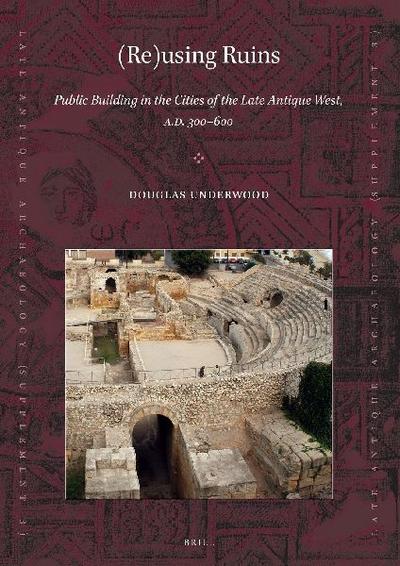
In (Re)using Ruins, Douglas Underwood presents a new account of the use and reuse of Roman urban public monuments in a crucial period of transition, A.D. 300-600. Commonly seen as a period of uniform decline for public building, especially in the western half of the Mediterranean, (Re)using Ruins shows a vibrant, yet variable, history for these structures.
Douglas Underwood establishes a broad catalogue of archaeological evidence (supplemented with epigraphic and literary testimony) for the construction, maintenance, abandonment and reuses of baths, aqueducts, theatres, amphitheatres and circuses in Italy, southern Gaul, Spain, and North Africa, demonstrating that the driving force behind the changes to public buildings was largely a combined shift in urban ideologies and euergetistic practices in Late Antique cities.
About the Author
Douglas Underwood, Ph.D. (2015), University of St Andrews, is an independent scholar, focusing on Roman and late antique urbanism. He has published articles and book chapters on aspects of that research including spolia, fortifications and public monuments.
"About this title" may belong to another edition of this title.