Synopsis
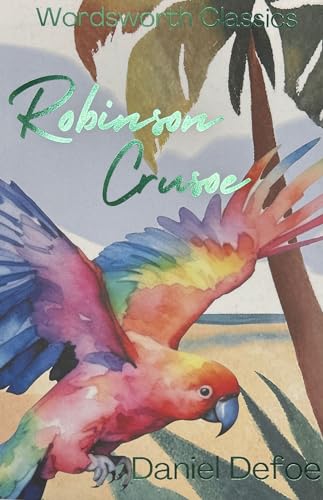
With an Introduction and Notes by Doreen Roberts, Rutherford College, University of Kent at Canterbury From its first publication in 1719, Robinson Crusoe has been printed in over 700 editions. It has inspired almost every conceivable kind of imitation and variation, and been the subject of plays, opera, cartoons, and computer games. The character of Crusoe has entered the consciousness of each succeeding generation as readers add their own interpretation to the adventures so thrillingly 'recorded' by Defoe. Praised by eminent figures such as Coleridge, Rousseau and Wordsworth, this perennially popular book was cited by Karl Marx in Das Kapital to illustrate economic theory. However it is readers of all ages over the last 280 years who have given Robinson Crusoe its abiding position as a classic tale of adventure.
About the Author
Daniel Defoe was born Daniel Foe in London in 1660. It was perhaps, ineveitable that Defoe, an outspoken man, would become a political journalist. As a Puritan he believed God had given him a mission to print the truth, that is, to proselytize on religion and politics, and in fact, he became a prolific pamphleteer satirizing the hypocrisies of both Church and State. Defoe admired William III, and his poem The True-Born Englishman (1701) won him the King's friendship. But an ill-timed satire on High Church extremists, The Shortest Way with the Dissenters, published during Queen Anne's reign, resulted in his being pilloried and imprisoned for seditious libel in 1703.
At fifty-nine Defoe turned to fiction, completing The Life and Strange Surprising Adventures of Robinson Crusoe (1719), partly based on the saga of Alexander Selkirk, a Scottish sailor; Moll Flanders (1722); Colonel Jack (1722); A Journal of the Plague Years (1722); and Roxana or the Fortunate Mistress (1724).
From the Paperback edition.
"About this title" may belong to another edition of this title.