INTRODUCTION
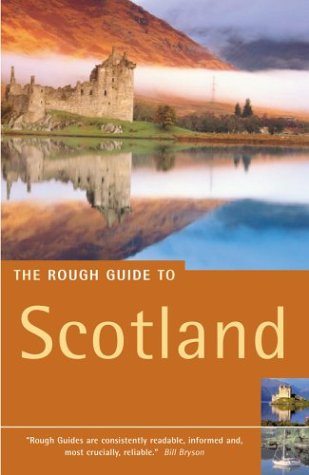
Despite the best efforts of an unreliable climate, Scotland is, quite simply, a wonderfully rewarding and diverse country to visit, encompassing everything from the rolling countryside of the Borders to the wild and weather-beaten islands that arc around its west and north coasts. Many parts of the mainland are surprisingly accessible, with remote lochs, glens and Highland mountains lying less than two hours' travel from Edinburgh and Glasgow, two of Britain's most complex and intriguing cities.
For centuries Scotland was a divided nation, with Gaelic-speaking, cattle-raising clans concentrated to the north and west, and Lowland Scots, distinguished by their Norman-style feudal loyalties and allegiances, dominant to the south and east. These two linguistically distinct Scotlands developed along separate lines, their mutually antagonistic populations creating the first of several overlapping sources of national tension. After the Reformation, religion became another flashpoint, not just between Catholic and Protestant, but also amongst a host of reformist sects. Later still, industrialization divided the rural from the urban, generating the class-conscious, socialist-minded cities of central and eastern Scotland. Such tensions are still apparent today in the complex relationships between incomers and natives, between the landed and the stranded, and between the progressive core of the cities and the drug-ridden poverty of their fringes.
In the background lurks Scotland's problematic relationship with England. In 1707, the Act of Union united the English and Scottish parliaments, ending centuries of political strife and, shortly afterwards, in 1745, the failure of Bonnie Prince Charlie's Jacobite rebellion gave the English and their Scottish allies the chance to bring the Gaels to heel. However, the union only partly integrated the two nations, with Scotland retaining separate legal and education systems, and, to this day, its relationship with its southern neighbour remains anomalous. During the Conservative rule of the 1980s and 1990s, many Scots were left feeling disenfranchized by and resentful of the Westminster government. However, with the Labour party victory in the 1997 general election came manifesto promises of dramatic constitutional reform, endorsed in September of that year by a referendum in which Scots voted resoundingly in favour of their own parliament, with control over issues such as health, education, law and order and the environment. Elections for the historic Parliament, the first to be convened in Scotland for nearly 300 years, were held in May 1999, and it was officially vested with power by the Queen in an inspiring ceremony in Edinburgh on July 1, 1999. As the new Scottish government begins to make its mark on the day-to-day running of the country, larger questions about the future of the United Kingdom linger. The debate remains fierce, both within the new Parliament and without, over whether this quasi-federal devolution of power or complete independence within the European Union will better serve Scotland, and while most Scots welcome the way in which recent events have heightened their sense of identity and importance, they also acknowledge the challenges inherent in converting expectation and optimism into tangible progress.
DK was founded in London in 1974 and is now the world's leading illustrated reference publisher and part of Penguin Random House, formed on July 1, 2013. DK publishes highly visual, photographic nonfiction for adults and children. DK produces content for consumers in over 87 countries and in 62 languages, with offices in Delhi, London, Melbourne, Munich, New York, and Toronto. DK's aim is to inform, enrich, and entertain readers of all ages, and everything DK publishes, whether print or digital, embodies the unique DK design approach. DK brings unrivalled clarity to a wide range of topics with a unique combination of words and pictures, put together to spectacular effect. We have a reputation for innovation in design for both print and digital products. Our adult range spans travel, including the award-winning DK Eyewitness Travel Guides, history, science, nature, sport, gardening, cookery, and parenting. DK’s extensive children’s list showcases a fantastic store of information for children, toddlers, and babies. DK covers everything from animals and the human body, to homework help and craft activities, together with an impressive list of licensing titles, including the bestselling LEGO® books. DK acts as the parent company for Alpha Books, publisher of the Idiot's Guides series and Prima Games, video gaming publishers, as well as the award-winning travel publisher, Rough Guides.