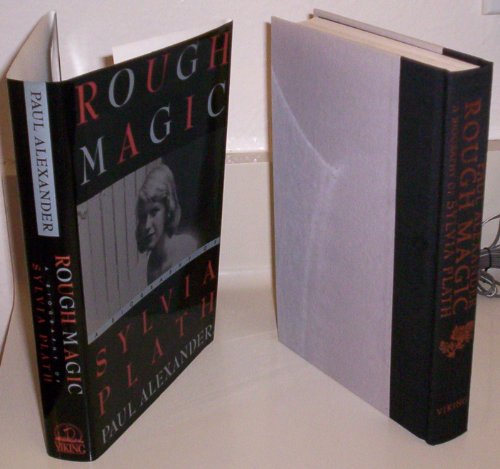
Synopsis
Examines the tragic life and complex literary artistry of the American poet
Reviews
Nearly 30 years after Plath's (1932-1963) suicide, her troubled life proves to be fertile ground for biographers, as witness this work by Alexander (editor of Ariel Ascending ), which may be the most objective portrayal yet of the controversial American poet. Choosing to write Plath's life without the consent and probable constraints of the estate, Alexander eschews quoting from Plath's work; his is not a literary study. Yet the results are impressive: a thorough, beautifully fashioned chronicle rich in new materials and significant minutiae, beginning with the convergence of her parents' lives, continuing with Plath's precocious childhood and tumultuous adulthood, and concluding with her posthumous literary career. The book's achievement is to record Plath's notable vicissitudes with respect and sensitivity, implying but not imposing an interpretation on complex, often ambiguous evidence. Though at times we may desire more direct analysis, Alexander's understated approach has the considerable virtue of allowing readers to determine for themselves--insofar as such questions can ever be answered--what forces nurtured Plath's extraordinary lyrical gifts and what finally ended them. Photos.
Copyright 1991 Reed Business Information, Inc.
Second biography of Sylvia Plath this season, this one by the editor of Ariel Ascending (1984), a collection of essays on Plath's life and work. Alexander's is a full-bodied biography, long on facts, short on criticism, but the best so far as a conventional life of the poet. Despite his detail, however, Alexander is much less involved with interpretation than Ronald Hayman is in The Death and Life of Sylvia Plath (p. 909), a psychocritical investigation focusing on the nature of suicide as shown in the poet's work. Hayman is more exciting, though both writers strain at supposition. Alexander carries Hayman's revisionist view of Plath's husband, poet Ted Hughes, to an even more extreme darkness, with Hughes now showing up as a craggy, violent man obsessed with horoscopes and the occult and in Plath's last year even urging her to suicide, perhaps with posthypnotic suggestion. Implied is that Plath fulfilled an agenda reinforced in her by Hughes, though of course she had an earlier history of suicide attempts. Whatever the truth of this (Hughes has never granted an interview about Plath), it's now more than a quarter century later and Hughes still finds himself pursued by his dead but restless wife in a variety of legal battles about her estate. Alexander (as Hayman did) resorts to paraphrase of Plath's work (Hughes refuses all rights to quote unless he can vet any biography), which tends to de-energize his page, but he has cracked the reserve of many Plath intimates who've not spoken before, especially about Hughes in a strange delirium attempting to strangle Plath and later deserting her outright on a vacation in Ireland when he thought he saw a face move in a painting. Alexander also uncovers a likely abortion that helped save her Fulbright. Lives of Plath are now so familiar that one reads them to see which writer can play Hamlet best. At this point, Hayman--with reservations--cuts the brightest figure, with Plath chewing more scenery than even Alexander can muster. (Sixteen pages of b&w photographs--not seen.) -- Copyright ©1991, Kirkus Associates, LP. All rights reserved.
It seems no longer possible to read Plath's poems and fictions without her life and suicide as guide. Ignore her death, and the fiction and most of the poems increasingly seem self-indulgent and less than first-rate, unable to support a major reputation half as well as her self-destructive behavior does. Because her estate--which is ruled over by Ted Hughes and his sister Olwyn, the villains in these biographies--denies authors permission to quote from Plath's work unless manuscripts are submitted for approval and changes, if requested, are made, readers are left with inadequate paraphrase, innuendo, gossip, and speculation, which then lead to controversy and mystery--which in their turn lead to sales and literary immortality. Alexander, editor of Ariel Ascending: Writings About Sylvia Plath, deserves some attention. Still, each biography finally fails, either because of padding with irrrelevant minutiae (Alexander's); or a melodramatic and Kitty Kelleyish tone (Hayman's); or the substitution of simplistic paraphrase for analyses, sensationalism for objectivity, mystery for understanding (both). The Plath Industry thrives, though the quality of its products decreases. Previewed in Prepub Alert, LJ 6/1/91 and LJ 3/15/91.
- Vincent D. Balitas, Allentown Coll. , Center Valley, Pa.
Copyright 1991 Reed Business Information, Inc.
"About this title" may belong to another edition of this title.