Synopsis
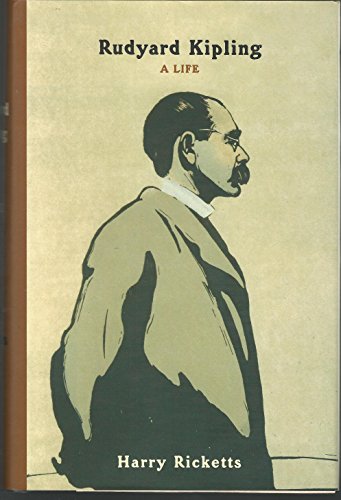
The first fullscale study of Rudyard Kipling in decades provides an incisive reassessment of the life and literary work of an author who had a profound influence on twentiethcentury English literature.
Reviews
Kipling's biographers are still trying to find a balance between his reputation as an imperialist writer and his actual life. After Martin Seymour-Smith's psychologically speculative 1990 biography (also titled Rudyard Kipling), the more conservative approach of New Zealander Ricketts (editor of Kipling's Lost World) gives some redress to the fiction writer and poet--although in the process his account downplays many of Kipling's late reactionary opinions. Like many sons of the Empire, Kipling's childhood was divided unevenly between England and India (primarily Bombay), but he was effectively orphaned when he was sent at age six to live in an evangelical household in Southsea. Although that experience instilled a permanent sense of abandonment in Kipling, evident in his fiction, Ricketts points out that it also ingrained in him the indefatigable work ethic that sustained his long literary career. Ricketts's insights into the ironies of that career also challenge the assumptions of Kipling's posthumous reputation. Kipling became an ardently propagandizing imperialist only after he settled permanently in England and lost contact with his "native" India. The Nobel notwithstanding, Kipling, Ricketts recounts, precipitously lost critical standing as he gained international popularity. These points are enlivened by Ricketts's selection of letters by such rival authors as Henry James and Max Beerbohm, which provide amusing gossip as well as literary context. Much of Ricketts's portrait of Kipling as a man with many internal contradictions ("devoted son/damaged' orphan,'" "scholar gipsy/rule-bound conformist") seems astute, but his treatment of the author as a complicated colonial isn't as successful as his assessment of Kipling's personal affairs and poetry. Photos not seen by PW.(Mar.)
Copyright 2000 Reed Business Information, Inc.
Kipling is revered for his adult and children's stories and poems, but much of his life and writings is largely unknown in this country. Rud (as he was affectionately known) was born in India in 1865 to an upper-class military family. He spent his early years in Britain and India and achieved his initial success as a reporter in India. He traveled widely and visited the U.S. a number of times, eventually building a house in Vermont. Because he believed, and wrote, that Americans were ignorant provincials, his political views were not appreciated in the states. Even in England his jingoism and anti-Semitism were too strident for much of the population. Although he was awarded the Nobel Prize for Literature in 1907, he was largely reviled in his own country by the literati. Ricketts provides a fascinating view of a complex figure, and though the book may be disillusioning to some, it makes very worthwhile reading. Eric Robbins
Kipling was a man of contradictions: identified with both India and England, he was a poet of the common man who also served as spokesman for the British Empire and the white man's burden. Poet and editor Ricketts tries to capture Kipling's complexity in order to show the sophistication and enduring quality of his fiction and poetry, which Ricketts sees as anticipating much in modernism. His sympathetic treatment is balanced, not glossing over Kipling's imperialism, right-wing politics, or anti-Semitism. This biography aims more at a popular audience than those of Angus Wilson (The Strange Ride of Rudyard Kipling, 1979), Lord Birkenhead (Rudyard Kipling. o.p.), James Harrison (Rudyard Kipling, 1982), and Martin Seymour-Smith (Rudyard Kipling, LJ 2/1/90). Though a bibliography would have been welcome, Ricketts's account is intelligent, thoroughly informed, and fluent. A pleasure to read.
-Thomas L. Cooksey, Armstrong State Coll., Savannah, GA
Copyright 2000 Reed Business Information, Inc.
"About this title" may belong to another edition of this title.