Synopsis
For the first time, the inside story of the brilliant American engineer who defeated Enigma and the Nazi code-masters
Much has been written about the success of the British “Ultra” program in cracking the Germans’ Enigma code early in World War II, but few know what really happened in 1942, when the Germans added a fourth rotor to the machine that created the already challenging naval code and plunged Allied intelligence into darkness.
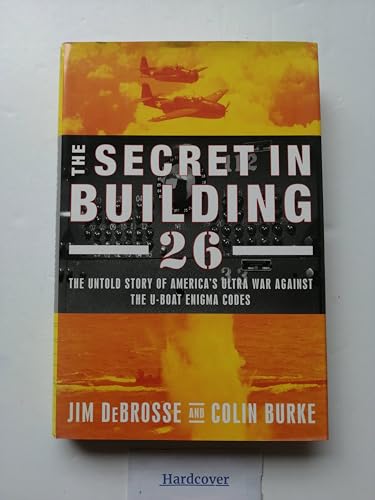
Enter one Joe Desch, an unassuming but brilliant engineer at the National Cash Register Company in Dayton, Ohio, who was given the task of creating a machine to break the new Enigma settings. It was an enterprise that rivaled the Manhattan Project for secrecy and complexity–and nearly drove Desch to a breakdown. Under enormous pressure, he succeeded in creating a 5,000-pound electromechanical monster known as the Desch Bombe, which helped turn the tide in the Battle of the Atlantic–but not before a disgruntled co-worker attempted to leak information about the machine to the Nazis.
After toiling anonymously–it even took his daughter years to learn of his accomplishments–Desch was awarded the National Medal of Merit, the country’s highest civilian honor. In The Secret in Building 26, the entire thrilling story of the final triumph over Enigma is finally told.
From the Trade Paperback edition.
Reviews
The Ultra secret (Allied decryption of German messages during World War II) has produced a growing body of literature since it was revealed 30 years ago, indicative not only of steady interest in the topic but also of the fact that it still retains its own secrets. DeBrosse and Burke benefit from the former, and make fascinating disclosures of the latter, in their account of the machines, called "bombes," that broke the German encryption tool, Enigma. Due to wartime exigencies, the construction of bombes, first built by the British, shifted to the NCR Company in Dayton, Ohio. On the technical side, the authors detail problems in building them and the ensuing strain placed on NCR's man in charge. On the intelligence side, DeBrosse and Burke dramatically recount a crisis generated by a complication added to Enigma in 1942 that, for the moment, thwarted Ultra and gained U-boats the upper hand. In addition to narrating NCR's literal life-and-death performance, the authors uncover an espionage affair within company ranks. This is an important new angle on Ultra. Gilbert Taylor
Copyright © American Library Association. All rights reserved
"About this title" may belong to another edition of this title.