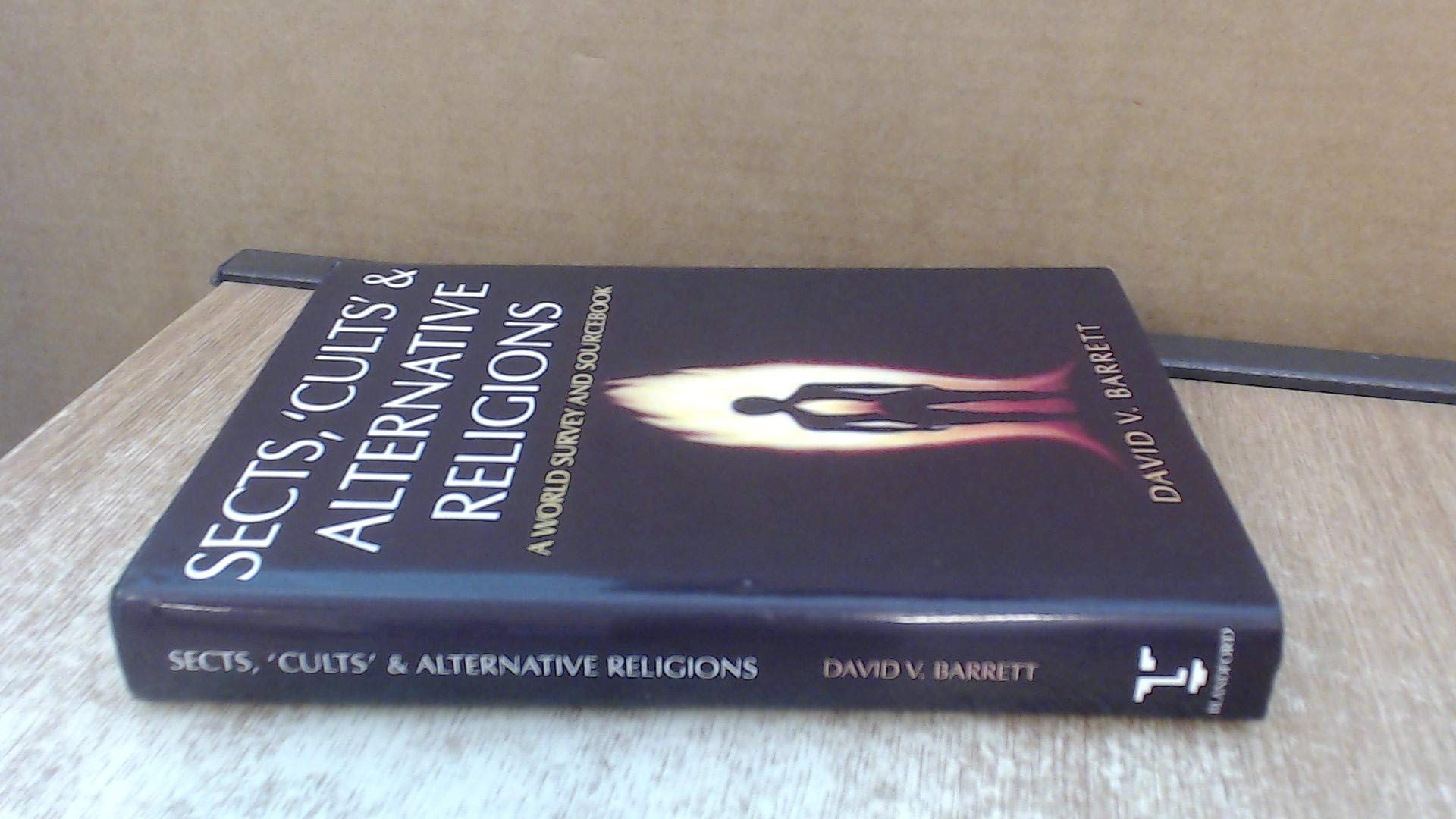
Many people belong to cults and sects which appear strange, frightening or disturbing to others. Aimed at the general reader, this book reveals the beliefs and practices of many modern cults and sects, explaining their origins and attempting to answer the questions raised by their activities.
Beginning with a brief history of major world religions, British journalist Barrett proceeds to present systematically a history of Christian "heresies" and movements. He moves from there to Eastern neopagan movements such as wicca, druidry, and theosophy and closes with studies of such self-help movements as neurolinguistic programming and Scientology. Barrett writes concisely but thoroughly, in an accessible, objective, and (both geographically and chronologically) encyclopedic fashion that makes his work truly stand out. Within a literature dominated by Christian (ergo hostile) surveys of alternative religions, the only in-print study even comparable to this work is J. Gordon Melton's Encyclopedic Handbook of Cults in America (Garland, 1992. rev. ed.). The one minor shortcoming worth noting is that the "useful addresses" are mostly in Great Britain. Libraries will find Barrett's work appropriate for either (or both) circulating and reference collections.?Bill Piekarski, Southwestern Coll. Lib., Chula Vista, Cal.
Copyright 1997 Reed Business Information, Inc.
Heaven's Gate, Branch Davidians, People's Temple--all bring a visceral reaction of horror to those with any news sense. All are labeled as cults, as were Christianity, Buddhism, and Islam when they were first preached. Barrett explores the history and beliefs of religions, the need for religion in human experience, and the subtle differences between acceptable and unacceptable beliefs.
The book is divided into five sections: "Background," which describes the history and beliefs of the world's major religions including Zoroastrianism and Baha'i; "Christian Origins," which covers the early history of Christianity and its battles with various heresies, then describes Christian sects and cults; "Eastern Origins," which describes such groups as Hare Krishnas, Elan Vital, and ECKANKAR; "Esoteric and Neo-Pagan Movements" such as Rosicrucians, Society of the Inner Light, "Flying Saucer Cults," Wicca, Druids, and shamanism; and "Psychology and Self-Help," covering Scientology, transcendental meditation, and neurolinguistic programming. Altogether, 69 groups are presented.
Each entry is divided into two parts: "History" and "Beliefs and Traditions." The history section describes the charismatic individual who attracts followers with his or her preaching, then follows the development of the group through subsequent leaders. "Beliefs and Traditions" discusses both the original teachings and how the cult may have changed over time. Much space is given to addressing the controversial practices or teachings (brainwashing, deprivation, sexual and physical abuse, etc.) that garner negative publicity. The text is mostly balanced between the accusations and the official response of the group. There is some editorializing in the body, but most of it is reserved for the preface and the afterword. Barrett corresponded with each group asking for authorized information and official responses and speaks candidly about how forthcoming (or not) the groups were. The entries range from one page ("The I Am Movement") to 16 pages ("Scientology"). The average is two to three pages. There are two sections of photographs, one black and white, the other color, with portraits of founders or representative group photographs or artwork.
In the introduction, Barrett describes the differences between sects, cults, and alternative religions, eschewing the term cult because of its negative connotations. He also discusses the difficulty in addressing the issue of different beliefs because of the emotional responses many faithful have. The conclusion looks at the organizations that "rescue" and "deprogram" members of these groups or that seek to balance the sensational news coverage with factual information collected from official sources and former members. There is a list of addresses for each of the religions covered and a bibliography. The index is brief.
This is a fascinating book to read. Barrett tries to remain objective but makes comments at important points. Some readers may be disconcerted by Britishisms (gaol for jail, bugger, colour, etc.), but these are infrequent. Much of the information comes from the British headquarters of organizations. Minimal information is provided on some of the groups that have had the most headlines--Jim Jones' People's Temple, the Order of the Solar Temple, Aum Shinrikyo. Nevertheless, this will be a useful resource for religion collections and for public libraries with frequent requests for information on sects and cults.