Synopsis
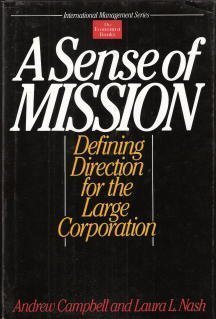
A Sense of Mission reveals how 50 U.S., Japanese, and European companies survived troubled economic times through good corporation mission statements and steady leadership. It explores how Johnson & Johnson thrived even after product-tampering, while redefining British Airways' customer-service mission revitalized that sagging company.
Reviews
Campbell, a founding director of Britain's Asbridge Strategic Management Centre, and Boston University economist Nash ( Good Intentions Aside ) here extol the benefits of a well-postulated and well-promulgated corporate mission statement. According to the authors, who surveyed management practices at 1500 major firms, a code articulating a company's purpose, strategy, professional standards and social values makes employees more loyal and management more focused and consistent in its decision-making. Just such a statement, the authors recall, helped Johnson & Johnson recover consumer confidence after several people died in 1982 from taking poisoned doses of its Tylenol pain reliever. A "sense of mission" that gave official priority to passengers' convenience and comfort brought an earnings turnaround to British Airways; Borg-Warner's creed stressed the company's specific obligations to shareholders, employees, customers, suppliers and society in general. Other case histories focus on Disney, Honeywell, Ford and Price Waterhouse.
Copyright 1993 Reed Business Information, Inc.
"About this title" may belong to another edition of this title.