

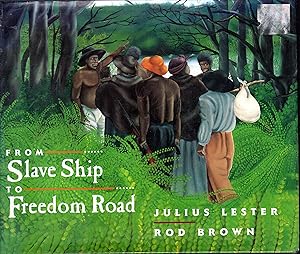
From Slave Ship to Freedom Road
Lester, Julius
ISBN 10: 0803718934 ISBN 13: 9780803718937
Published by Dial, 1998
Used
Hardcover
From
Reliant Bookstore, El Dorado, KS, U.S.A.
Seller rating 5 out of 5 stars

AbeBooks Seller since June 30, 2021
This specific item is no longer available.
About this Item
Description:
This book is in good condition with very minimal damage. This is an ex-library book with stickers and markings. Pages may have minimal notes or highlighting. Cover image on the book may vary from photo. Ships out quickly in a secure plastic mailer. Seller Inventory # 56JTFY003L46_ns
Synopsis:
Filled with brilliant illustrations, this comprehensive study discusses the history of slavery in America, from its beginning through the Civil War, and tells of the great struggles slaves had to face, the difficulties they had to overcome, and the many heroic attempts made by those who wished to be free.
Reviews:
Grade 5 Up?Brown's 22 brilliant and dramatic paintings of slaves and slavery in America are the attention-riveting basis for this picture-book history. Lester's carefully crafted words are the threads that weave about the pictures, inviting readers, whether black or white, to "invest soul" and to reach "an understanding in the heart" of what Africans endured over the 250 years from the first slave ships to Emancipation. The illustrations, bright with color contrasts and skillfully composed, were previously shown in gallery exhibits. They are effectively displayed against glossy white pages. The portraits of men and women show statuesque, cleanly sculptured bodies, strong in their attitudes, whether laboring, filled with silent anger, or gathered in prayer. Many of the scenes so artfully portrayed are those depicting suffering, from the dreaded Middle Passage to field labor, the slave market, attempts to escape, and the cost in whippings and lynchings. Finally, in the last paintings, the Civil War and the joyful road to freedom mark the end of this darkest period in American history. Lester's words guide readers into the pictures, offering background facts, creating dialogue, or constructing the thoughts of the pictured persons. At intervals, the text breaks to suggest an "Imagination Exercise," or to question readers on how they would act or feel. This is a powerful book, and it is an important one. It asks African Americans to understand the experience and honor the strength of the ancestors who survived these ordeals. It asks whites to understand the price exacted by past domination and cruelty on the fabric of society today.?Shirley Wilton, Ocean County College, Toms River, NJ
Copyright 1998 Reed Business Information, Inc.
In a stirring picture book for older readers, Lester (Sam and the Tigers, 1996, etc.) creates meditations on the journey of Africans to slavery, on the lives of people held as slaves, and on runaways, the Civil War, and the meaning of freedom. Although these musings are both impressionistic and personal, Lester, in an introduction, demands that readers participate: ``I found myself addressing you, the reader, begging, pleading, imploring you not to be passive, but to invest soul and imagine yourself into the images.'' ``Imagination Exercise One--For White People'' asks readers to imagine being taken away in a spaceship by people whose skin color they've never seen, to a place where they are given new names and can be maimed or killed. ``Imagination Exercise Two--For African Americans'' asks readers to examine any shame they have about being the descendants of slaves. Each of Lester's deeply personal commentaries is placed opposite one of Brown's paintings, which depict in brilliant colors and sculpturally molded forms the people who were slaves and stops or landmarks on their journey to freedom. This is a teaching book: Those who seek to understand the experience of slavery will find many questions to grapple with, for the text does not flinch from the horrors of slave ships, whippings, or the selling of human flesh. As is true of Tom Feelings's The Middle Passage (1995), this book needs the key of collaboration with caring adults to understand its treasures fully. Readers who make that effort will be amply rewarded. (Picture book/nonfiction. 10-12) -- Copyright ©1997, Kirkus Associates, LP. All rights reserved.
Gr. 5^-10. If you are white, imagine what it would be like if "suddenly a spaceship lands and people of a skin color you have never seen come out of the ship and drag you aboard"; they speak a different language and take you to a place you've never seen to work for them as a slave; imagine your hurt and rage. If you are black, confront your shame about being a descendant of slaves and consider the strength of your ancestors, their anger, defiance, self-possession, endurance, and rebellion under unspeakable conditions: "Heroism has many faces." If you are black or white, consider whether you could ever be the aggressor and whip someone "until their flesh cried blood." What if your peers approved and told you it was honorable to act that way? Lester's impassioned questions grow from his visceral response to Brown's narrative paintings that show the history of slavery through group scenarios: the horror of capture, the voyage over, the auction, the labor, and also the secret bonds of community and defiance on the plantation and on the Underground Railroad. Books such as James Berry's Ajeemah and His Son (1992) and Lester's To Be a Slave (1968) personalize the experience. Here, the combination of history, art, and commentary demands interaction and makes us imagine the daily life in the cabin, in the fields, and in the house; the importance of storytelling and religion; the anguish when a child is sold away. In contrast, Brown shows the horrifying impersonality of the slave ships, the bodies stacked head to foot on bunks; it could be a scene from Auschwitz. In fact, this book would make a great connecting text in any curriculum study of the Holocaust and racism. Hazel Rochman
"About this title" may belong to another edition of this title.
Bibliographic Details
Title: From Slave Ship to Freedom Road
Publisher: Dial
Publication Date: 1998
Binding: Hardcover
Illustrator: Brown, Rod
Condition: good