Synopsis
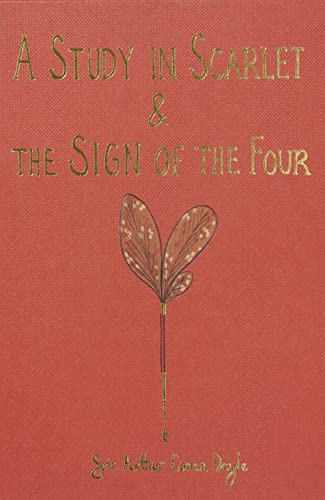
Doctor Watson, Mr Sherlock Holmes's - The most famous introduction in the history of crime fiction takes place in Sir Arthur Conan Doyle's A Study in Scarlet, bringing together Sherlock Holmes, the master of science detection, and John H. Watson, the great detective's faithful chronicler. This novel not only establishes the magic of the Holmes myth but also provides the reader with a dramatic adventure yarn which ranges from the foggy, gas-lit streets of London to the burning plains of Utah. The Sign of the Four, the second Holmes novel, presents the detective with one of his greatest challenges. The theft of the Agna treasure in India forms a catalyst for treachery, deceit and murder. With these two classic novels, A Study in Scarlet and The Sign of the Four, you have the brilliant foundation of the Sherlock Holmes canon. Reading pleasure rarely comes any finer.
About the Author
Arthur Conan Doyle was born in Edinburgh in 1859, the son of Charles Altamont Doyle and Mary (Foley) Doyle, both practising Roman Catholics. In order to supplement his income (he was an unsuccessful architect) his father painted and made illustrated books. Doyle attended the Jesuit Stonyhurst College but had abandoned his family’s Catholicism by the time he had completed his medical studies at Edinburgh University. In 1884 he married Louise Hawkins and qualified as a doctor in 1885 after which he practised as an eye specialist near Portsmouth until 1891, when he became a full-time writer. His father died in an asylum in 1893 after being institutionalized for some years. The first Sherlock Holmes story, A Study in Scarlet, was written in 1886 over a three week period and published a year later. This was followed by a second novel, The Sign of the Four (1890), and the first collection of short stories, The Adventures of Sherlock Holmes (1892), all of which were first published in the Strand Magazine. Despite the huge popularity of the Holmes stories, Doyle felt they detracted from his other, more serious writing, so in the last story of The Memoirs of Sherlock Holmes (1894) ‘The Final Problem’, Doyle killed off Holmes in a final, fatal confrontation with the arch-villain, Professor Moriarty. There was a huge public reaction, with 20,000 subscriptions to the Strand magazine cancelled, but Doyle resisted the pressure to bring back his finest creation until 1902, when he released The Hound of the Baskervilles, a full-length novel set earlier in Holmes’ career. Finally, in ‘The Empty Room’, the first story in The Return of Sherlock Holmes, he restored Holmes to life. Further stories appeared sporadically. The Valley of Fear, a novel in 1915, and two further collections of stories, His Last Bow (1917) and The Casebook of Sherlock Holmes (1927).
"About this title" may belong to another edition of this title.