Synopsis
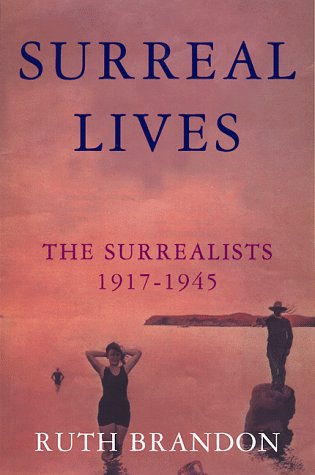
Filled with revealing black-and-white photography, this comprehensive guide to Surrealism traces the movement's origins from the final days of World War I through the following decades, focusing on the work of such seminal artists as Marcel Duchamp, Salvador Dali, Man Ray, and many others.
Reviews
"Jacques Vach? is the Surrealist in me." So said Andr? Breton of his compatriot, dead from drug abuse in 1919, well before the heyday of the official movement that Breton came to run like a political party. Vach?, a man who created virtually no artwork, embodied the surrealist ideal that one's life itself should be a work of art. Brandon (Uncertainty Principle; Singer and the Sewing Machine)Aentranced by these artists' dadaist outrages, political radicalism, flirtations with Stalin, psychic seances and sexual debaucheryAfinds the search for this ideal more compelling than any art objects, poetry or manifestos left behind along the way. The narrative focuses on the most sensational behavior of this disparate group of avant-gardists; at times, it has the breathless feel of a rock-star bio, paying considerable attention to outrageous, backstabbing disputes and wife-swapping affairs. Her interpretations of their art are swift and punchy to a fault, however. Of Duchamp's infamous "readymade" urinal, Brandon says: "In Art's very own sanctum Mr Mutt pissed on the notion of Art." And she misses key connections. Brandon herself suggests that Vach? may well have modeled himself on Gide's character Lafcadio. Later, she dismisses Arthur Cravan as a "simplified and brutalized" version of Vach?. She then provides evidence that Cravan may have been Gide's model for LafcadioAand yet, she never directly comments on this Escher-like circle of influence. Despite such drawbacks, this account of the flawed and ambitious group of surrealists is enthralling, for despite their many failures, the questions the surrealists sought to raise are more relevant today than ever. Illus. not seen by PW. (Sept.)
Copyright 1999 Reed Business Information, Inc.
Brandon (The Life and Many Deaths of Harry Houdini, 1994, etc.), a prominent biographer and fiction writer, explores the aesthetics, politics, and psychology of Surrealism by unraveling the complex personal histories of the movement's key players. Among multiple sources of Surrealism, Brandon highlights two: Marxism and Freudianism. Born of the turmoil of WWI and christened by Apollinaire, this revolutionary artistic trend advocated anarchy, sided with the political left during the interwar period, and aspired to produce an iconoclastic ``anti-art.'' A creative use of dreams, delving into the subconscious, and a preoccupation with sex, death, and excrement complemented the Surrealists' political radicalism. Although nowadays we associate Surrealism primarily with visual art, literary figures like the autocratic Andr Breton headed the movement at its inception. Transgression of boundaries between different artistic media was quite common, and many artists also wrote poetry or prose. After the shock induced by Buuel's films, cinematography advanced as the most immediate Surrealist format. Brandon systematically points out the eccentricities that shaped Surrealists' lives and, consequently, their creative process. Despising conventional moral and family values and considering procreation ``sloppy'' at best, many Surrealists were involved in mnages ... trois, bisexual relations, and unscrupulous leeching off rich American lovers. On the other hand, Elsa Triolet and Gala Eluard successfully exploited their husbands' talents to attain the lifestyle they desired. Elsa made Louis Aragon a national icon and had him endorse her writing; the ``nymphomaniacal harpy'' Gala achieved fame and wealth by transforming (her second husband) Dal's originally subversive art into expensive commercial entertainment, compliant with the Fascist regimes in Spain and Germany. Scattering its principles by the wayside, the Surrealist movement stumbled toward its zenith, torn by internal contradictions. Rooted to a large extent in neurotic obsessions, pathological tendencies, and introspective observation, Surrealism is a rare case where insights into artists' lives facilitate interpretation of their creations. A marvelous job of using biographical material to demystify esoteric art. -- Copyright ©1999, Kirkus Associates, LP. All rights reserved.
In her generous history of Surrealism, perhaps best known for automatic writing and vigorous, abstract paintings, Brandon (biographer of Harry Houdini and Sarah Bernhardt) takes on more than her considerable enthusiasm and skill can handle. In her struggle to bring life to the sometimes dizzying social, political, and psychological worlds of the movement's major players, Brandon gets swept away by the boyish infighting of the "Three Musketeers" (Breton, Aragon, and Eluard), their mentors (Appollinaire, Rimbaud, and others), and their compatriots (such as Dal!, Duchamp, and Lorca); she ends up with a fragmented effort slowed by daily events and flattened by unchallenged myths: she chooses to portray women in early Surrealism as the "headless" muses Breton thought them to be although women were integral to the movement's development, as illustrated in Surrealist Women (LJ 9/15/98). Newcomers will find the story and, more disappointing, the passion of Surrealism a bit buried in the telling here. However, fans of Surrealism will be interested in Brandon's insights into the seemingly accidental conflagration of artistic effort and the intertwined relations between the creators of modern art and literature.ARebecca Miller, "Library Journal"
Copyright 1999 Reed Business Information, Inc.
Ruth Brandon set out to write Surreal Lives with two objectives in mind. First, that surrealism informs not only the visual arts but also other artistic media, such as writing and film. Second, that surrealism is not so much a unified movement but the dynamic outgrowth of a collective of artists, writers, and filmmakers who continued to challenge each other's views on art and life as their world became embroiled in two world wars. Both are well-known and well-accepted facts in the history of surrealism. What makes Brandon's book a fresh read is the way she retells the stories of the individual players in juicy People magazine^-like detail. Thus, while we know already that Andre Breton, the self-appointed pope of surrealism, was a humorless crank, Brandon proves the case further by describing, with much verve, his obsessive devotion to Jacques Vache, his bullheaded refusal to learn English when he escaped from the war to America, and other events. Her equally witty and vivacious coverage of Marcel Duchamp, Francis Picabia, Salvador Dali, Man Ray, Max Ernst, and Luis Bunuel makes this an entertaining read. Veronica Scrol
"About this title" may belong to another edition of this title.