
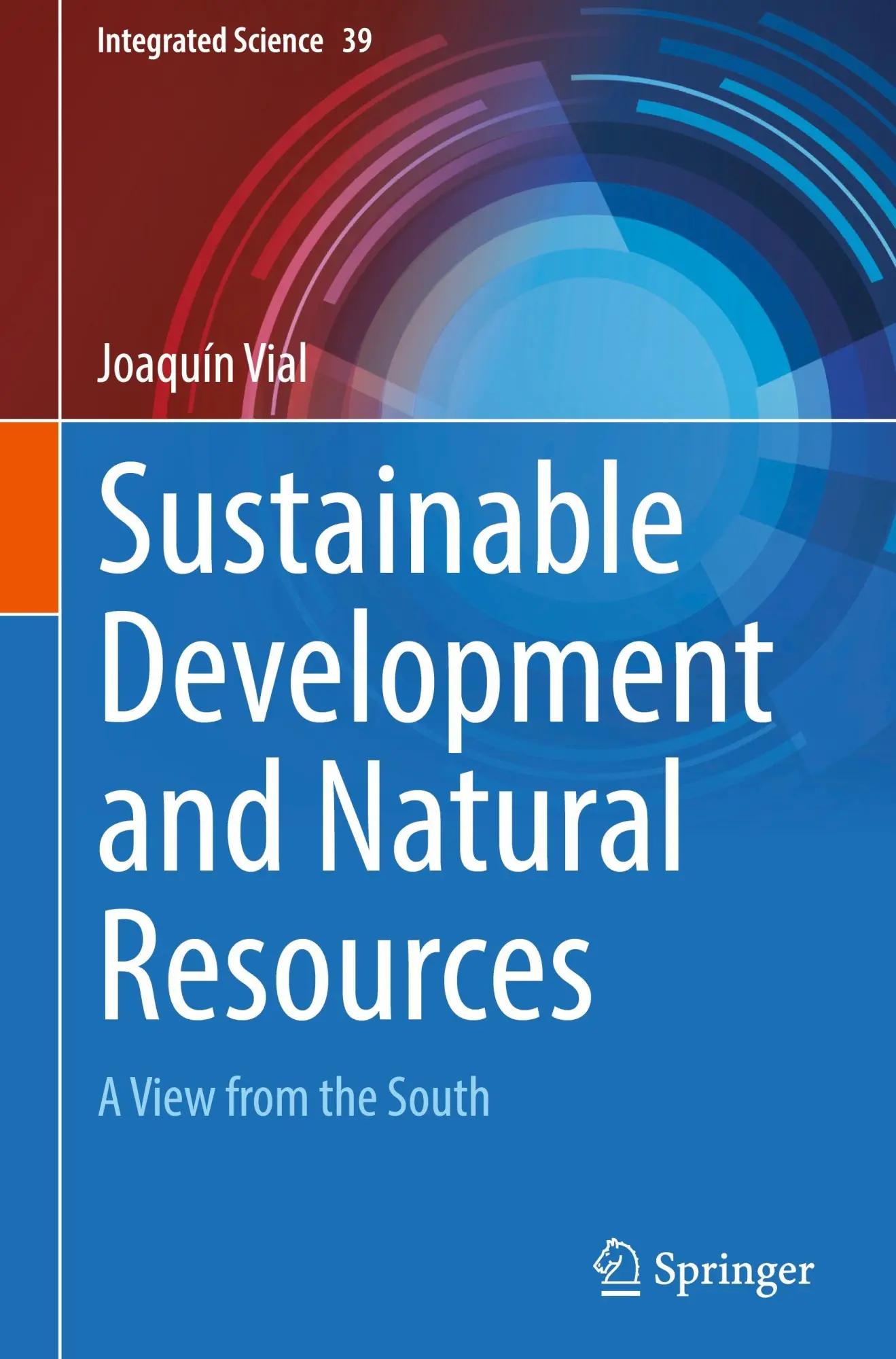

Sustainable Development and Natural Resources | A View from the South
Joaquín Vial
ISBN 10: 3032122627 ISBN 13: 9783032122629
Published by Springer, 2026
New
Buch
From
preigu, Osnabrück, Germany
Seller rating 5 out of 5 stars

AbeBooks Seller since August 5, 2024
This specific item is no longer available.
About this Item
Description:
Sustainable Development and Natural Resources | A View from the South | Joaquín Vial | Buch | xiii | Englisch | 2026 | Springer | EAN 9783032122629 | Verantwortliche Person für die EU: Springer Verlag GmbH, Tiergartenstr. 17, 69121 Heidelberg, juergen[dot]hartmann[at]springer[dot]com | Anbieter: preigu Print on Demand. Seller Inventory # 134570893
Synopsis:
The book focuses on the tensions and challenges faced by emerging economies, which, although rich in natural resources, struggle to achieve economic and social development amid a global environmental crisis. An orderly demographic transition is needed to reduce the human footprint, but right now it is creating tensions in ageing societies, while still pressuring nature in the poorest areas of the world, where fertility rates remain high. If per capita consumption in emerging countries replicates the patterns of the rich ones, and the latter do not change theirs, there will be a collapse of many ecosystem services, with dire consequences for human welfare across the world. Innovation and charging the correct pricing of goods and services, reflecting their environmental costs, are critical to improve efficiency in the use of natural wealth.
There are ways to deal with all these challenges, but international cooperation and strong national commitments leveraged by netter institutions are needed to prevent a chaotic resolution of the environmental crisis. Time is running out.
About the Author:
Dr Joaquín Vial R-T. studied economics at the University of Chile during a period of great political upheaval and a major economic crisis, so he specialized in macroeconomics. In the early 80s, he went to UPenn to pursue a PhD in Economics. Upon completion of his doctoral thesis – an econometric model of the world copper market – in the 1990s, after his return to Chile, he became involved in the definition of fisheries and forestry policies, during the transition to democracy. Thereafter, he participated in the definition and practical application of fiscal policy in the Ministry of Finance, where he was Budget Director. After that, he went to Harvard, and then to Columbia, to work with Jeff Sachs on a project to improve competitiveness in the Andean countries, in close collaboration with the governments of the region. Subsequently, he spent 8 years in the BBVA Research Department, where he led a group to study the main global trends that would shape financial markets in the coming decades. At the time of the Global Financial Crisis in 2008, he was asked to lead BBVA’s Research teams in South America. In 2012, he left BBVA to become a member of the Board of the Central Bank, where he was deputy governor between 2017 and 2022. At the end of his term, he concentrated on teaching at the Catholic University.
"About this title" may belong to another edition of this title.
Bibliographic Details
Title: Sustainable Development and Natural ...
Publisher: Springer
Publication Date: 2026
Binding: Buch
Condition: Neu