Synopsis
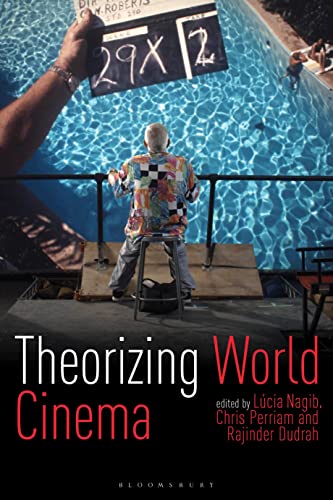
This innovative book is about the place of world cinema in the cultural imaginary. It also repositions world cinema in a wider discursive space than is usually the case and treats it as an object of theoretical enquiry, rather than as a commercial label. The editors and distinguished group of contributors offer a range of approaches and case studies whose organizing principle is the developing idea of polycentrism as applied to cinema. They refine and redefine key concepts in film studies, including identification and identity, narrative and realism, allegory and the national project, auteurism and the popular, art and genre. They re-evaluate how cinema shapes and responds to the philosophical, cultural and political effects of transnationalism and cosmopolitanism in the age of the moving image, and explore the interconnectedness of films produced worldwide, as well as the links between cinema and other visual cultural forms. The contributors include: John Caughie, Felicia Chan, Tiago de Luca, Rajinder Dudrah, Song Hwee Lim, Laura Mulvey, Lucia Nagib, Geoffrey Nowell-Smith, Chris Perriam, Ashish Rajadhyaksha, Paul Julian Smith, and Ismail Xavier.
About the Authors
Lúcia Nagib is Professor of Film and Director of the Centre for Film Aesthetics and Cultures (CFAC) at the University of Reading. Her research has focused, among other subjects, on polycentric approaches to world cinema, new waves and new cinemas, cinematic realism and intermediality. She is the author of World Cinema and the Ethics of Realism (Continuum, 2011), Brazil on Screen: Cinema Novo, New Cinema, Utopia (I.B. Tauris, 2007), The Brazilian Film Revival: Interviews with 90 Filmmakers of the 90s (Editora 34, 2002), Born of the Ashes: The Auteur and the Individual in Oshima's Films (Edusp, 1995), Around the Japanese Nouvelle Vague (Editora da Unicamp, 1993) and Werner Herzog: Film as Reality (EstaçãoLiberdade, 1991). She is the editor of Impure Cinema: Intermedial and Intercultural Approaches to Film (with Anne Jerslev, 2013), Theorizing World Cinema (with Chris Perriam and Rajinder Dudrah, I.B. Tauris, 2011), Realism and the Audiovisual Media (with Cecília Mello, Palgrave, 2009), The New Brazilian Cinema (I.B. Tauris, 2003), Master Mizoguchi (Navegar, 1990) and Ozu (Marco Zero, 1990).
Chris Perriam Professor of Hispanic Studies,University of Newcastle upon Tyne
Julian Ross is a University Lecturer at the Centre for the Arts in Society.
"About this title" may belong to another edition of this title.