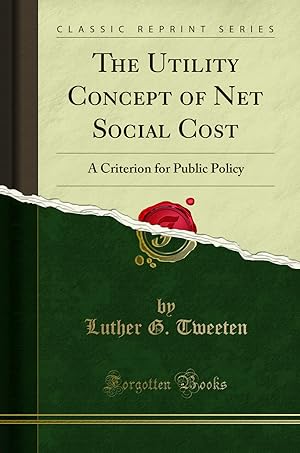
The Utility Concept of Net Social Cost: A Criterion for Public Policy
Luther G. Tweeten, Fred Helmer Tyner
ISBN 10:
1390527441 ISBN 13:
9781390527445
Published by Forgotten Books, 2024
Language: English
Condition: New
Soft cover
Sold by Forgotten Books, London, United Kingdom
AbeBooks Seller since June 2, 2021
Seller rating 5 out of 5 stars

New - Soft cover
Condition: New
Price:
US$ 17.05
Free Shipping
Ships from United Kingdom to U.S.A.
Ships from United Kingdom to U.S.A.
Quantity: Over 20 available
Add to basket