Synopsis
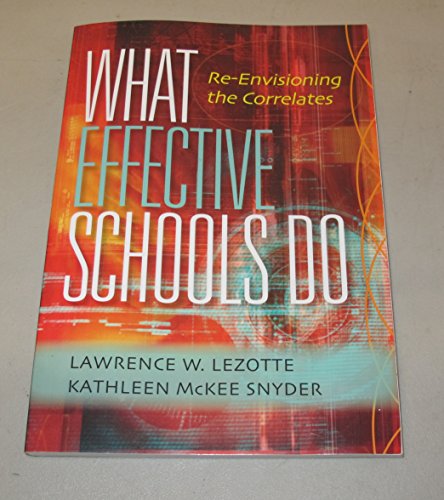
This guide helps educators implement a continuous school improvement system through application of the seven correlates of effective schools. The authors discuss each correlate, update the knowledge base, and incorporate practical ideas from practitioners in the field. A comprehensive description of practices enables educators to build and sustain a school culture that accommodates the learning expectations and needs of all students.
About the Author
Dr. Lawrence W. Lezotte earned his doctorate from Michigan State University (MSU) in 1969, joining the faculty there that same year. During his eighteen-year tenure at MSU, he served in various capacities, including Chair of the Department of Educational Administration; Associate Director, with Ron Edmonds, of the Center for School Improvement in the College of Education; and Chair of Urban and Metropolitan Studies in the College of Urban Affairs. Dr. Lezotte was a member of the original team of effective schools researchers who identified the characteristics of successful schools that have come to be known as the correlates of effective schools. Since that time, Dr. Lezotte has been at the forefront of the effective schools movement and has written widely on the new mission of public education. He has identified the components of a learner-centered system, as well as the theories and tools necessary for successful and continuous school improvement. As a nationally renowned education consultant and speaker, Dr. Lezotte has devoted his career to assisting schools in their efforts to assure that all students learn. He touches the lives of thousands of educators and tens of thousands of students each year through training programs workshops and conferences across the U.S. and Canada. Dr. Lezotte s training programs not only inspire schools and districts to adopt the learning-for-all mission, but also give them the information and tools they need to plan and implement continuous school improvement and raise student achievement. In recognition of his lifelong efforts, Dr. Lezotte received the 2003 Council of Chief State School Officers Distinguished Service Award presented each year to outstanding American who has made a difference in education. Dr. Lezotte was also selected as the 2009 recipient of the prestigious Brock International Prize in Education. The award is given annually to recognize an individual for innovative and effective ideas in education resulting in a significant impact on the practice or understanding of the field of education. Kathleen McKee Snyder earned her master s degree in 1980 from Michigan State University in Community and Regional Development within the College of Agriculture and Natural Resources. The primary focus of her work there was in the area of community and organizational change, and the role of leadership in creating stakeholder buy-in and consensus. During her time at MSU, she coordinated the Lansing Community Network, a diverse group of citizens who, under the College of Urban Affairs, worked together to bring about positive changes in their community, particularly in regard to the education and welfare of young people. Ms. Snyder also consulted with various communities and nonprofit organizations in conducting perceptual surveys of their stakeholder groups and assisting them in creating buy-in to their various improvement efforts. In 1987, Ms. Snyder became the executive director of an environmental education center in Michigan, where she became well acquainted with the public education system. Working closely with local school districts, Ms. Snyder facilitated the alignment of the center s K 8 education programs with state learning objectives in core areas. During her ten years at the center, she instituted several hands-on science and environmental education programs designed to augment the curricula of the local schools. Ms. Snyder also has firsthand experience with education through her experiences as a substitute teacher in elementary and middle schools, and with her involvement as a parent of three children. Her varied experiences with public education, combined with her knowledge of the change process, continuous improvement, and leadership, have allowed Ms. Snyder to bring a unique perspective to her work at effective schools.
"About this title" may belong to another edition of this title.