Synopsis
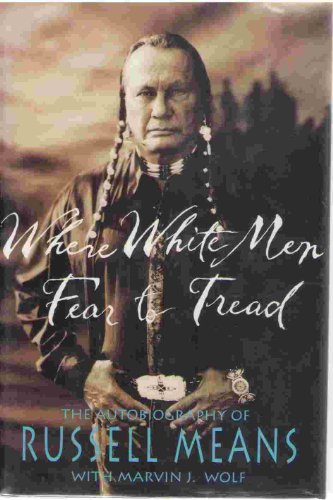
The provocative autobiography of the Native American activist, leader of the takeover of Wounded Knee in 1973, recounts his struggle for Indian self-determination, his periods in prison, and his spiritual awakening. National ad/promo. Tour.
Reviews
"Indian people are dying of sympathy," declares legendary activist Means. "What we want is respect." His unwieldy yet absorbing epic conveys his furious, resourceful activism, intertwined with (and sometimes overshadowed by) his own dramatic, messy life?including heavy drinking, attempts on his life, a stint in prison and several rocky marriages. "Conscientized" by the American Indian Movement at 30, Means helped define Indian rage, leading an occupation of the federal Bureau of Indian Affairs and, in 1973, an armed takeover of Wounded Knee in protest of a corrupt Lakota tribal government. Assisted by historian Wolf, Means tells his story with vernacular frankness, regularly slamming Eurocentrism. While Means's love for his people and his anger at America's historic depredations seem genuine, his conclusion steals some of his thunder (and contradicts his opposition to intermarriage): after finally entering therapy to cope with his anger, he determines that "feelings and relationships" matter far more than race or culture. Photos not seen by PW. Author tour.
Copyright 1995 Reed Business Information, Inc.
American Indian activist Means tells his life story with all the clash and fire of thunder and lightning. Means helped turn the grass-roots American Indian Movement (AIM) of the 1960s into a bold national organization that took on the federal government during the 1970s in heated battles at Mount Rushmore; the Washington, D.C., the headquarters of the Bureau of Indian Affairs; and, most dramatically and violently, at Wounded Knee, where Means and his fellow protesters withstood the siege of heavily armed federal agents for 71 world-altering days. His autobiography, a tale spiked with an uncompromising attitude, frank regret, warranted pride, ringing political truths, and spiritual revelation, combines one man's personal quest with an insider's view of a crucial social movement. Means provides powerful testimony to the devastating consequences of the federal government's attempted cultural annihilation of American Indians in this century as well as the last as he recounts his difficult childhood, his self-destructive years as a bar brawler and drug dealer, and, finally, his transformation from a "part-time" to "full-time" Indian with a deep commitment to militant activism. Means is no saint, but even if some of his opinions and actions are drastic, his intentions are honorable, and his story should be heard. Donna Seaman
Next to Wilma Mankiller, Russell Means is the contemporary Native American leader that most non-Native Americans are likely to know. He first came to worldwide media attention during the 1973 siege at Wounded Knee, South Dakota, and has rarely been out of the spotlight since. A leader of the American Indian Movement (AIM), he also made news for filing a lawsuit against the Cleveland Indians to stop the use of the Indians mascot; most recently, Means played in the Disney animated feature film Pocahontas, in which he was the voice of Powhatan. This extremely readable and chatty autobiography gives an insider's eyewitness account of the events of Means's life, allowing non-Native readers some insight into the world of contemporary Native America with all of its strengths and weaknesses. Struggling with alcohol throughout his busy life, Means went into treatment in 1991 and began this book soon after. Highly recommended. [For an interview with Means, see p. 68.]?Lisa A. Mitten, Univ. of Pittsburgh Lib.
-?Lisa A. Mitten, Univ. of Pittsburgh Lib.
Copyright 1995 Reed Business Information, Inc.
"About this title" may belong to another edition of this title.