Synopsis
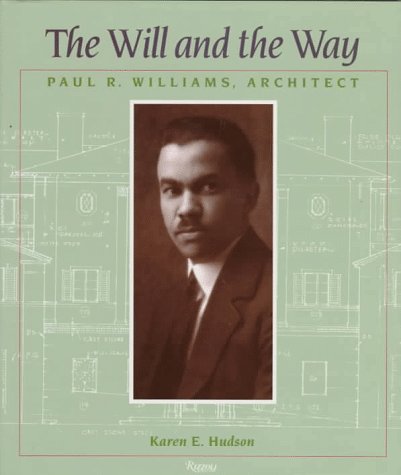
Tells the story of the life and career of the first African American member and Fellow of the American Institute of Architects, who designed more than 3,000 buildings from the 1920s to the 1970s
Reviews
Grade 4-7-One of America's foremost architects, Paul Revere Williams, designed more than 3,000 houses, office buildings, schools, and churches during a career that spanned almost 60 years. Although he was not the first African-American architect, he was the first to become a member of the American Institute of Architects. Despite his prolific and prestigious career, little has been written about him. Here, Hudson, his granddaughter and the author of the only adult book on Williams, has taken the first step towards filling this gap. Through notes written to his grandson, she allows the man to tell his own story. Because this is a very personal presentation, the book lacks the organization and detail present in more traditional biographies. Readers must also bear with, and forgive, a bit of sentimentality as Williams reflects on his own challenges and achievements. A biographical chronology, a glossary, and an abundance of high-quality, mostly black-and-white photographs strengthen the story of one man's single-minded determination. If only for its inspirational value to aspiring young architects, The Will and the Way is a solid purchase for most libraries.
Jeanette Larson, Texas State Library, Austin
Copyright 1994 Reed Business Information, Inc.
In more than five decades as a practicing architect, Paul R. Williams (1894-1980), the first African American to be made a fellow of the American Institute of Architects, designed everything from churches to hotels, mansions to housing projects. In this beautifully presented book Williams's granddaughter (the director of his archives as well as the author of a monograph on Williams's work) takes journal entries Williams had addressed to his grandson and weaves them into an inspiring biography. In Williams's voice, the text traces Williams's development, from his childhood in Los Angeles to the height of his popularity as a designer of celebrity homes in the '20s and '30s to his design for the L.A. airport in the late '50s. Numerous pictures document both Williams's life and his architectural style, while his thoughts about such topics as prejudice and success combine with personal recollections of family events. Although younger readers will find some of the technical discussions of architecture confusing, and although the intimate nature of the journal entries sometimes overpowers their usefulness as a biographical source, the book affords a well-rounded picture of an interesting figure. Ages 8-12.
Copyright 1994 Reed Business Information, Inc.
Gr. 5-7. "Who ever heard of a Negro being an architect?" That's what Paul Williams was told in 1912 by his high-school adviser. Williams went on to become the first African American member and Fellow of the American Institute of Architects. From the 1920s through the 1970s, he enjoyed worldwide success, designing more than 3,000 buildings. This handsome photobiography, with large, clear type, thick paper, and fine reproductions, introduces the man, his family, and his architecture. It's written in the first person, edited by Williams' granddaughter from a journal he wrote for his grandson. The tone is upbeat and inspirational ("Don't let anyone keep you from achieving your dreams"), though Williams is clear about the prejudice he suffered and the irony that he was sometimes designing homes for places where he was not allowed to live. One wry, affectionate note is that his grandchildren might have liked to follow in their grandfather's footsteps--but neither of them could draw. Hudson includes a biographical chronology and a glossary. Hazel Rochman
"About this title" may belong to another edition of this title.