Synopsis
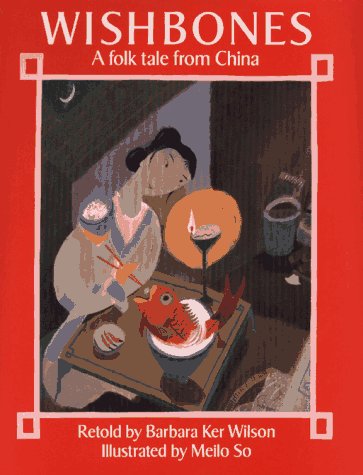
Yeh Hsien discovers that the bones of the beautiful fish she has caught, and which her envious stepmother plots to kill for supper, are magic wishbones that transport her, like Cinderella, to the exciting Cave Festival.
Reviews
Kindergarten-Grade 6-Another version of the Chinese Cinderella story that will be familiar to readers of Al-Ling Louie's Yeh Shen (Philomel, 1990). The story comes from aboriginal tribes in the area of Yongzhou in what is now Guangxi province, and was first redacted by the Tang Dynasty scholar Duan Cheng-shi in the mid-800s. Besides the obligatory stepmother and stepsister, Yeh Hsien (as romanized here) has a pet fish as a wise confidant. The stepmother secretly kills and eats it, but a spirit tells Yeh Hsien where to find the bones, which turn out to be magic, laying the groundwork for the happy ending. Wilson's retelling is clever, as is her chosen title, and reads aloud well. More details are included, such as Yeh Hsien's new husband wearing out the bones's magic, without impairing the tale's momentum. So's magical watercolor illustrations are bright, vibrant, and droll. The stepmother and stepsister often mirror each other's actions with comic effect. The free, folksy style draws on Chinese and non-Han motifs, being influenced as well by modern Chinese masters, notably Qi Bai-shi. Children will delight in this clever retelling and be dazzled by the truly splendid illustrations.
John Philbrook, San Francisco Public Library
Copyright 1994 Reed Business Information, Inc.
The canon of ethnic Cinderella stories expands yet again to include this cursory retelling of the Chinese version, featuring motherless maiden Yeh Hsien and her magic fish. Comparisons with Yeh-Shen , the richly detailed interpretation penned by Ai-Ling Louie and graced by Ed Young's ethereal pastels, however, are inevitable and unfortunate. Wilson's choppy abridgement stresses the story's barest, generic elements--stepmother, stepdaughter, lost slipper, prince--in the process sacrificing its cultural and ethnic nuances. The resulting narration is lifeless ("She went to the pond and called to the fish. The fish, believing it was Yeh Hsien standing there, leapt from the water and laid its head on the bank") and occasionally inept ("Yeh Hsien moved the fish into the pond that lay close-by the cave"). Elements of "The Fisherman and His Wife" further confuse the text. So's ( The Emperor and the Nightingale ) exuberant use of color is impressive, although her busy scenes and slightly skewed proportions lend the tale an incongruous air of humor. Ages 3-7.
Copyright 1993 Reed Business Information, Inc.
A Chinese version of Cinderella in which the role of the dead mother's benevolent spirit (or fairy godmother) is played by the magic bones of a great fish--the special pet of the heroine before it was killed by her jealous stepmother. This text is similar to Ai-Ling Louie's Yeh-Shen (1982), though a bit more succinct and with a gentler ending (Yeh-Shen ends with the deaths of the stepmother and stepsister); but Meilo So's illustrations could hardly be more different from Ed Young's misty, empaneled visions. Wilson's text is almost squeezed off the pages by bold paintings crowded with robust shapes, disorienting the eye with distorted perspectives and wildly unconventional color harmonies. A sophisticated, powerful re-imagining of an often overprettified tale. (Folklore/Picture book. 4-8) -- Copyright ©1993, Kirkus Associates, LP. All rights reserved.
"About this title" may belong to another edition of this title.