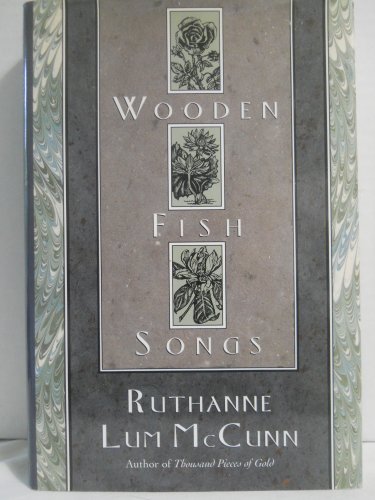
Synopsis
The story of Lue Gim Gong, a Chinese immigrant to nineteenth-century America, who rose from virtual indentured servitude in New England to fame as a botanist, is told through the voices of three generations of Chinese women who cared for him. 15,000 first printing.
Reviews
McCunn's second novel (after Thousand Pieces of Gold) returns to a subject she treated in the nonfiction Chinese-American Portraits, as she again tells an affecting story of a lonely, dedicated life. This is a fictionalized biography (documented with well-researched details) of unsung immigrant horticulturist Lue Gim Gong, who died in 1925 after breeding superior Florida citruses. Lue's tale is recounted from the viewpoints of three 19th-century women: Sum Jui, his mother in Toishan, anxious for her son among America's "foreign ghosts"; Fanny, the 40-ish fundamentalist spinster (and laudanum addict) in North Adams, Mass., who gives the teenaged Lue a home and a Christian education while falling in love with him; and Sheba, daughter of black slaves, who works with Lue in the citrus groves. The common theme is the appalling inhumanity endured by women, and sometimes by men, in all three cultures under the stress of cultural and religious notions. McCunn records Chinese infanticide, the sale and hard labor of children, the paralyzing dread of seeing a "fox ghost"; relatives and rapacious landlords; New Englanders' Bible-toting fury and xenophobia against "pagan" Asians; Southern cruelty toward newly emancipated African Americans; and icy racial hostility against the Chinese. Her skillful balance of individual stories and social history makes a poignant statement about the waste of lives. The author's own lament emerges in her title, which refers to a genre of women's songs for the menfolk who sought their livelihoods in the "Gold Mountain" of America.
Copyright 1995 Reed Business Information, Inc.
The story of Lue Gim Gong, a Chinese immigrant who gave up his country and family to pursue his passion for botany, is told in this historical novel through the voices of three women representing three distinct cultures and three distinct points of view. We hear alternately from Sum Jui, Lue's mother, who lives with her husband's family in a small rural village in China; Fanny, a New England spinster who converts Lue to Christianity and encourages his botanical research but keeps him financially dependent; and Sheba, the daughter of slaves, who is a servant to Fanny's sister in Florida. Although the narratives provide much detail about the lives of these three women and the differences and similarities in their cultures, they never develop beyond types, and the story becomes tedious. Nevertheless, the reader learns something about Lue's work and is given the opportunity to think about cultural conflict, the evils of racism, and the opportunities lost to blind prejudice. McCunn is the author of the well-received Thousand Pieces of Gold: A Biographical Novel (1981). Recommended for most libraries.?Rebecca Stuhr-Rommereim, Grinnel Coll. Libs., Iowa
Copyright 1995 Reed Business Information, Inc.
It's hard to believe some stories are true, so fantastic are their circumstances; this novel based on the life of Lue Gim Gong, a world-renowned plant cultivator who developed an extraordinary type of orange, both is and isn't. Born in mid-nineteenth-century rural China, Lue went to "Gold Mountain" (the Chinese name for America during the California gold rush) as a boy to help support his family. According to the novel, his life became a tale full of cultural and religious clashes, family drama, unrequited love, a passion for learning, and the power of ghosts. McCunn tells it from the perspectives of the three women who knew Lue best: his superstitious mother, Sum Jui, who keeps a terrible secret; Sheba, a housemaid descended from slaves; and Fanny, the New England spinster who educated him, converted him to Christianity, and eventually fell in love with him. This is rich and beautiful storytelling, full of cultural nuance and finely crafted characters inhabitating a dark period in Chinese-U.S. relations. Mary Ellen Sullivan
"About this title" may belong to another edition of this title.