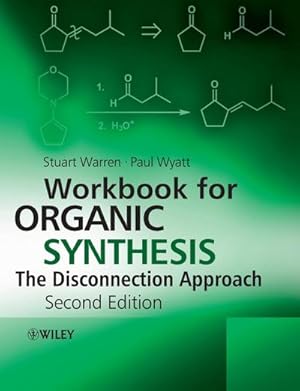
Workbook for Organic Synthesis : The Disconnection Approach
Stuart Warren
Sold by AHA-BUCH GmbH, Einbeck, Germany
AbeBooks Seller since August 14, 2006
New - Soft cover
Condition: New
Ships from Germany to U.S.A.
Quantity: 2 available
Add to basketSold by AHA-BUCH GmbH, Einbeck, Germany
AbeBooks Seller since August 14, 2006
Condition: New
Quantity: 2 available
Add to basketNeuware - One approach to organic synthesis is retrosynthetic analysis. With this approach chemists start with the structures of their target molecules and progressively cut bonds to create simpler molecules. Reversing this process gives a synthetic route to the target molecule from simpler starting materials. This 'disconnection' approach to synthesis is now a fundamental part of every organic synthesis course.Workbook for Organic Synthesis: The Disconnection Approach, 2nd EditionThis workbook provides a comprehensive graded set of problems to illustrate and develop the themes of each of the chapters in the textbook Organic Synthesis: The Disconnection Approach, 2nd Edition. Each problem is followed by a fully explained solution and discussion. The examples extend the student's experience of the types of molecules being synthesised by organic chemists, and the strategies they employ to control their syntheses. By working through these examples students will develop their skills in analysing synthetic challenges, and build a toolkit of strategies for planning new syntheses. Examples are drawn from pharmaceuticals, agrochemicals, natural products, pheromones, perfumery and flavouring compounds, dyestuffs, monomers, and intermediates used in more advanced synthetic work. Reasons for wishing to synthesise each compound are given. Together the workbook and textbook provide a complete course in retrosynthetic analysis.Organic Synthesis: The Disconnection Approach, 2nd EditionThere are forty chapters in Organic Synthesis: The Disconnection Approach, 2nd Edition: those on the synthesis of given types of molecules alternate with strategy chapters in which the methods just learnt are placed in a wider context. The synthesis chapters cover many ways of making each type of molecule starting with simple aromatic and aliphatic compounds with one functional group and progressing to molecules with many functional groups. The strategy chapters cover questions of selectivity, protection, stereochemistry, and develop more advanced thinking via reagents specifically designed for difficult problems. In its second edition updated examples and techniques are included and illustrated additional material has been added to take the student to the level required by the sequel, Organic Synthesis: Strategy and Control. Several chapters contain extensive new material based on courses that the authors give to chemists in the pharmaceutical industry.Workbook for Organic Synthesis: The Disconnection Approach, 2nd edition, combined with the main textbook, provides a full course in retrosynthetic analysis for chemistry and biochemistry students, and a refresher course for organic chemists working in industry and academia.
Seller Inventory # 9780470712269
Workbook for Organic Synthesis: The Disconnection Approach, 2nd Edition
This workbook provides a comprehensive graded set of problems to illustrate and develop the themes of each of the chapters in the textbook Organic Synthesis: The Disconnection Approach, 2nd Edition. Each problem is followed by a fully explained solution and discussion. The examples extend the student’s experience of the types of molecules being synthesised by organic chemists, and the strategies they employ to control their syntheses. By working through these examples students will develop their skills in analysing synthetic challenges, and build a toolkit of strategies for planning new syntheses. Examples are drawn from pharmaceuticals, agrochemicals, natural products, pheromones, perfumery and flavouring compounds, dyestuffs, monomers, and intermediates used in more advanced synthetic work. Reasons for wishing to synthesise each compound are given. Together the workbook and textbook provide a complete course in retrosynthetic analysis.
Organic Synthesis: The Disconnection Approach, 2nd Edition
There are forty chapters in Organic Synthesis: The Disconnection Approach, 2nd Edition: those on the synthesis of given types of molecules alternate with strategy chapters in which the methods just learnt are placed in a wider context. The synthesis chapters cover many ways of making each type of molecule starting with simple aromatic and aliphatic compounds with one functional group and progressing to molecules with many functional groups. The strategy chapters cover questions of selectivity, protection, stereochemistry, and develop more advanced thinking via reagents specifically designed for difficult problems. In its second edition updated examples and techniques are included and illustrated additional material has been added to take the student to the level required by the sequel, Organic Synthesis: Strategy and Control. Several chapters contain extensive new material based on courses that the authors give to chemists in the pharmaceutical industry.
Workbook for Organic Synthesis: The Disconnection Approach, 2nd edition, combined with the main textbook, provides a full course in retrosynthetic analysis for chemistry and biochemistry students, and a refresher course for organic chemists working in industry and academia.
Dr Stuart Warren Department of Chemistry, University of Cambridge, UK
Dr Warren is the author of the bestselling textbooks "Organic Synthesis: The Disconnection Approach" (Wiley), "Organic Synthesis: Strategy and Control" (Wiley) and "Organic Chemistry" (OUP)
Dr Paul Wyatt
School of Chemistry, University of Bristol, UK.
Dr Wyatt is Director of Undergraduate Studies for the School of Chemistry at Bristol University and also Director of BRISTOL ChemLabS - a HEFCE Centre for Excellence in Teaching & Learning.?He is co-author, with Warren, of "Organic Synthesis: Strategy and Control"
"About this title" may belong to another edition of this title.
General Terms and Conditions and Customer Information / Privacy Policy
I. General Terms and Conditions
§ 1 Basic provisions
(1) The following terms and conditions apply to all contracts that you conclude with us as a provider (AHA-BUCH GmbH) via the Internet platforms AbeBooks and/or ZVAB. Unless otherwise agreed, the inclusion of any of your own terms and conditions used by you will be objected to
(2) A consumer within the meaning of the following regulations is any natural person who concludes...
We ship your order after we received them
for articles on hand latest 24 hours,
for articles with overnight supply latest 48 hours.
In case we need to order an article from our supplier our dispatch time depends on the reception date of the articles, but the articles will be shipped on the same day.
Our goal is to send the ordered articles in the fastest, but also most efficient and secure way to our customers.
| Order quantity | 30 to 40 business days | 7 to 14 business days |
|---|---|---|
| First item | US$ 72.68 | US$ 84.27 |
Delivery times are set by sellers and vary by carrier and location. Orders passing through Customs may face delays and buyers are responsible for any associated duties or fees. Sellers may contact you regarding additional charges to cover any increased costs to ship your items.