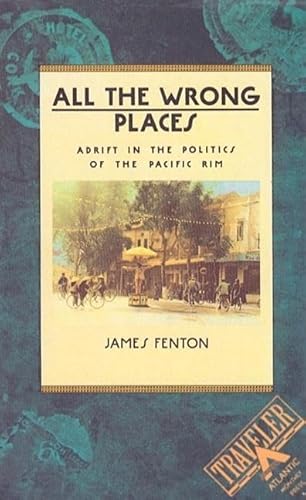
James Fenton is the right man in the wrong place in dangerous times. This journalist, poet, and critic is almost always at the center of a revolution. Fenton was one of the last journalists in Saigon, and his reporting from the abandoned American embassy, “where the looting had just begun,” is unlike any Vietnam coverage you’ve ever read. “Some people gave me suspicious looks; I was after all the only one there with a white face—so I began to do a little looting myself . . . .Two things I could not take were reproduction of an 1873 map of Hanoi and a framed quotation by Lawrence of Arabia, which read ‘Better to let them do it imperfectly than do it perfectly yourself, for it is their country, their way, and your time is short.’”
Reporting from war-ravaged Cambodia, Fenton lived for a while in a monastery, where the monks, certain he was a CIA agent, were fixated with his bout of constipation. In “The Snap Revolution,” Fenton chronicles Corazon Aquino's assumption of power in the Philippines, from a vantage point so close “I could even tell you what perfume Imelda Marcos was wearing.” Fenton's most recent posting is Korea, where he reports, in his inimitable fashion, on the recent riots and election in that complex country on the brink of civil convulsion. All the Wrong Places is a visceral and unforgettable view from the Pacific Rim.
British poet and journalist Fenton reported for British and American newspapers from Vietnam, Cambodia, the Philippines and Korea from 1973 to 1987, and here recounts, with cynicism and an eye for detail, his remarkable experiences. A self-proclaimed sympathizer to liberation movements, he first went to Vietnam in 1973 to "see a war, and . . . a communist victory" but does not romanticize his encounters with the Viet Cong, which included participation in the looting of the American embassy and a ride on the first North Vietnamese tank to enter the Saigon palace grounds. His impressionistic description of a Cambodian monastery, even as the country is ravaged by the Khmer Rouge, recalls both the nuances of everyday life and his private feelings. Reportage from South Korea is less self-indulgent and covers aspects of that country's struggle for democracy not usually detailed in Western media. Throughout, Fenton avoids sensationalism, but a dense prose style and an abundance of personal and historical references diminish the strength of his more insightful anecdotes.
Copyright 1988 Reed Business Information, Inc.