
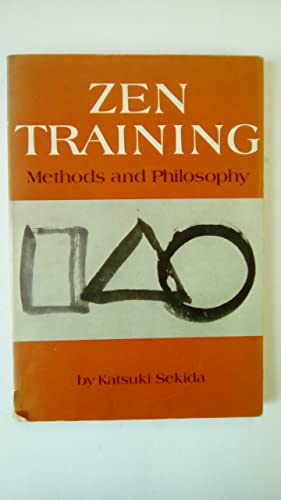
Zen Training: Methods And Philosophy
Katsuki Sekida
ISBN 10: 0834801140 ISBN 13: 9780834801141
Published by Weatherhill, 1975
Used
Paperback
From
ThriftBooks-Atlanta, AUSTELL, GA, U.S.A.
Seller rating 5 out of 5 stars

AbeBooks Seller since March 24, 2009
This specific item is no longer available.
About this Item
Description:
Missing dust jacket; Pages can have notes/highlighting. Spine may show signs of wear. ~ ThriftBooks: Read More, Spend Less. Seller Inventory # G0834801140I3N01
Synopsis:
First published in 1975, Zen Training has become a classic of Zen literature. It was one of the first books to demystify religion without debunking it, to explain hitherto esoteric practices in lucid, everyday terms. It offers concrete guidelines for practicing zazen, seated meditation. Posture, breathing, the function of the abdominal muscles, muscle tone, and the mechanisms of wakefulness and attention are clearly and scientifically explained, so that one learns what actually happens in doing zazen, why it leads to certain psychological experiences, and what their significance is. There is also a chapter on koans that goes far to clarify what for many has seemed one of the most frustrating and baffling aspects of Zen. Again, the reader is told how actually to deal with koans and how they operate as catalysts of enlightenment. The author also draws many significant parallels between Zen and Western philosophy and psychology, comparing traditional Zen concepts with the theories of being and cognition of such thinkers as Heidegger and Husserl. Zen Training marked a turning point in Zen literature in its critical reevaluation of the enlightenment experience called kensho, which the author believes has often been emphasized at the expense of other important aspects of Zen training. The aim of zazen is seen not as the achievement of such experiences as satori or kensho but as the attainment of absolute samadhi, that condition of utters stillness in which thought is cut off, the mind is empty, yet one is in a state of extreme wakefulness and awareness. Absolute samadhi is considered the precondition of any kensho experience of lasting value, and indeed as "the foundation of all Zen activities." This book also goes beyond the earlier stages of Zen training to describe the more advanced stages: what happens after kensho, and above all, how one lives as well as trains in Zen.
About the Author: Katsuki Sekida (1893–1987) was by profession a high school teacher of English until his retirement in 1945. Zen, nevertheless, was his lifelong preoccupation. He began his Zen practice in 1915 and trained at Empuku-ji in Kyoto and Ryutaki-ji in Mishima, Shizuoka Prefecture. He taught at the Honolulu Zendo and Maui Zendo from 1963 to 1970 and at the London Zen Society from 1970 to 1972.
"About this title" may belong to another edition of this title.
Bibliographic Details
Title: Zen Training: Methods And Philosophy
Publisher: Weatherhill
Publication Date: 1975
Binding: Paperback
Condition: Good
Dust Jacket Condition: No Jacket