James T. Hamilton
James T. (“Jay”) Hamilton is Vice Provost for Undergraduate Education and Hearst Professor of Communication at Stanford University. The winner of eight teaching awards at Harvard, Duke, and Stanford, he’s spent decades teaching and mentoring undergraduates and designing programs to help them thrive in college.
As chair of the First-Year Requirement Governance Board at Stanford, Hamilton helped implement the Civic, Liberal, and Global Education requirement for first-year students. This set of classes prompts students to reflect on the goals of their college education and their roles as citizens in the twenty-first century.
His most recent book, You Got In! Now What? 100 Insights into Finding Your Best Life in College (Radius Book Group, 2025), is designed to help students navigate college and prepare for what comes afterward.
Hamilton’s academic books on media markets and information provision include All the News That’s Fit to Sell: How the Market Transforms Information into News (Princeton, 2004), Regulation Through Revelation: The Origin, Politics, and Impacts of the Toxics Release Inventory Program (Cambridge, 2005), and Channeling Violence: The Economic Market for Violent Television Programming (Princeton, 1998). His book Democracy’s Detectives: The Economics of Investigative Journalism (Harvard, 2016) focuses on the market for investigative reporting. He is a Senior Fellow at the Stanford Institute for Economic Policy Research, affiliated faculty at the Brown Institute for Media Innovation, and member of the JSK Fellowships Board of Visitors.
For his accomplishments in research, he has won awards such as the David N Kershaw Award of the Association for Public Policy Analysis and Management, the Goldsmith Book Prize from the Kennedy School’s Shorenstein Center (twice), the Frank Luther Mott Research Award (twice), and a Center for Advanced Study in the Behavioral Sciences Fellowship.
Prior to joining the Stanford faculty, Hamilton taught at Duke University’s Sanford School of Public Policy, where he directed the De Witt Wallace Center for Media and Democracy. He earned a BA in Economics and Government (summa cum laude) and PhD in Economics from Harvard University.
Popular items by James T. Hamilton
View all offers-
Democracy’s Detectives: The Economics of Investigative Journalism
Hamilton, James T.
Item prices starting from
View 47 offersUS$ 4.50
-
All the News That's Fit to Sell: How the Market Transforms Information into News
Hamilton, James T.
Item prices starting from
View 39 offersUS$ 6.98
-
Calculating Risks? The Spatial and Political Dimensions of Hazardous Waste Policy (Regulation of Economic Activity)
Hamilton, James T.; Viscusi, W. Kip
Item prices starting from
View 4 offersUS$ 8.05
-
-
Regulation through Revelation: The Origin, Politics, and Impacts of the Toxics Release Inventory Program
Hamilton, James T.
Item prices starting from
View 29 offersUS$ 17.09
-
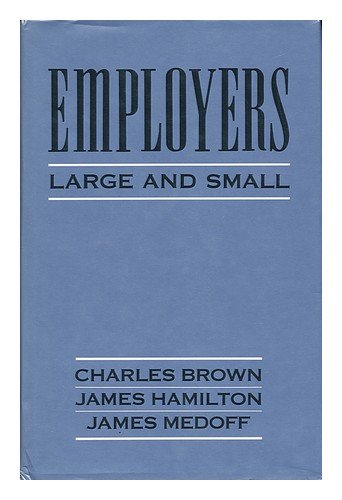
Employers Large and Small
Brown, Charles; Hamilton, James T.; Medoff, James
Item prices starting from
View 17 offersUS$ 48.85
-
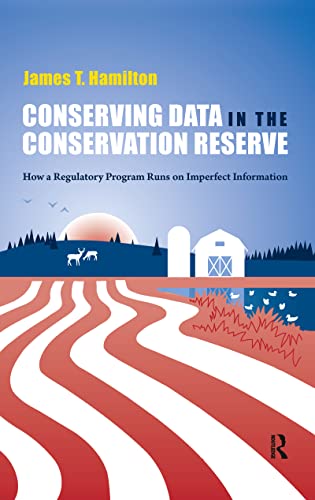
Conserving Data in the Conservation Reserve: How A Regulatory Program Runs on Imperfect Information
Hamilton, James
Item prices starting from
View 38 offersUS$ 5.33
-
The Mount of Olives: And Other Lectures On Prayer
Hamilton, James
Item prices starting from
View 64 offersUS$ 20.65