

Jess Mowry
Jess Mowry was born in 1960 near Starkville, Mississippi. When he was only a few months old his father took him to live in Oakland, California. Mowry has written twenty books and many short stories for and about black children and teens in a variety of genres, ranging from inner-city settings to the forests of Haiti and the African veldt. While many of his novels are set in Oakland and deal with contemporary themes, such as crack cocaine, drug dealers, gangs, teenage sexuality, and school dropouts, Mowry has also written several ghost tales, as well as novels featuring Voodoo and African magic, in addition to sea stories, and compiled and edited an anthology of Victorian ghost stories. He has also written several book reviews, including for 'The Nation' and "The Columbia Review Of Journalism,' as well as many articles for magazines, such as 'Might, The Los Angeles Times,' and 'Bullet.'
Mowry's father was a voracious reader who introduced his son to books at a very early age. Jess attended a public school, but despite his love of reading, was not an above-average student. He dropped out of school at age thirteen, part way through the eighth grade and worked with his father in the scrap-iron business. In his late teens, Jess moved to Arizona to work as a truck driver and heavy equipment operator. He also lived and worked in Alaska as an engineer aboard a tugboat and as an aircraft mechanic on Douglas C-47 cargo planes, as well as at a children's refuge in Haiti.
Returning to Oakland in the 1980s, Jess began working with kids at a youth center, reading to them and often making up stories because there were very few books to which African-American youth could relate. Later, he began to write the stories. In 1988, Jess sent one of his stories to Howard Junker, editor of 'Zyzzyva' magazine in San Francisco. Junker rejected the tale but asked to see more work, and published the second of Mowry's stories (the first was later published in the Stanford University literary review, 'Sequoia'). Mowry bought a 1923 Underwood typewriter for eight dollars, and within a year, his work was appearing in literary magazines in the United States and abroad.
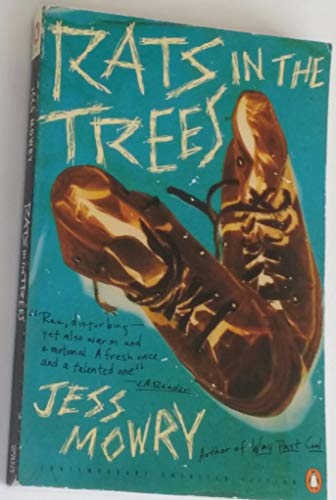
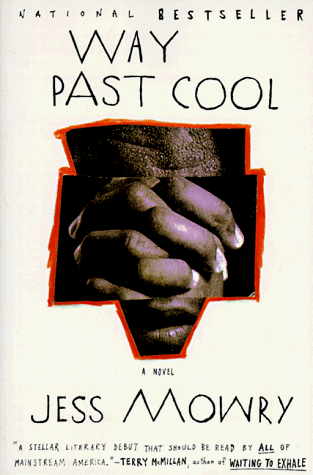
In 1990, Mowry's first collection of stories, 'Rats In The Trees,' won a PEN Oakland/Josephine Miles Literary Award and was also published in the United Kingdom, Germany and Japan. In 1991, Mowry's first novel, 'Children Of The Night,' was published by Holloway House in Los Angeles. In 1992, his second novel, 'Way Past Cool,' was published by Farrar, Straus & Giroux of New York. 'Way Past Cool' was also published in the United Kingdom, Italy, France, Germany, The Netherlands, Sweden, Denmark, Finland, and Japan. It was optioned for a film, for which Mowry co-wrote the screenplay. The film under the same title was produced by Redeemable Features in 2000 with director Adam Davidson and executive producers Norman Lear and Milos Forman.
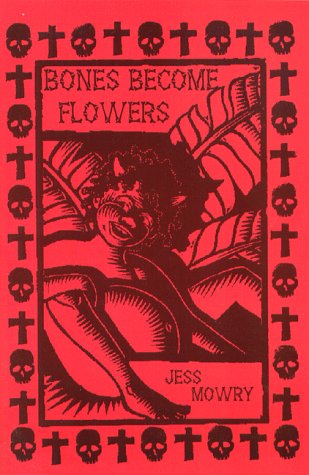
Other novels followed, including 'Six Out Seven, Babylon Boyz, Ghost Train, Bones Become Flowers, Skeleton Key, Phat Acceptance, Voodoo Dawgz, Drawing From Life,' and 'The Bridge.' He also published two story collections, 'Reaps' and "Magic Rats.' Mowry's characters and settings range from gun-toting gang kids in Oakland and Voodoo apprentices in New Orleans' French Quarter, to teenage airplane pilots and portrait artists, tugboat deckhands in Alaska, and child-soldiers in Africa.
As Mowry's puts it: "Almost all my stories and books are for and about Black kids who are not always cute and cuddly. My characters often spit, sweat, and swear, as well as occasionally smoke or drink. Just like their real-world counterparts, some are 'overweight,' may look 'too black,' and/or are otherwise unacceptable by superficial [mainstream] American values. Like on-the-real kids, they often live in dirty and violent environments, and are forced into sometimes unpleasant lifestyles."
Jess Mowry emerged during the mid- 1990s as one of America's most original and important, yet relatively unheralded authors. His low profile is as much a matter of personal preference as of any lack of merit or of public interest in his writing. Mowry has declined to take the easy road, refusing to be seduced by fame or money into writing the kind of Black ghetto fiction that mainstream publishers seem to want. Instead, Mowry remains socially committed; he prefers doing things his way as he works to inspire and enhance self-images of youths all over the world.
Jess Mowry lives in Oakland.
Popular items by Jess Mowry
View all offers-
Rats in the Trees (Contemporary American Fiction)
Mowry, Jess
Item prices starting from
View 24 offersUS$ 3.99
-
-
-
-
-
-
-




Showing 8 of 25 titles