Peter Bernhardt
Peter Bernhardt was born in Brooklyn, New York in 1952 and grew up on Long Island. His interest in natural history developed thanks to the woodland reserve two blocks from his house separating the towns of Merrick and Freeport, his summer attendance at Meroke Day Camp and the influence of local plant breeder and garden designer, the late Joseph Reis. His indulgent parents allowed Peter to keep many small pets (birds, tropical fish, newts, turtles) as well as pots of cacti and succulents. His 1974 BA in Biology came from the State University of New York at Oswego and Peter credits his first attempt at botanical research (a project on how prickly pear cacti grow spines) to Professor James Seago. After taking his Masters Degree in Biology from the State University of New York at Brockport in 1975 Peter spent over two years in Peace Corps at the University of El Salvador in Central America collecting plants for the university's herbarium (plant museum), teaching undergraduate courses and conducting field studies on the pollination of the Gabriel flower (Echeandia macrocarpa). His first popular article on how wild orchids street trees and telephone poles in the city of San Salvador appeared in "Natural History Magazine." After a few months as a technician at the New York Botanical Garden in 1977 he was contributing articles to their now defunct magazine, "Garden." By 1977 he accepted a doctoral scholarship at the University of Melbourne, Australia, where he studied the breeding systems of box mistletoes (Amyema) under Malcolm Calder and the late Bruce Knox. He remains a Professor of Biology at Saint Louis University, Missouri (see his web page at the SLU Department of Biology) and a Research Associate of both the Missouri Botanical Garden (St. Louis) and the Royal Botanic Gardens of Sydney (Sydney, N.S.W., Australia). His fieldwork in pollination biology takes him to Kansas, Missouri and Oregon and abroad to Australia, Israel and China. A sabbatical in 2009 took him back to Australia where he and Retha Meier studied how blue sun orchids (Thelymitra) are pollinated by native bees and why blue-flowered species often hybridize with each other or with the yellow lemon orchid (Thelytmitra antennifera). Consequently, Dr. Bernhardt's books on plant life are often based on real experiences he's enjoyed in the field, the laboratory and his own home garden.
Popular items by Peter Bernhardt
View all offers-
Natural Affairs: A Botanist Looks at the Attachments Between Plants and People
Bernhardt, Peter
Item prices starting from
View 17 offersUS$ 3.61
-
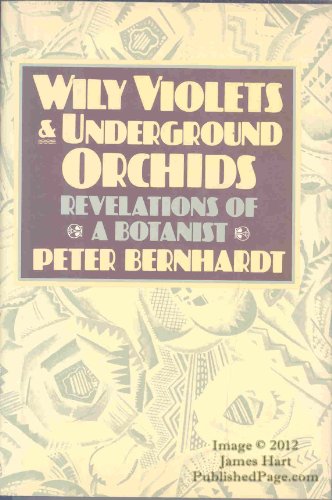
Wily Violets and Underground Orchids: Revelations of a Botanist
Bernhardt, Peter
Item prices starting from
View 53 offersUS$ 5.99
-
-
The Rose's Kiss: A Natural History Of Flowers
Bernhardt, Peter
Item prices starting from
View 15 offersUS$ 5.91
-
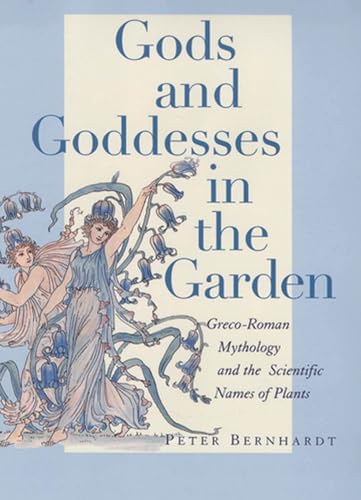
Gods and Goddesses in the Garden: Greco-Roman Mythology and the Scientific Names of Plants
Bernhardt, Professor Peter
Item prices starting from
View 6 offersUS$ 20.60