

Bernard Harrison
Bernard Harrison was born in 1933 in Bristol, England. After beginning as a biologist he turned to philosophy, first at the University of Birmingham, and later at the University of Michigan, Ann Arbor. Influential teachers included Charles Whiteley, Peter Geach, Austin Duncan-Jones, William Frankena, Charles Stevenson and Julius Moravcsik. He has taught, or held research posts, at many universities, including Sussex, which he joined in 1963 to become one of the first members of the philosophy department, Toronto, Cincinnati, Utah, the University of Canterbury, N.Z., the Australian National University and the University of Western Australia. He presently holds emeritus Chairs in the universities of Utah and Sussex. He is married, with three children and two grandchildren.
In his work he has tended to follow arguments wherever they may lead, without worrying too much about conventional subject boundaries. His maxim has been that if a good journal or press will publish the work it doesn't much matter if the subject falls outside one's "field." His interests are thus rather various. They range from the interpretation of Wittgenstein, by way of the philosophy of language, philosophy and literature, literary criticism and moral philosophy, to the politics and conceptual structure of contemporary antisemitism.
Much of his work on all these topics has appeared in journals and elsewhere. A selection of that material can be downloaded from his website: https:/bernardharrison1.academia.edu.
Popular items by Bernard Harrison
View all offers-
Henry Fielding's Tom Jones: The Novelist As Moral Philosopher (Text and Context)
Harrison, Bernard
Item prices starting from
View 8 offersUS$ 7.44
Also find
Used -
An Introduction to the Philosophy of Language (Modern Introductions to Philosophy)
Harrison, Bernard
Item prices starting from
View 30 offersUS$ 11.82
-
Meaning and structure;: An essay in the philosophy of language (Studies in language)
Harrison, Bernard
Item prices starting from
View 9 offersUS$ 5.69
-
The Resurgence of Anti-Semitism: Jews, Israel, And Liberal Opinion (Philosophy And The Global Context) (Philosophy and the Global Context (Paperback))
Harrison, Bernard
Item prices starting from
View 32 offersUS$ 6.60
-
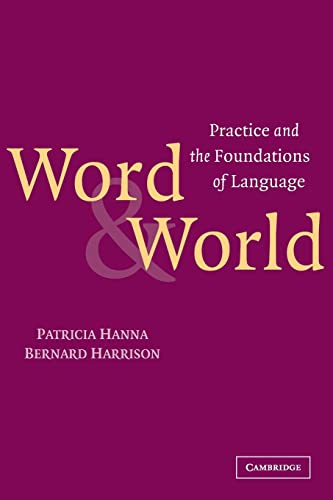
Word and World: Practice and the Foundations of Language
Hanna, Patricia; Harrison, Bernard
Item prices starting from
View 47 offersUS$ 7.95
-
-
What Is Fiction For?: Literary Humanism Restored
Harrison, Bernard
Item prices starting from
View 41 offersUS$ 26.45
-
Blaming the Jews: Politics and Delusion (Studies in Antisemitism)
Harrison, Bernard
Item prices starting from
View 39 offersUS$ 22.50




Showing 8 of 10 titles