Eric Thomas Chester
I was an activist while a student at the University of Michigan during the 1960s. I joined in civil rights protests in Detroit with the Northern Student Movement and in the South with the Student Nonviolent Coordinating Committee (SNCC) in Montgomery and Jackson. I was active in Students for a Democratic Society through several years of protests against the war in Vietnam.
After graduating from U of M, I taught economics at the University of Massachusetts-Boston. During those years, I helped organize a faculty union that covered both Amherst and Boston campuses and spent a year trying to negotiate a first contract.
Since then, I have participated in a variety of organizing activities. I was the vice-presidential candidate for the Socialist Party in 1996. I have lived for the last six years in Glasgow, Scotland, and have been active in the peace movement here.
I first wrote on U.S. radical history and the Cold War, but over the last decade or so my interest has shifted to a study of the World War I era, a crucial turning point in world history. My book on the Industrial Workers of the World (IWW) during this period is in print. An anthology based on letters between IWW leaders and activists is ready for publication. It will shed light on how the IWW actually functioned, rather than the public image it projected in its publications and songs. The book will be titled: Yours for Industrial Freedom: The Industrial Workers of the World from the Inside.
I am currently writing a manuscript on civil liberties issues that arose during World War I. This will cover key events, including the prosecution of Gene Debs for allegedly violating the Espionage Act and the formation of the American Civil Liberties Union. I also intend to explore the fundamental questions raised by the government's repression of dissent during the war as they relate to the right to free expression guaranteed in the U.S. Constitution.
Beyond this work in progress, my research interests are turning to a broader range of questions that relate to World War I. In researching these topics I have been struck by how difficult it is a century later to determine what actually occurred. Woodrow Wilson and his administration were very good at concealing from the public the true course of events and some historians have been all too willing to accept the official version.
Popular items by Eric Thomas Chester
View all offers-
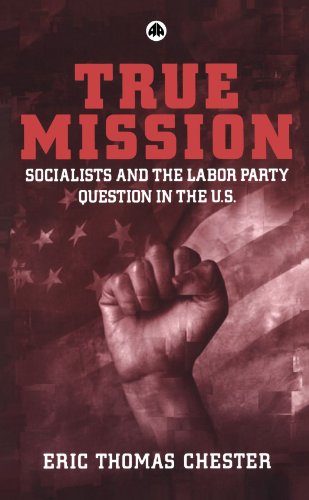
True Mission: Socialists and the Labor Party Question in the U.S
Chester, Eric Thomas
Item prices starting from
View 16 offersUS$ 9.29
-
Yours for Industrial Freedom
Chester, Eric Thomas
Item prices starting from
View 21 offersUS$ 19.11
-
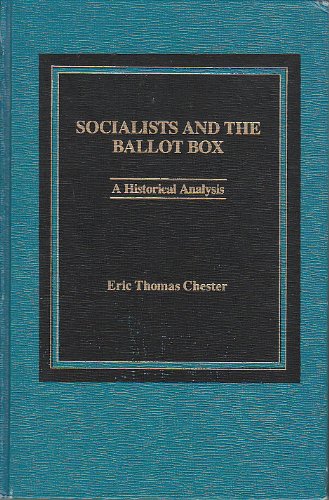
Socialists and the ballot box: A historical analysis
Chester, Eric Thomas
Item prices starting from
View 2 offersUS$ 38.55
Also find
Used -
The Wobblies in Their Heyday: The Rise and Destruction of the Industrial Workers of the World during the World War I Era
Chester, Eric Thomas
Item prices starting from
View 14 offersUS$ 95.02
Also find
New -
Free Speech and the Suppression of Dissent During World War I
Chester, Eric T.
Item prices starting from
View 23 offersUS$ 11.99
-
Rag-Tags, Scum, Riff-Raff and Commies: The U.S. Intervention in the Dominican Republic, 1965-1966
Chester, Eric T.
Item prices starting from
View 22 offersUS$ 19.18
-